

More Unique Than Mums: These Colorful Flowers Make The Perfect Fall Alternative
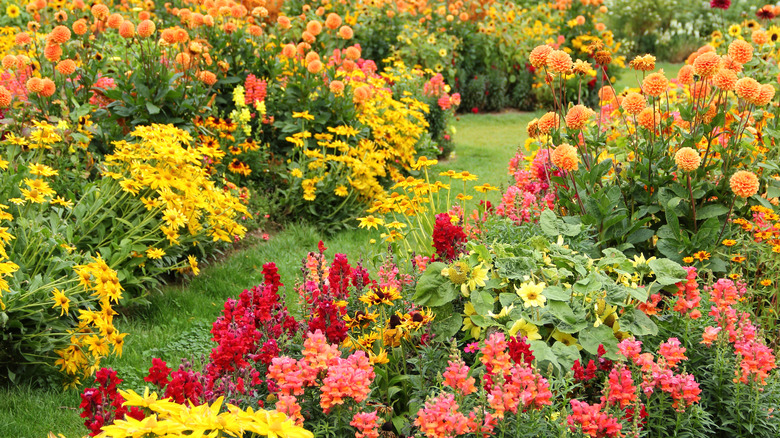
During the fall, it's hard to visit a plant nursery without seeing rows of chrysanthemums, easily one of the most popular fall flowers. You'll see them throughout the neighborhood as vibrant borders or nestled in containers on porches. But if you're looking to differentiate your yard from your neighbor's, look for eye-catching alternatives. One colorful perennial that also works particularly well as a border plant for your driveway is the sneezeweed (Helenium autumnale), a brightly-colored plant that blooms late summer into fall.
Contrary to its name, this plant doesn't induce pollen-related sneezing. Historically, its leaves were dried and used to make snuff. The belief was that if someone inhaled the snuff, sneezing would help cleanse their body of evil. Today, it's known for its cheerful, radiant appearance, ideal for adding warm color to a flower bed, designing the perfect cottage garden, or complementing ornamental grasses in a border.
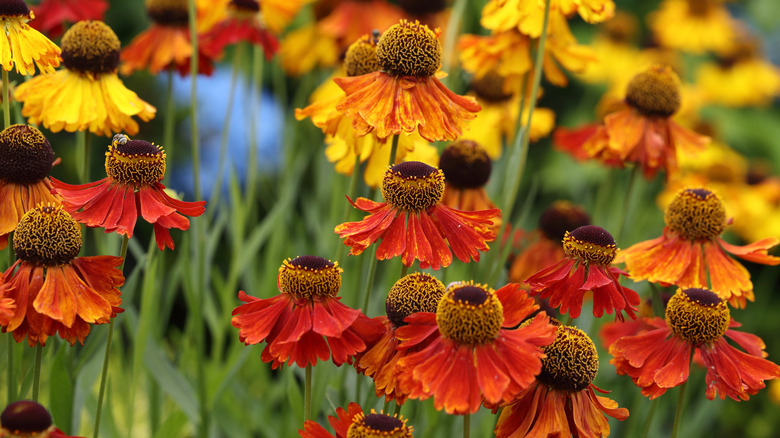
The sneezeweed, a pollinator-friendly plant in the aster family, is hardy to USDA Hardiness Zones 3 to 8. It grows well in partial shade and full sun, and it needs moist soil to grow well, as it's naturally found in habitats like streams, ponds, and wetlands. Its petals radiate from a center globe, with blooms sitting on top of long, narrow leaves. Sneezeweed can grow up to five feet tall and spread up to three feet wide. The color of the blooms will depend on the variety, with choices like golden yellow, burgundy, copper red, and bronze red.
Planting and caring for sneezeweed
There are multiple timelines for planting sneezeweed, depending if you're starting seeds indoors or sowing them directly outdoors. Sneezeweed also benefits from seed stratification, which is the process of exposing seeds to cold temperatures indoors to wake them up from dormancy. This will take 30 to 60 days prior to the seeds being sown. Factor in another two to four weeks for germination before sowing them indoors after the last frost. You can also sow seeds outdoors in the late fall without first stratifying them, since the colder temperatures will wake up the seeds.
In the early spring, fertilization can help boost the plant's growth. However, don't give them too much, since an excess can direct the plant's energy toward growing leaves rather than flowers. If you don't want the plants to grow too tall or floppy, pinch off new growth during the late spring to produce shorter stems. Just keep in mind that this will also result in later blooms.
Mature clumps of sneezeweed will benefit from division, both to plant elsewhere in your garden and to keep the plant robust. Unless you need to keep the plant small, divide them every three to five years. In a garden or container, sneezeweed is a visually stunning partner with other perennials like beebalm (Monarda spp.) and other asters (Symphyotrichum spp.). When handling sneezeweed, be aware that sensitive individuals may experience skin irritation. The plant also has the potential to be poisonous to humans, so keep your curious kids away from it.