

Forget Shade Sails: The Alternative That Adds Privacy Without Blocking Light
We may receive a commission on purchases made from links.
If your backyard patio turns from a beautiful oasis into a blazing hot griddle in the summertime, you might be thinking about making some changes so you can get more use out of it. A lot of people use shade sails as a chic way to get some relief, but there are many different ways to cover your patio or fence using other materials. Shade cloth is one alternative to shade sails, offering the same level of privacy without blocking light. It can be installed in a variety of ways for a surprising number of uses, even hung vertically the way shade sails sometimes are.
Whether it's to give your pets relief from the sun or make the daybed under your pergola more inviting, one of the main reasons to use shade cloth rather than sails is that there's a lot more flexibility in how it's installed. It can be custom-ordered or cut to size and installed in various ways. While some shade cloths are predefined sizes with grommets, you can also buy large bulk rolls, and it's much less expensive per square foot. The winemana 120x6 FT Outdoor Shade Cloth is a budget option that's 90% black woven mesh and priced at $71.98 from Amazon at the time of writing. For a highly rated tear-resistant HDPE shade cloth, the Coolaroo 90% UV Block Heavy Duty Sun Protection Fabric comes in stone and sandstone for $114.99 for a 6-by-50-foot roll. It's offered in 6-by-15, 6-by-100, and 12-by-50 foot sizes, as well.
Methods for fastening shade cloth in the yard and garden
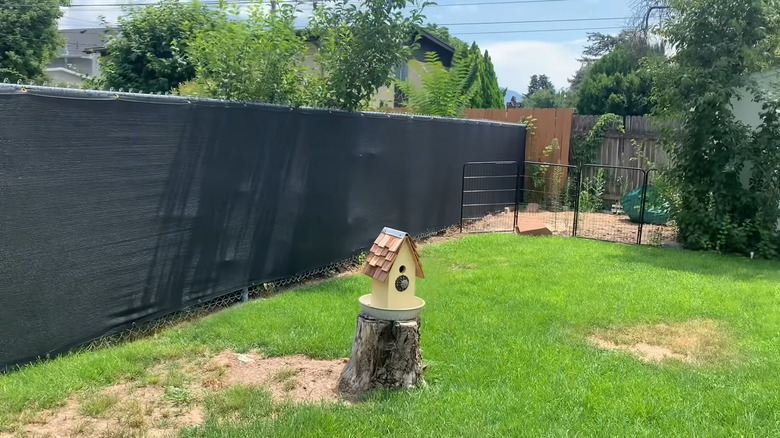
Whether you buy shade cloths with hems and grommets or purchase rolls of bulk shade cloth and install it another way, keep in mind that some types fray. If you're cutting it, the best kind is the type with lock-stitch construction, such as knitted HDPE shade cloths. From a bulk roll, you can measure and cut a single piece for everything from vertical walls to pergola shade covers, as long as there is an anchor point and a secure fastening. Shade cloth is also a good idea if you want to add height or extra privacy to an existing fence.
Shade cloth without grommets can be fastened a few ways. Staples or zip ties work fine for projects in your garden, and there are even inexpensive clip-on grommets made for agricultural use. These make it easy to join two shade cloths together, and since grommets are rarely in the right place, they are handy even if your shade cloth already has some. Amazon has the SUNNE Shade Cloth Clips, 50PC for $7.99 right now, and they'll work with most knitted shade cloths.
Another option for a sleek look is to use screws or nails with stainless steel washers, which grip the cloth firmly to keep it in place so there's less tearing. The Flutesan 100 Pcs Shade Cloth Fasteners are $6.99 at the time of writing. Bungee cords and balls, ropes, and even a rock with the fabric bundled up around it and tied into place can be used to fasten shade cloths.
Tips for choosing the right shade cloth
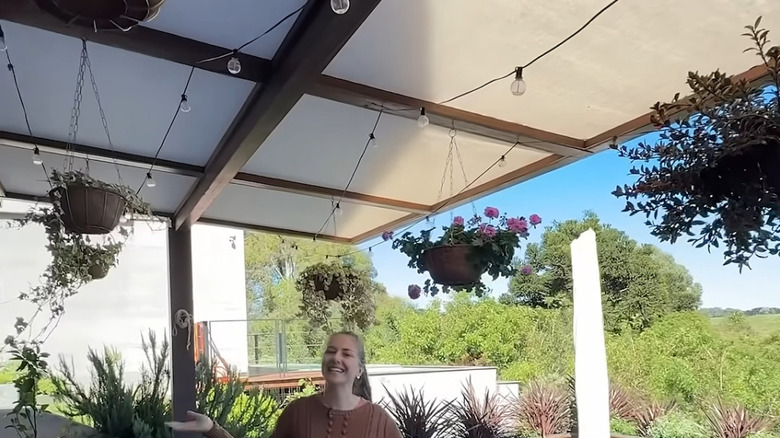
If you're trying to build shade on a budget, start by choosing the right percentage of density for your project. The percentages are a measurement of how much light the shade cloth blocks, and bulk rolls come anywhere from 10% to 90%. With more density comes less light filtered through, but you'll also get more privacy as a tradeoff. For plants, the percentage and type of shade cloth you want depends heavily on factors like the type of plant, the time of year, and where you live, and 40% is commonly used for gardening projects. In the backyard, shade cloth is even used on livestock pens and chicken coops to keep animals cool.
For projects like vertical walls, pergolas, and window shades, color matters for more than just aesthetic purposes. Although black is often used in agriculture settings and resists UV rays better, it absorbs and radiates heat, so you may want to choose another color, like green, terracotta, beige, or white. Coolaroo's stone and sandstone-colored fabrics are knitted HDPE shade fabric, which block up to 95% of UV rays, and even though they cost a little more, quality pays off with long-term value. Good shade cloths can last up to 15 years with proper care, but keep in mind when you're installing them that stretching too tight is one of the causes of tearing.