

Ditch Traditional Gravel Driveways: The Durable Material To Use For Superior Drainage
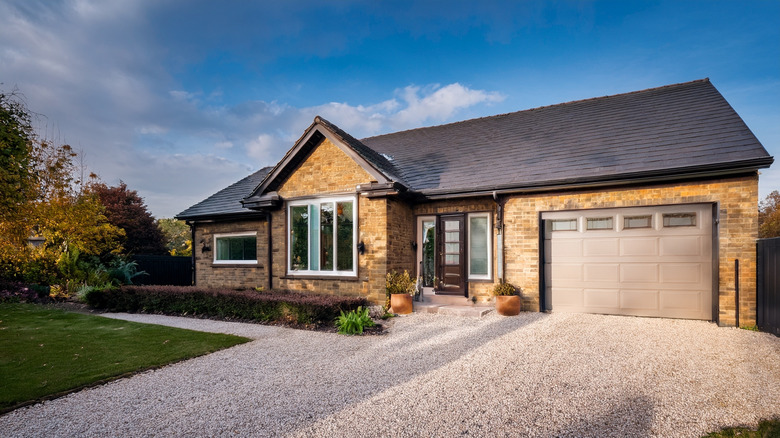
Not only do gravel driveways offer an easy way to add texture to your home's frontage, but they can also be highly cost effective. Gravel doesn't break down, unlike organic drive materials such as wood chips, which makes it cheaper in the long-term. It can also be excellent for drainage, since water naturally wants to run into the cracks between the stones. Now, with that being said, not all gravel is created equal. And while there are lots of gravel-type materials that you use to lay a new driveway, #57 stone is widely considered one of the best.
Unlike gravel, which is effectively gathered in its natural state, sorted, and then bagged, #57 stone is mined and crushed. As for the number, it's not the weight of the stone, nor the amount of dollars you'll pay for a ton of it. Instead, it's a reference to the size of the sieve that the stones are passed through. Generally speaking, #57 stone comprises crushed pieces of stone approximately an inch in size. It's typically made from natural rock like limestone, granite, and even recycled concrete, and usually features jagged, angular edges — unlike gravel, which tends to be more rounded. This shape helps the stones interlock together, creating a very durable surface under heavy loads. This trait also helps them to resist rutting and displacement, which are some of the biggest drawbacks of standard gravel driveways. Crucially, if you have lots of rainfall in your area, #57 stone is widely thought to be superior for drainage, as the uniform-size stones prevent water from gathering, instead allowing it to drain freely through them.
Considerations to make before investing in a #57 stone driveway
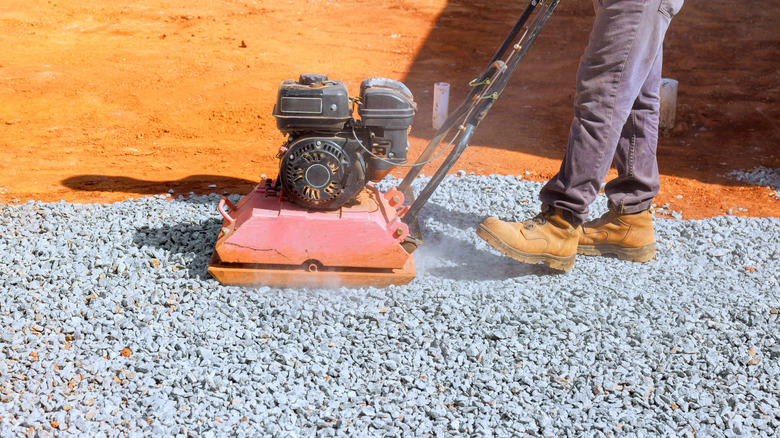
One of the first things you're likely to wonder is whether crushed stone or gravel driveways are cheaper. Generally speaking, since crushed stone requires both mining and crushing, it tends to cost more than gravel. However, that is not a hard and fast rule. In both cases, the cost often depends on the specific type of stone, and how far away it's been sourced from. Pairing a crushed-stone driveway base with a smoother, decorative top layer will also impact the cost — again, depending on the type of the stones you choose to use.
Another consideration to bear in mind is maintenance. While crushed stone naturally tends to lock together well and resist rutting and displacement, it's not totally infallible. In other words, from time to time, you will need to rake your driveway to prevent holes from forming and ensure a smooth surface. Weather can also cause displacement over time, and depending on the severity of the seasons in your region, you may find that you need to top the gravel up from time to time to keep it properly graded. With all of that being said, no driveway material is completely devoid of maintenance requirements. In driveways where drainage is as important as a strong, durable base for your vehicles, crushed #57 stone is more likely to satisfy your needs than standard gravel.