

How To Prevent Condensation On The Inside Of Windows
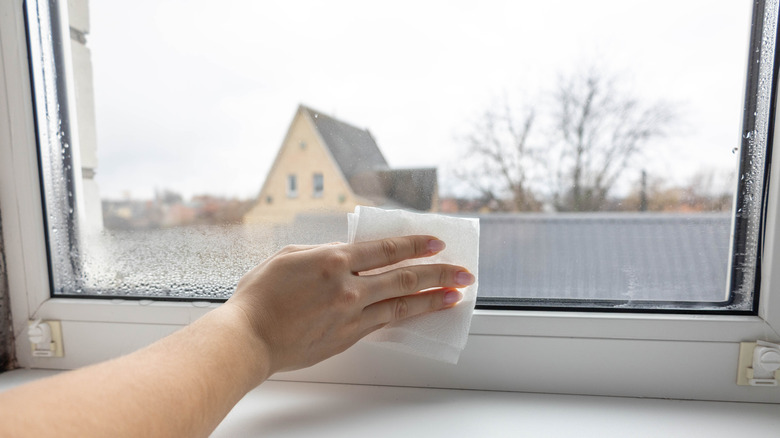
It can be really frustrating to wipe condensation off your windows one day, only to wake up the next morning with the glass covered in water again. This often happens when warm, humid indoor air touches the cold window pane, causing the air to cool and condense into moisture. This appears on the inside of windows as condensation or water droplets. Don't worry, though — it is completely fixable. All you have to do is ensure that the indoor humidity is not too high, along with improving airflow, and keeping your windows slightly warm, and you will be good to go.
Start by figuring out what is causing the moisture levels to rise indoors. It can be a number of things, from cooking to showering and doing dishes to drying clothes. There are even some indoor plants to avoid if you want to prevent a humid home. Nevertheless, once you have figured out the root cause of high humidity indoors, take measures to fix it. For instance, make sure that your clothes dryer is venting outside. If it is venting inside the home, all the moisture it pulls from the clothes will eventually end up indoors.
A good option is to use a dehumidifier, which removes moisture from the air, reducing humidity indoors. However, do choose the right size dehumidifier for your space, as something undersized might not be able to remove enough moisture. Also, when the dehumidifier is running, keep the windows and doors closed so that it can effectively dehumidify the space.
Warm glass and better airflow can also help avoid condensation
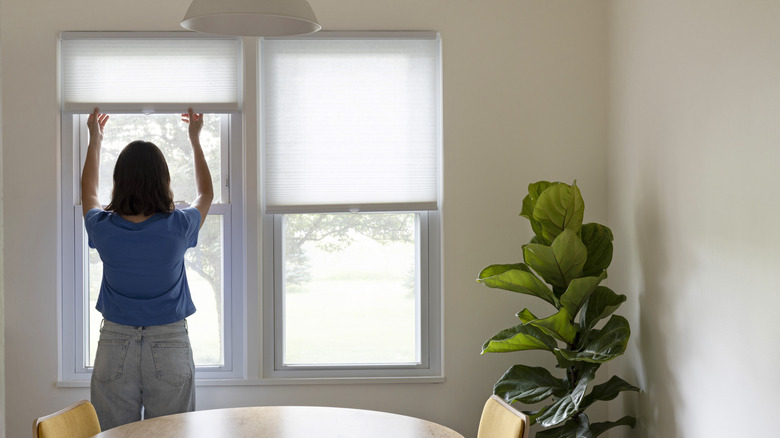
Lowering indoor humidity works great if you want to avoid moisture building up on your windows, but it is only part of the equation. You need to keep your glass windows warm, too, along with improving the airflow. Start by opening the blinds and curtains during the day. It might not sound like much, but blinds and curtains can trap a layer of cold air against the glass, which can lead to condensation appearing on the windows. So, when you pull them back, the cold air escapes and the glass becomes a bit warmer.
It might also be worth checking the windows themselves as well. Poorly insulated or single-pane windows will show more condensation than windows that have a double or triple pane and proper insulation. So, if your windows are consistently fogging up and feel too cold to touch, it might be time for an upgrade. If, however, you would rather stick with your current windows, at least take some measures to insulate them and try not to use the wrong materials. It is one of those common mistakes people make when insulating windows.
Lastly, improve the airflow indoors to help prevent humid air from pooling, which will help reduce condensation on the windows. This is especially important in kitchens and bathrooms where moisture is high. So, make sure you install and use an exhaust fan in these places to help remove excess humidity and keep the chances of condensation appearing on the windows low. Better yet? Installing an exhaust fan in your bathroom is also a bathroom improvement that can help prevent toilet stains.