

Not Reclaimed Wood: The Recycled Flooring Material That's Sturdier
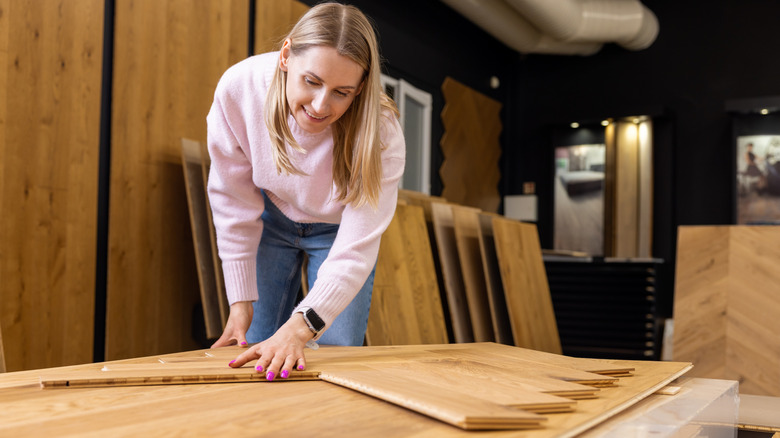
One flooring trend that's good for both sustainability and style is the use of reclaimed wood. The age of the wood alone can lend exceptional durability, since it tends to harden with age. More than that, the fact that the wood is reclaimed means no new trees have been harvested to make it. However, given the technological improvements in the world of floor manufacturing in recent decades, it may come as no surprise that hardwood is far from the only option for sturdy, sustainable flooring. In fact, there is one recycled flooring type that's actually much sturdier and more sustainable: Recycled, strand-woven bamboo flooring.
Traditional bamboo flooring is made with strips of bamboo, which are glued together in layers. Strand-woven bamboo is formed from thousands of sawn bamboo strips, which are often taken from the "waste" pile of other bamboo manufacturing processes. These fibers are bound together with resin, and then compressed under extreme pressure. The resulting planks are both harder and far more durable than traditional bamboo flooring and most hardwood planks. Strand-woven bamboo is usually rated well over 3,000 on the Janka scale, which is used to score the hardness of different woods. Compare that to English brown oak (the hardest oak type), which is rated 1,360. Even materials like Brazilian teak and mahogany score lower. In other words, if you want to design your home with sustainable materials, strand-woven bamboo is well worth adding to your shortlist of flooring options.
Considerations to make before investing in strand-woven bamboo flooring
With all of the above in mind, strand-woven bamboo may seem like a no-brainer, especially in busy family households and for environmentally-conscious home improvers. iI's highly regenerative, taking as little as five years to reach "harvest" size compared to woods like oak, which can take 80 years or more. This factor can also make bamboo floor products much more cost-effective than traditional hardwoods. In fact, HomeAdvisor suggests that the cost of installing a bamboo floor averages around $3,400, compared to oak floors, which average around $12,000. However, as with any flooring choice, there are certain downsides to bamboo flooring that you'll want to bear in mind before installing it in your home.
Firstly, just because it's supremely hard, that doesn't mean that it's unaffected by environmental conditions, like temperature and humidity. Even though it is technically a grass, floors made from bamboo nevertheless expand and contract — just like hardwood. Additionally, just because they're hard doesn't mean that strand-woven bamboo planks won't scratch. Excessive heat and UV exposure can also cause the boards to fade over time. And, while it's an excellent alternative to kitchen hardwood floors, you should still be cautious about where you use it in the home. For example, exposure to lots of moisture — like in the bathroom — can cause the bamboo boards to warp. With that in mind, you'll want to reserve it for dry, temperature-controlled areas of the home, like bedrooms, hallways, and living rooms.