

What Does Black Soot Marks Coming From Gas Stove Burners Mean?
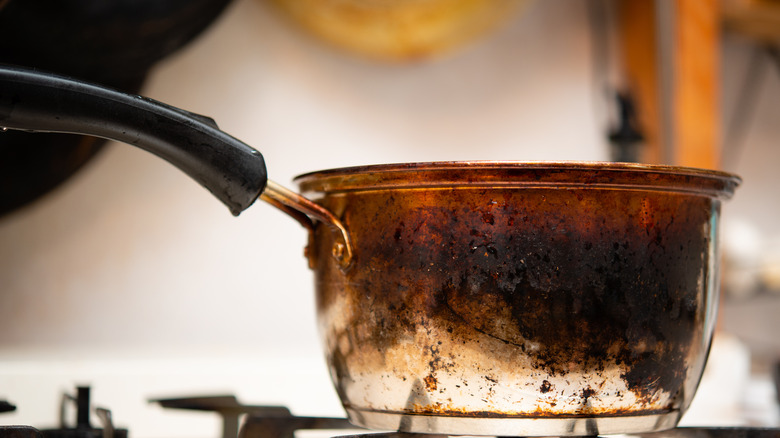
Black soot marks on the bottom of pots and pans can be the most annoying cleaning problem in the kitchen, especially when they appear when you least expect it. Even deep cleaning the gas stovetop does not guarantee smudge-free cookware surfaces. That's because when a stove burner leaves behind a black, powdery residue on the underside of cookware, it usually indicates a problem with the air-to-fuel ratio or the air-fuel mixture entering the burner during combustion. When there's less air to burn the available fuel, combustion is incomplete. Instead of producing blue flame, the burner generates a yellow or orange flame, which almost always causes soot to form.
There are different reasons for gas stove burners to have incomplete combustion. One of them is a clogged or dirty burner. As food particles, grease, and other debris splatter and obstruct the burner holes, the flow of gas or the amount of air mixing with it is affected. The resulting flame may form dark residue under the cookware. Another reason is when the burner cap is not properly positioned. This can happen if it is sitting unevenly or placed in the wrong position after lifting the stovetop to clean the stove. In this case, the gas may not distribute properly across the burner. The same issue could arise when the burner cap is damaged. Therefore, it's important to always check that these components are clean, dry, and properly positioned before using your gas stove.
How to prevent black soot marks from forming

While it's easy to revive burnt pots and pans with different cleaning hacks, preventing the formation of soot in the first place can nip the problem in the bud. Black marks may not necessarily mean the stove is faulty and dangerous, but they can be a warning sign that something is hindering the burner from operating efficiently. Cleaning the stove, especially the burners, can make a big difference. Remove any form of buildup that could interfere with the air-gas mixture, then wipe the surface with a damp cloth. Remove the burner caps, soak them in a cleaning solution, and thoroughly brush the holes. Let the caps dry completely before returning them to the stovetop. Be sure to reposition them correctly, so the gas stove does not produce soot and other potentially dangerous byproducts of incomplete combustion, such as carbon monoxide.
If a burner continues to generate a yellowish flame, excessive soot, or unusual odors even after cleaning it, it may be time to get rid of and replace the problematic burner. If the issue persists even after replacement, the problem could involve another component of the appliance — one that may require the professional services of a qualified gas appliance technician. Nevertheless, gas cooktops typically last between 15 and 20 years. If the one you have at home has already seen better days and no longer produces blue flames, consider replacing the entire unit altogether.