

Can You Trim The Bushes In Your Yard Too Much?

Even the easiest plants for beginner gardeners can require pruning and trimming, and learning the right way to care for your plants is essential to helping them thrive in your yard. Without proper trimming, your plants can become unkempt, and they may develop diseases or damage that goes unseen. Unfortunately, there is another extreme to avoid as well: over-trimming. While it may seem that trimming is as simple as removing any branches you don't want while keeping those you do, there is such a thing as trimming the bushes in your yard too much, and it can be detrimental to your plant's health.
When talking about over-trimming bushes, it's important to note that the distinction often lies in volume, not frequency. In fact, it's often better to trim your bushes in smaller, more frequent amounts than it is to dedicate a single day to heavy pruning. Over-trimming typically becomes a problem when you remove too much of the plant at once.
Lopping off limbs creates open wounds along your plant, and like any living thing, it will need time to recover. Removing substantial portions of growth all at the same time risks exposing your plant to more pests and diseases while reducing its ability to fight them off, overall creating a weaker plant. Before stepping into your yard with your favorite clippers, it's important to brush up on how much trimming is too much, and what you should do instead to keep your plants happy and healthy.
Proportions and timing matter more than frequency
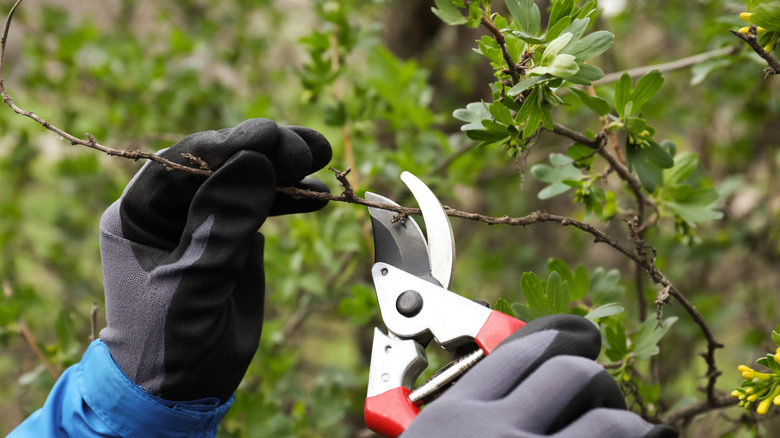
For the best results when pruning your bushes, you'll want to think about preventative care and maintenance, rather than any big chops. Preventative trimming involves clearing out any branches that may lead to harm in the future while also gently sculpting the appearance that you'd prefer. This is especially important for bushes that you're using as a living privacy fence or decorative topiary.
If this method sounds abstract, don't worry. There are actually a couple helpful ways to know what to trim and what not to trim. One of these methods is to remember the three D rule of pruning. This means only trimming away branches that are diseased, damaged, or dead, which will help improve the overall health of your shrubs. Following the simple one-third rule of pruning rule can also make trimming easier. Consider the overall volume of your bush, and avoid removing more than one-third of the plant in a single year. Think about it in terms of a haircut: you won't want to take your bush from luscious locks to a buzzcut all at once.
You might also over-trim plants if you break out the shears before they've become well-established in your yard. When you first transplant a bush into your yard, it needs time to recover from introduction into a new environment before adding a new shock for it to navigate. Otherwise, your plant could suffer, if not die entirely. If you can, wait until winter dormancy has begun to trim healthy branches from deciduous bushes and shrubs. Wait until early spring to trim your evergreens. However, if you have a flowering bush that blooms on old growth, such as hydrangeas, beware that you may be chopping off future flower buds.