

Not A Skillet — The Valuable Cast Iron Kitchen Tool That Collectors Dream Of Finding
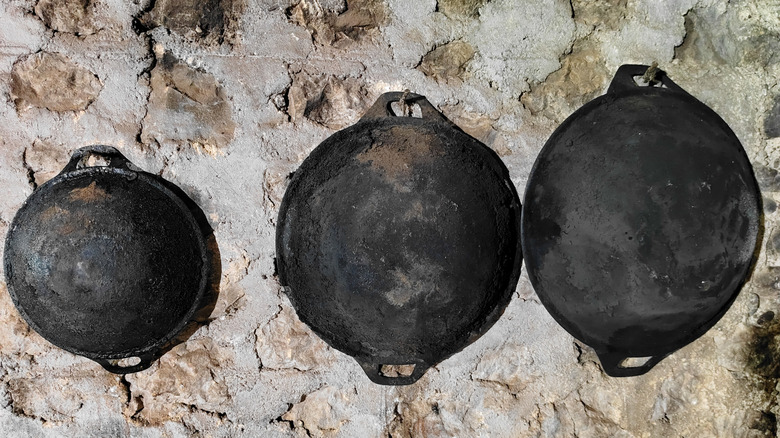
Cast iron skillets may be a generic cooking staple, but when it comes to the most important meal of the day, don't overlook waffle irons. There's a pattern on one particular type of waffle iron that promises to do more than just keep pools of maple syrup from sliding down the sides of your breakfast, and it could be just the feature that fetches you a four-figure sum at auction. Ironically, the marks that collectors like you dream of finding aren't the famous waffle patterns that shape waffles so recognizably. Rather, it's the hammered design markings on the exterior of the Griswold No. 8 waffle iron that makes this piece so valuable — we're talking upwards of $1,000.
The price (and feelings of collector's euphoria) can be chalked up to the thing that makes most antique cast iron pieces collectible: scarcity. Online forums and collectors' sites suggest that the vintage waffle iron's hammered pattern hit the markets in the mid-20th century, with the 1930s to 1950s being the most likely production dates for these items.
The Griswold Manufacturing Company, which originated in Erie, Pennsylvania in 1868 as Selden & Griswold, produced hammered designs on other popular cookware items, too, like Dutch ovens and skillets. However, the hammered waffle iron was a little harder to come by. It, along with some other cast iron pans like Griswold's hammered corn-shaped pans and muffin tins, seems to be the proverbial Lost Ark of the Griswold collectibles world. Find one and collectors around the world will be in awe.
What to know about the Griswold No. 8 waffle iron's hammered pattern
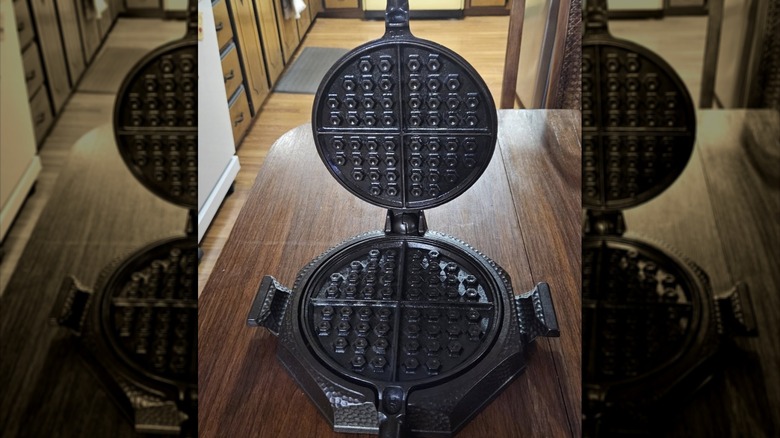
Although the hammered pattern on Griswold's cast iron No. 8 waffle iron looks as if someone took their frustrations out on the pots and pans that bore the pattern, the markings didn't come from the efforts of an aggressive hammer-wielder. If the piece had been made of softer, more pliable materials like tin, brass, or copper, that would have been the production method used to create this waffle iron.
However, cast iron is a different beast altogether. It doesn't take too easily being pounded into shape. To make this design, Griswold had to put the waffle iron's raw materials into molds to create the look that the craftsman's hammer once achieved. Such embellishments were intended for the high-end cookware of the day. The manufacturing of this decorative design likely ended sometime around World War II, when activities on the war fronts took cast iron away from morning waffles and cookware production and reassigned them to the war effort instead.
Things to look for if you find a No. 8 waffle iron
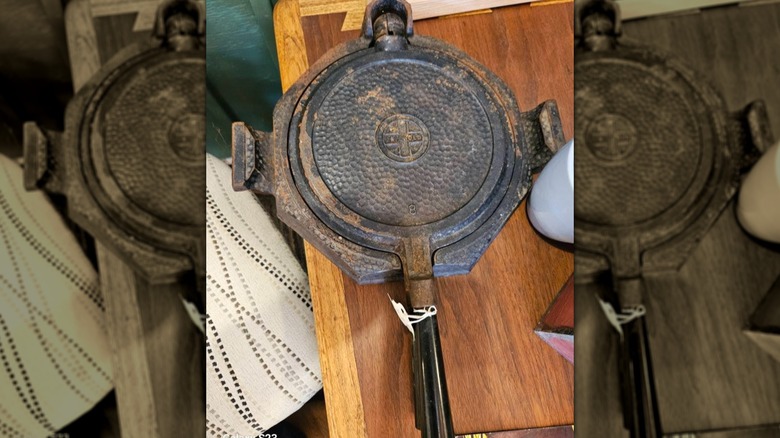
The No. 8 waffle iron was the most commonly-used size of waffle iron, whether the piece has the hammered pattern or not. However, even as common as the size was, it's likely that most of the waffle irons you'll find through antique or online retailers will be sans pattern. It's no exaggeration to say that these items are rare, even on sites like eBay.
If you do find one, it'll be the most valuable if it's not rusted, chipped, or cracked, and if it has all the pieces. You'll know if the latter is the case if it has the two waffle iron plates and a base — these correspond with the numbers 171, 172, and 173. This waffle iron will also have a circular ball-and-socket hinge at the top.
Keep in mind, too, that knockoffs and reproductions of these and other cast iron kitchen tools exist. These are marked by low-quality casting, hard-to-read logos, and tinges of orange rust. Some reproductions were made by turning true Griswold pieces into a mold; these dupes are known as recasts. If you run across such a thing, it'll be smaller than the standard No. 8, which is just under 8 inches. If it's not a real Griswold waffle iron, hammered or otherwise, it'll look like the size should be right, but some details will be a bit off just the same.