

It's Time To Clean Your Washing Machine's Inlet Filter If You Spot These Warning Signs
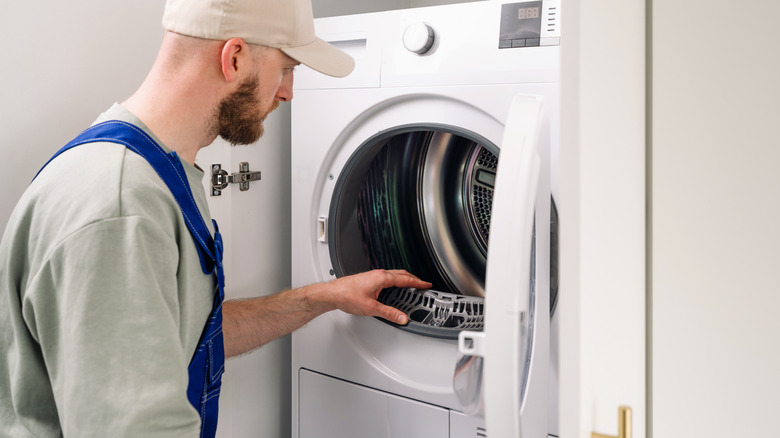
If you're wondering whether it's time to clean your washing machine's inlet filter, the tell is much more subtle than you might expect. It's all about the water. What you want to look for is how water enters the drum, and if you see slow filling, water entering at a trickle, a machine that doesn't fill at all, or a water-inlet error appearing on the display, then that's your tell. Specific models may vary, but overall the consensus is the same — LG specifically lists clogged inlet filters as one possible cause of slow filling while Whirlpool says mineral build-up or other debris clogging the inlet screens can cause a washer to fill slowly.
Now, what exactly is an inlet filter? It's a small mesh screen where the water supply hose connects to the washing machine. It is there to catch debris before they enter the appliance, but over time, mineral deposits, sand, rust, and other bits can collect on the screen and that can restrict the flow of water. And so this can leave the machine waiting for enough water to come in before it can continue with its cycle. If you've ever seen one of those error codes, it could be because the required water level hasn't been reached within a set time. And unlike cleaning the inside of your washing machine, it's easy to overlook a little screen that is tucked away at the back of the appliance. However, checking that little screen may be exactly what you should do if your washer suddenly seems slower to fill than usual.
How to clean your washing machine's inlet filter
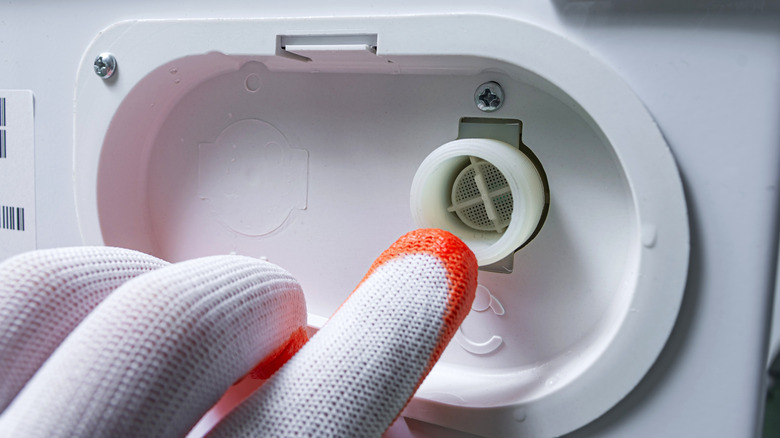
There's no need for complicated washing machine cleaning hacks to unclog the inlet filter. The first move should just be to check your appliance's manual. If you have a model where the filter can be cleaned, the basic process is usually to turn off the water supply, disconnect the inlet hose, and inspect the mesh screen. Advice varies slightly between manufacturers — some advise you to remove the inlet filter and clean away any buildup or foreign objects with a toothbrush whilst others say not to remove the screen and instead gently clean it in place with a toothbrush, soap, and some water. This is why you should always keep your manufacturer's instructions for your appliances.
If, after cleaning, the machine still fills slowly or displays a water-supply error, then the filter may not be the problem here and it's time to check for other issues like restricted or bent hoses, low water pressure, or issues with your home's plumbing. Next time you're shopping for a new washing machine, it's worth keeping this tiny bit of maintenance in mind, as even the fanciest washer will likely experience build-up over time.