

Why Does My Home Smell Like Gasoline?

If you can smell gasoline from inside your home, the likely explanation is that gasoline (or its vapors) have found their way indoors from a vehicle, fuel container, lawn equipment, or a spill. Because the scent of gasoline is so strong, it can linger after the liquid itself has evaporated.
So first, inspect the more obvious culprits. If you have an attached garage and the garage smells like gas as well, then look at your car and the area around any parked vehicle(s) for spills as well as any tools and fuel containers. Anything from a loose fuel cap, small leak, or a recent spill could be leaving behind the gasoline scent, even if it isn't leaving an obvious puddle for you to discover. Because gasoline vapors are heavier than air, they settle in low areas rather than simply floating away. As a result, garages, floor-level storage areas, and other enclosed spaces are really worth checking carefully.
As you are inspecting areas, don't ignite anything, such as a lighter, candle, or match, even a flashlight, as gasoline fumes can travel to an ignition source. Once you've checked everything relevant, remember that gasoline odors stick to clothing, and so the smell could be coming indoors from jackets, shoes, rags, or other items that have been around fuel and doesn't necessarily mean there's an active spill inside your home.
Could it be something other than gasoline?
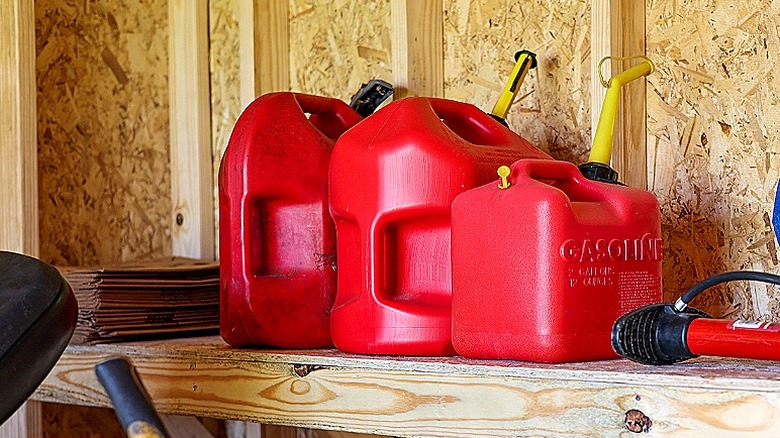
When there's a strong or unexplained odor that goes beyond your home simply smelling a bit bad to guests, it deserves attention. Gasoline vapors are highly flammable and toxic, which is why gasoline-powered vehicles and equipment should never be operated inside a home or even an attached garage, only outside. Once you've ruled out that it isn't your car, any lawn equipment, or fuel containers in your garage, the next step is to assess whether the smell is coming from somewhere less obvious.
A dry drain trap can allow sewer gases into your home. Usually, that curved section of pipe that's beneath a sink or drain will hold water that creates a seal to keep those gases out but if a drain hasn't been used for a while, the water can evaporate which leaves it open. Typically, sewer gas smells more like rotten eggs than gasoline, but sometimes prolonged exposure to a strong odor can make it difficult to discern; this is a phenomenon known as olfactory fatigue.
With that in mind, another possibility worth exploring is that it could be a natural gas or propane leak — natural gas has no smell, which is why an odorant is added to give it a distinctive rotten-egg scent so we know when there's a leak (and you've eliminated it being a dry trap). In this instance, you should vacate the area and contact the appropriate gas emergency service.