

What To Do If You Spot Ant Eggs In Your Home Or Yard

Have you ever dug your spade into a garden bed, only to find you'd hit an ant nest? If so, amid the chaos of the colony, you may have also seen little white ant eggs. Due to caretaking habits in ant colonies, you'll often find the eggs clumped together rather than laid about individually, but some ants will occasionally relocate their colonies, carrying their eggs and larvae with them. In many cases, you may not be able to readily distinguish an ant egg from its other forms. Due to their size and coloration, eggs can look an awful lot like larvae or pupae. However, if you are able to correctly identify the white specks in your home or yard as ant eggs, then you can begin the process of deciding what exactly you want to do about them: leave them alone or begin seeking intervention strategies.
Of course, ants aren't always bad, especially if they're outdoors where they belong, but some species can indicate a problem. Ants trailing over your kitchen countertop might have found a good source of water, food, or shelter in your home — especially if they're willing to move in their young. Knowing what type of ant is plaguing your home can help you decide how to proceed. Because there are many different types of ants you may find around your home and garden, you may experience some variation between their eggs too. For example, carpenter ant eggs are around half of a millimeter long with a tapered oval shape. Depending on the age of the egg, they may be a white or cream color as they mature. Meanwhile, while fire ant eggs have the same oval shape and white coloration, they can be half the size.
Ant eggs around your home may be a sign of bigger problems
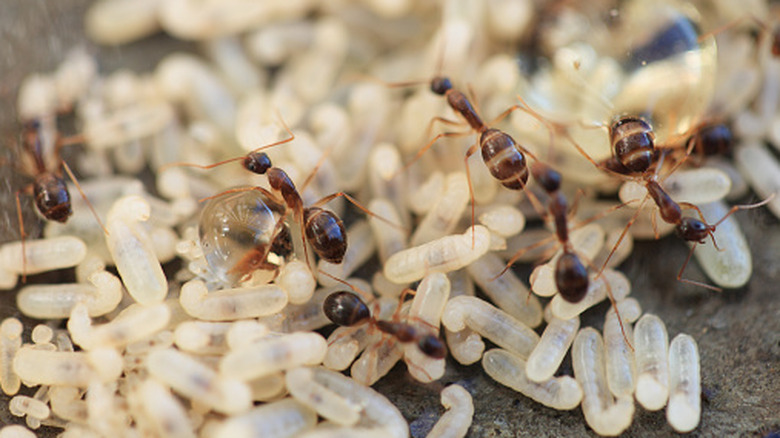
If you see ant eggs, it means the colony is healthy and growing, but it could also mean they're on the move. When ants are inside the house, they become a bigger issue. Carpenter ants and black ants can indicate water-damaged or rotted wood inside your walls, and they'll actively make the issue worse, so it's important to treat the infestation quickly. Indoors, you can often choose between chemical products and traps.
If you'd rather not share your yard with a family of ants either, there are ways to handle that too. Physically destroying the nests as you find them can help keep numbers to a minimum. There are also natural ways to say goodbye to ants, like diatomaceous earth. However, if the infestation is too much to bear, it may be worthwhile to seek a professional's opinion. They will be able to inspect your yard and come up with the best course of action for your unique outdoor space.
When you first spot ant eggs in your yard, you may immediately think that you need to get rid of them. However, so long as they aren't posing a threat to your home or day-to-day life, you can also easily leave the eggs alone and allow the colony to flourish. While they may not seem like much at first glance, ants are invaluable members of the ecosystem. They work as decomposers to clean up dead organic materials, and their intricate tunnel systems can help aerate the soil in your yard while they prey on and remove unwanted invertebrates. Not to mention that their presence can draw in birds, helpful insects, toads, and other animals that bring life to your yard.