

The Unwritten Retaining Wall Height Rule To Know Before Building

After watching the land wash away, you've realized it's finally time to add a charming retaining wall to your sloped backyard. With a little searching and a few YouTube videos, building a retaining wall yourself might not seem so hard. But before you head to the home improvement store to load up on concrete blocks (or whatever retaining wall material you choose), there's one little-known rule you need to follow first: the 4-foot rule.
According to the 2024 International Residence Code (IRC), all retaining walls over 4 feet tall need to have a permit, hence the 4-foot rule. But since the IRC acts as a model code, jurisdictions are permitted to add or amend the requirements as they see fit. To quote the infamous words of Captain Barbossa from the "Pirates of The Caribbean" series, "The code is more of what you'd call guidelines than actual rules." So while the 4-foot rule is a good rule of thumb to keep in mind, always check with your local building inspector to see if you need a permit before you start to dig or build a retaining wall.
There is one important addendum to the 4-foot rule. If your retaining wall will support a surcharge, the IRC requires a permit regardless of its height. A surcharge refers to any extra weight a retaining wall will have to support besides the dirt itself. When it comes to residences, this is often a driveway, sidewalk, or other structure built on top of the soil. In other words, no matter the height of your retaining wall, if you know it will be holding more than just dirt, call the building inspector for local permit details.
Comply with the 4-foot rule when building your retaining wall
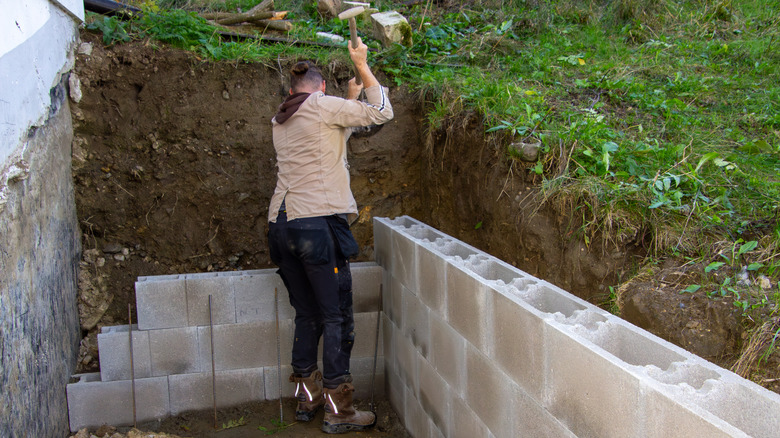
As mentioned, this is one of the home renovations that require a permit before starting, so before you break ground, get in touch with your municipality's building inspector office to find out what their specific requirements are. Professional contractors may also require proof of a permit. Luckily, many are familiar with this unwritten rule and willing to help or include permit fees in their contract. Obtaining permission for your retaining wall is more than just a good idea for legal reasons; it's also critical for building a durable, safe retaining wall that stands for years to come.
Most jurisdictions require permits out of a concern for safety. Shorter retaining walls with no surcharge are generally less likely to topple over, and even if they do, would rarely lead to significant property damage or injury. Once a retaining wall reaches a certain height or has a heavy surcharge, the pressure behind it might be enough for it to fall if its not built correctly. Failing to get a permit can also result in fees and other penalties, so it's better to be safe than sorry.
How do you know the actual height of your retaining wall? You can't just measure from the soil to the top edge. Instead, you'll need to measure from the bottom of the retaining wall's foundation, known as the footing. The footing is typically 12 inches deep, depending on the planned final height to the top of the wall. The depth of the footing is a required measurement in many cities to ensure your retaining wall can safely hold back the weight of the soil and stay strong in whatever weather weather comes your way.