

Not Daisies: The Flower That Blooms Into Fall That Gardeners Have Forgotten About
While at first glance this flower might look like an ordinary roadside weed, frost aster is actually a very overlooked native perennial with a useful feature. Namely, it keeps producing its tiny white blooms after many other summer flowers have given up the game. Frost aster (Symphyotrichum pilosum) is hardy in USDA Zones 4 through 8, making it suitable for a variety of climates. Flowering for around four to six weeks in autumn, it produces adorable daisy-like blooms with a yellow center and white petals. As the flowers age, those yellow centers can blush a little red, changing up the look of the plant with the season.
This native aster gets its nickname from the little white hairs that cover its leaves and stems, which give it a bit of a frosted look. You may also see this plant referred to as "hairy aster", and you can understand why gardeners might often overlook it. The flowers that appear on its branching stems are quite small, though the plant itself can reach 4 feet tall and has a bit of a wild appearance. So no, it isn't very showy, but the understated look can work well when creating a spectacular fall garden, especially when paired with larger blooms and plants.
Why frost aster deserves a place in the fall garden
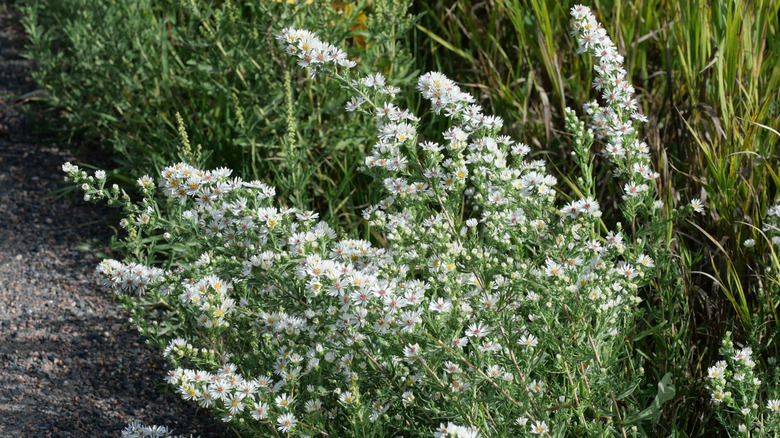
By August or September, most summer gardens are looking a little worse for wear. But that's when frost aster is only getting started. Like many other asters, you can start frost aster from seed in the spring or propagate it in fall. When it blooms, it blooms in abundance, which can create a soft misty effect around your garden that lasts into November. This plant can work well to fill gaps between larger autumnal flowers and plants, and it's an important source of food for pollinators during a season when fewer flowers are available. Frost aster should bring bees and butterflies to your garden even as the weather has started to cool.
The trade-off lies in how it grows. Frost aster often gets an unfavorable reputation for being a weedy nuisance, but it's actually more of an aggressive opportunist — and yes, there is a difference between invasive plants and aggressive growers. The plant can spread fast through both seeds and rhizomes, but that freewheeling habit is also what makes the plant interesting to many cottage-style gardeners. Planting it closely with other flowers can help keep it from rapidly taking over the area. Frost aster offers less of a polished plant look and more of a wildflower effect, and being a perennial, it will overwinter well in the right zones. If you're thinking about planting fall flowers for a colorful landscape and wondering which to choose, frost aster is a lovely reminder that you don't need to rely on chrysanthemums alone for some autumnal blooms.