

11 Popular Houseplants Ranked From The Hardest To Easiest To Keep Alive
Even though I'm a master gardener with over twenty years of experience in growing things, I find it much easier to keep plants healthy outside, in the ground, or even in containers. I love houseplants, but some are fussy and really quite difficult to care for. I have to admit that I generally prefer things that don't need my constant attention, monitoring, and humidity checks. I don't want to have to coddle plants that can't cope with the slightest draft or temperature change.
Having said that, I do have a lovely collection of succulents that live happily in my house, but there are many plants that I wouldn't gift to a beginner or somebody who is perhaps a little forgetful. A number of houseplants don't do well without somebody fussing over them regularly. There are, however, a number of tough houseplants that are really hard to kill, even if you try. Things like a ZZ plant, monstera, or pothos, which may get a bit stringy in low light or with lots of neglect but still survives. All are suitable for people who couldn't manage to keep something particularly fussy like a gardenia or maidenhair fern alive.
Methodology
Out of the countless different houseplants available, I chose a selection of popular ones that are often sold with no special instructions, and then I ranked them by how easy they are to keep alive. I looked at light, humidity, temperature, and watering requirements, as well as pest susceptibility. I also considered how badly the plants react to neglect, helicopter parenting, and inappropriate growing conditions, in addition to how easy they are to keep healthy and alive in a normal household.
11. Gardenia
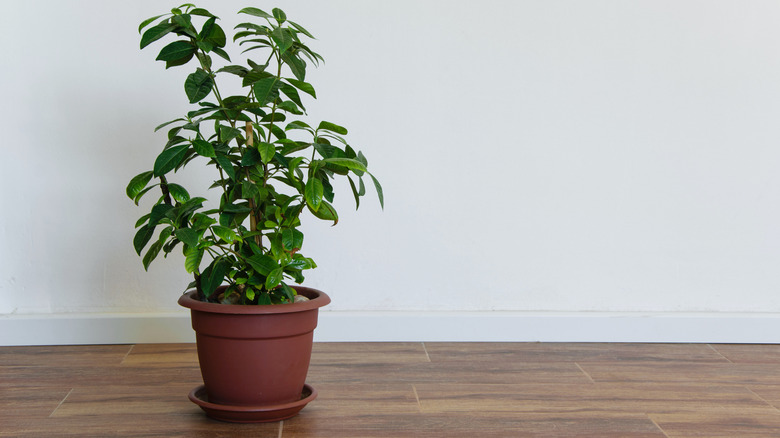
When gardenias flower, they are beautiful. It's like having a vase of cut flowers in pot plant form. But they are fussy and notoriously difficult to get to come into full flower. The most common problem people encounter is called bud blast or bud drop. The leaves are a beautiful glossy green, and are firm and upright. You see a good-sized crop of beautiful, fat flower buds and you think any day now they are going to burst open and give you an amazing show of yellow or white flowers. Instead, seemingly out of nowhere, the gardenia gets upset and drops every single bud before they can open and flower. It's infuriating. Bud blast can be caused by pretty much anything that the gardenia doesn't like, which can include temperature fluctuation, irregular or inappropriate watering, low humidity, or lack of light. Even simply moving a gardenia that is budding up to a new location within the same house can be enough for it to lose all its buds.
Another common issue that can cause problems with gardenias, including bud drop, is the potting mix becoming too alkaline over time in hard water areas. If this is the problem, you may also notice chlorotic yellow foliage, even though you are fertilizing it right on schedule. To rectify this particular issue you would need to repot the gardenia in an ericaceous growing medium. If you live in an area with particularly hard tap water, you may want to switch to using rainwater. Gardenias also need bright light, consistently moist but not soaking compost, high humidity, and stable, warm temperatures. And remember that it also doesn't like being moved, particularly if it's developing buds. If you have a tendency to be a helicopter plant parent, gardenia may be the right choice for you.
10. Maidenhair fern
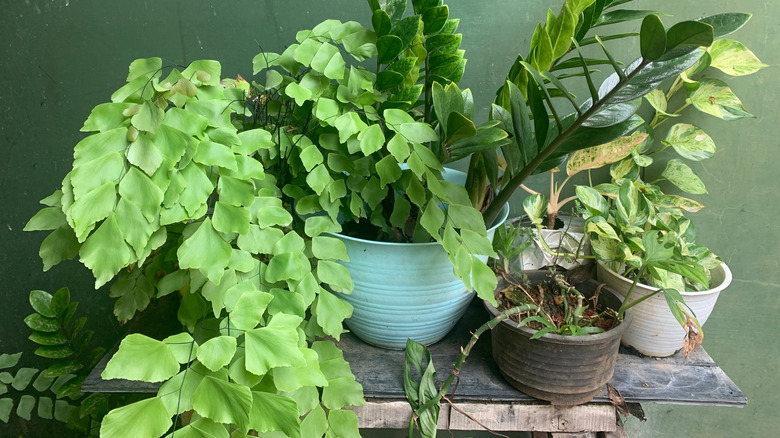
Unlike succulents that have plenty of water storage, the maidenhair fern does not do well if it gets too dry. If the root ball dries out completely, the thin, delicate fronds that give the maidenhair fern its name simply die off. They don't tend to recover once they start shriveling up. If you accidentally forget to water the maidenhair and don't remember until you see the fronds begin to get dry and crispy, it may already be too late for those particular fronds.
This is a high-maintenance houseplant that you may want to switch for an easier alternative like bird's nest ferns. If you do lose some fronds to excessive dryness, get the plant back on a regular watering schedule and just snip off the damaged pieces of foliage. The other main thing you have to watch for with the maidenhair fern is humidity. This plant does not like excessively dry air, so you shouldn't keep it around radiators or forced air heating. It does better with high humidity so a bright bathroom is a better option as long as there's adequate sunlight. If you want to get really fancy, keeping a maidenhair fern in a terrarium is an even better choice, because a closed terrarium will maintain the moist atmosphere that this particular plant needs to really thrive.
9. Calathea
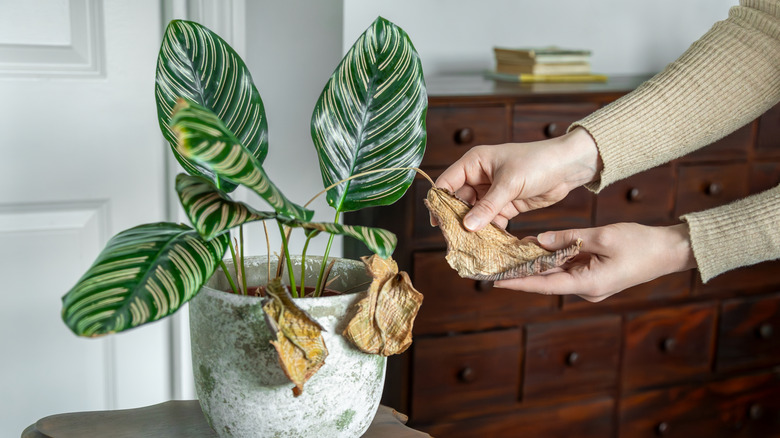
It's not easy to keep a calathea looking good. Whenever there's something wrong with the plant, it will usually let you know via its leaves. If the humidity is too low, the leaf margins get crispy. If there is moisture or temperature stress, the leaves curl or roll. If you see fine pale speckling on the leaves or wispy webbing between them, there is a good chance your calathea is both too dry and playing host to spider mites. Calatheas are among the plants that are particularly susceptible to red spider mites when indoor conditions are too dry.
Those expressive leaves are one of the reasons that calatheas are so interesting. Many species have leaves that naturally raise or fold up at night through a process called nyctinasty. Some calatheas are overly sensitive to minerals, too. If you know all of your other conditions are within range, including both humidity and moisture, but you're still seeing scorched leaf tips, you may want to consider switching to rain water or distilled water, or at the very least filtered water. Calatheas are not the best choice of plant for forgetful people or those new to houseplants. There are better alternatives to high-maintenance calatheas, like begonias or peperomias.
8. Fiddle leaf fig
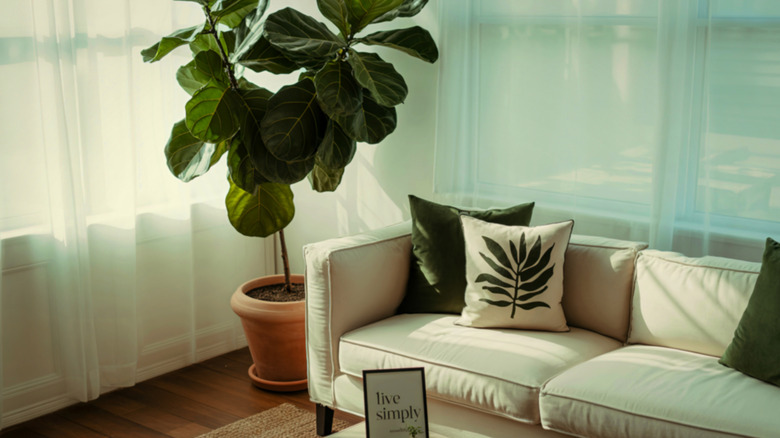
Fiddle leaf figs, with their enormous dinner plate size leaves, are wonderfully dramatic, but it also means that one brown patch or, worse, a whole brown leaf can make your fiddle leaf fig look like it's hit dire straits. These beautiful tropical plants don't like too much direct sun, as it can scorch the delicate leaves. Temperature fluctuations can also cause brown spotting. Finding the right watering level is challenging, as both excessive and insufficient watering causes the fiddle leaf fig to drop its leaves. They also don't like being relocated and moving. Even an otherwise healthy plant can drop its foliage until it adjusts to its new environment.
Fiddle leaf figs can also get leggy, and you end up with a tall skinny plant with a random and oddly glorious tuft of leaves right at the top, with nothing below. If this happens to your plant, you'll need to pinch the growing tips to encourage the plant to get bushy instead of continuing to get crazy-tall. You can also cut back a tall stem and it will re-sprout from the trunk, as fiddle leaf figs can produce new growth below a pruning cut. If you go this route though, just remember to wear gloves, as the milky sap can irritate your skin.
7. Phalaenopsis orchid
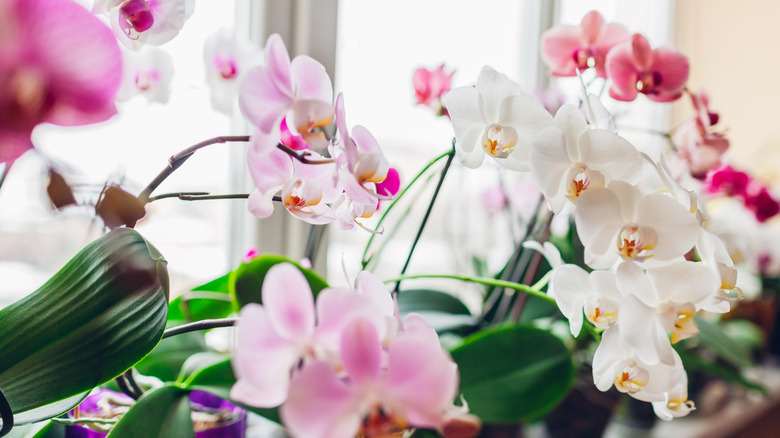
Phalaenopsis orchids look slightly alien and pretty fussy because of the delicate flowers and weird out-of-the-pot roots. And although there are a few problems that can keep moth orchids from growing, they aren't that difficult to keep, even if you're reasonably new to houseplants. This particular plant is an epiphyte, and so it puts out those thick odd-looking aerial roots. The mistake newbies tend to make with these plants is tucking those roots back inside the pot or chopping them off. Don't do either. Even though they look a bit random, those aerial roots are supposed to be sticking up out of the soil and maintaining airflow around them is critical. The other thing that often trips people up is letting water collect in the crown of the orchid. You don't want water sitting between the leaves as this can encourage rot, so be cautious when you water.
Moth orchids require water roughly weekly during the growing season, and 10 to 14 days through winter. You'll also want to keep humidity at between 50% and 80% for these orchids, which will likely involve sitting the plants in trays of gravel with a small amount of water in the bottom. This will increase humidity around the plant, without impacting airflow or encouraging fungal pathogens.
6. English ivy
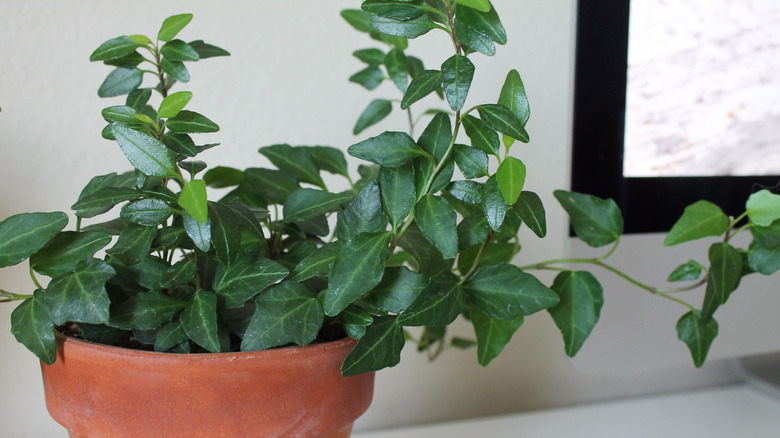
As a houseplant, English ivy is fairly robust, but it does have one particular weakness that can quickly cause it to deteriorate, and that is spider mites. The warm, dry conditions of most households that English ivy grows so well in also suit spider mites. If you notice leaf damage and fine webbing on the underside of ivy leaves, you've most likely got a spider mite infestation. These pests are one of the most common indoor ivy problems you'll encounter.
To keep your ivy looking full and dense, you need to prune it, as this encourages bushier growth as shoots get excessively long. One of the most popular types of English ivy to keep as houseplants are the variegated varieties. If you have one of these, pay attention to new shoots, as some will be all green. These are generally more vigorous than the variegated shoots because they have a greater capacity to photosynthesize, due to the fact that they have more chlorophyll. You need to remove those reverted shoots at their base as soon as possible so that they don't out-compete the variegated growth. You must also remember that English ivy is invasive, so it must not escape your house. That means that if you accidentally kill it or think you've killed it, you can't just throw it on the compost heap. Also, your trimmings must be contained, so you'll need to bag them and put them in the trash.
5. Peace lily
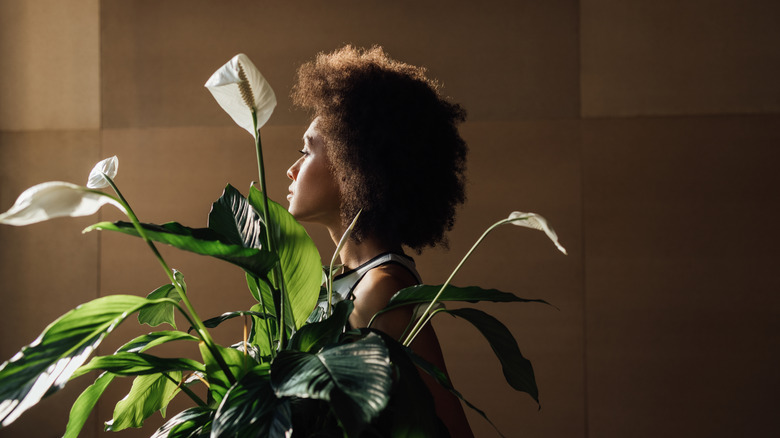
It's fairly easy to care for a peace lily, because it's very obvious when it needs to be watered. Unlike a ZZ plant, which takes many weeks to show you it has a problem, if you forget to water the peace lily, it will very quickly droop. It flops dramatically like a Victorian lady on her fainting couch. If you act quickly and give the peace lily a drink, it will perk back up in short order.
The peace lily ranks relatively high on my list of plants that are difficult to kill because, aside from silently screaming at you when it needs a drink, it can also tolerate low light. Peace lilies can cope with deep shade for a long time, but I still wouldn't recommend that you permanently keep your peace lily in a dark room, as you'll find that growth slows and you will be very unlikely to see it flower. It needs a nice, bright position with plenty of indirect light to really live its best life. If you've got a peace lily that hasn't done much of anything for a year or so, try moving it into a brighter location before assuming it needs extra fertilizer.
4. Monstera
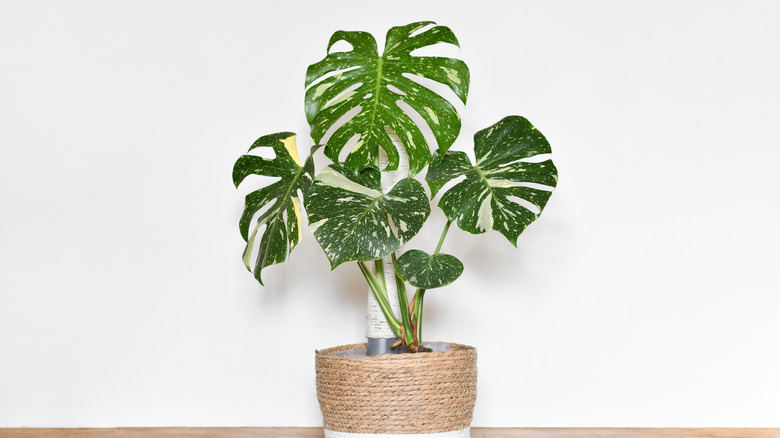
Monsteras look like they should be harder to keep alive than they actually are. These big dramatic tropical plants are surprisingly easy going. They grow pretty fast and can cope with typical household conditions well and require relatively little effort from you. You do need to get the set up right though, as monsteras are technically climbing plants, even though many novices try and grow them as upright shrubs.
What happens then is that as the monstera starts to attempt to climb as it matures, but it's got nothing to climb onto, so it starts sprawling outwards. This can weaken it and make it take up a huge amount of floor space, and can mean your monstera won't develop the classic splits in its leaves. It needs a good sturdy moss pole or some other kind of suitable vertical support that the aerial roots can anchor into so it can continue its upward growth. You'll see your monstera start to put off weird brown finger-like bits. These are the aerial roots. Let them anchor onto the moss pole, and don't be alarmed once your solid leaves start to get holes in them. Monstera naturally have fenestrations in their leaves, which is a fancy term for their characteristic holes and splits. As your plant gets more mature and that particular leaf gets older, its fenestrations become more pronounced.
3. Pothos
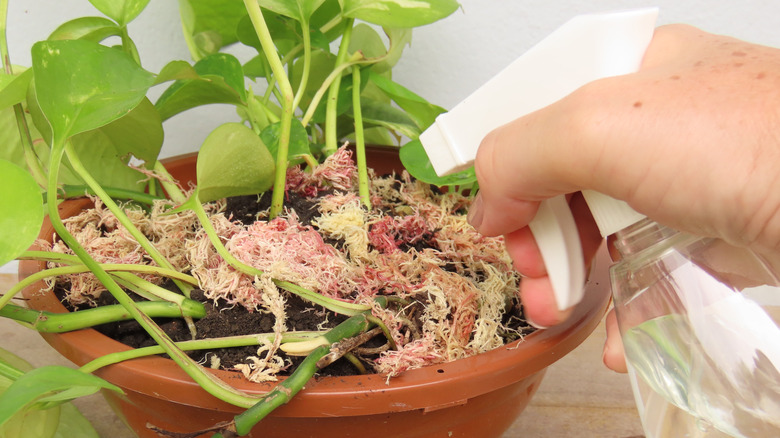
You have to work pretty hard to kill off a pothos. Although these plants aren't literally indestructible, they are very tolerant of black thumbs and new or forgetful plant parents. The humble pothos can cope with imperfect lighting, occasional missed waterings, overly aggressive pruning, and general neglect. It will survive in lower light, but variegated cultivars tend to lose their variegation and go back to green if the conditions stay too dim for too long. Additionally, neglected pothos vines tend to get long and straggly with increasingly bare patches and a sparse crown. Older plants also lose their leaves and develop woody-looking crowns, so they do require some maintenance. You take a long, healthy stretch of vine, curl it gently back on itself, and tuck a node on the vine back into the pot so that it can root and form another vine. It will eventually mask the bare older woody portion.
Many people make the mistake of letting their pothos trail downwards over the side of the pot, but pothos has aerial roots and it wants to climb. If you let it trail, you'll find that the leaves are smaller and farther apart, whereas if you let its aerial roots cling on to a moss or coir pole, you'll get thicker growth and much larger foliage. While pothos is quite easy to keep alive, it's not necessarily easy to keep it looking in spectacular condition, and it does need a little bit of maintenance for it to stay full and healthy.
2. ZZ plant
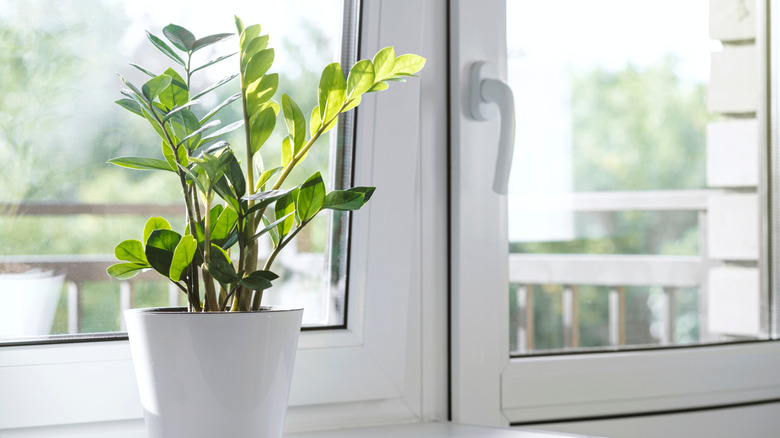
Periods of low light and forgetful plant parents don't bother ZZ plants. They are astonishingly tolerant and are well known for being practically unkillable. Caring for a ZZ plant is easy. This hardy indoor plant, with its dark green glossy foliage, is a good pick for houseplant newbies. While they can tolerate low light, it will slow down their growth. They do better with bright indirect sunlight though, as continuous low light can slow their growth. While ZZ plants can survive harsh conditions, they most definitely won't thrive in them. ZZ plants also don't like to be too cold as they come from Africa, so it is a good idea to keep them away from cold drafts and air conditioner vents.
One of the main problems with the ZZ plant is that it's slow, even in perfect temperature and light conditions. It takes ages to grow and just as long to show symptoms of a problem. Many inexperienced houseplant keepers end up thinking that there's something wrong with the plant because it's not growing, and so they water or they fertilize to give the plant a boost. Because it doesn't respond in just a few days, they repeat the process. Eventually the ZZ plant develops root rot or other issues caused by the buildup of fertilizer salts in the soil. Not throwing off loads of new growth doesn't necessarily mean there's anything wrong with it. If you're still convinced there's something wrong with your plant, take a little look inside the pot at the roots. ZZ plants have rhizomes and these should be firm and pale. If they are soft, brown, or collapsing, then your plant most likely has root rot.
1. Snake plant
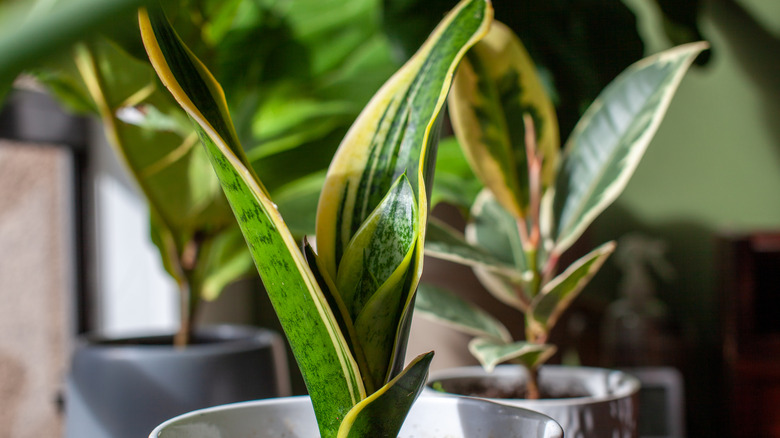
Snake plants are one of the very easiest houseplants to keep alive, even if you struggle with most other plants. There are few houseplants that will tolerate inconsistent care and neglect as well as a snake plant. The cast iron plant comes close, but it's not quite so tolerant of overwatering as the snake plant. It's one of the hardest plants to kill by accident. As with many plants though, overwatering consistently is the biggest reason that a snake plant will fail.
They have fleshy, underground tuberous rhizomes that store water, and if these end up sitting in wet soil, they will rot, which kills the plant quickly. But generally speaking, they are a great plant for black thumbs and new plant parents. They do well in spare rooms, offices, dorms, and first apartments, and they're great plants for people who travel a lot. Admittedly, they grow slowly, but they will still stay alive even if their owners are neglectful or forgetful. The thick leaves of the snake plant also hold water, so it can handle missed waterings without issue. They cope well even with dry indoor air and can survive in low light and fluctuating temperatures. Water them sparingly and generally leave them alone. If you have a variegated variety, it's a good idea to make sure it gets plenty of bright but indirect light, otherwise you may find it reverts to its solid green form. In spite of their easy-going nature, you can employ a few clever care tips to keep your snake plant thriving.