

How To Repel Ants Using A Clever Soapy Water Hack
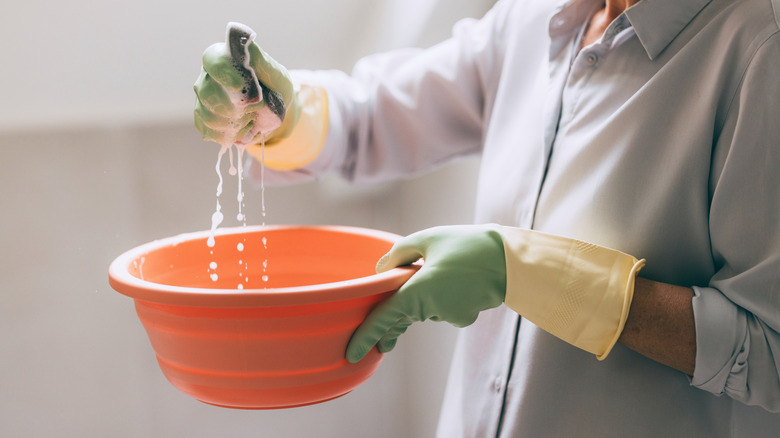
Whether they're marching along your baseboards or scuttling along your countertops, if you have them in the house, you're probably frantically searching for methods to repel ants. Fortunately, there are several methods that you can use, but one of the easiest and fastest ones is to reach for the cabinet beneath your sink. Provided that you have a bottle of dish soap there — and, ideally, a cloth — then all you'll need to add is water.
Now, before you dash off and begin spraying at that line of ants, hold your fire. The goal with soapy water is not to attack the ants directly. Instead, the idea is to first watch where they're marching to and from, make a note of their route, and then use your solution to wipe down their trail. And before you say anything, we know. It sounds counterintuitive. Surely the best way to get rid of ants is to spray them on sight and be done with it? Well, that might help in the very short term. But if you employ a little patience, and use your soapy water (and a cloth) to wipe their trails down, your plan of attack is likely to be more effective.
Wiping their trails down with soapy water cleans away the pheromones that ants use to navigate between their nest and whatever it is that's attracted them into your house. Of course, if you don't also eliminate said attractant, then they may eventually come back. But as part of a wider ant-control strategy, a little soap and water could buy you the time you need to work out what's attracted them and deal with it.
What to do after wiping the ants' trail with soapy water
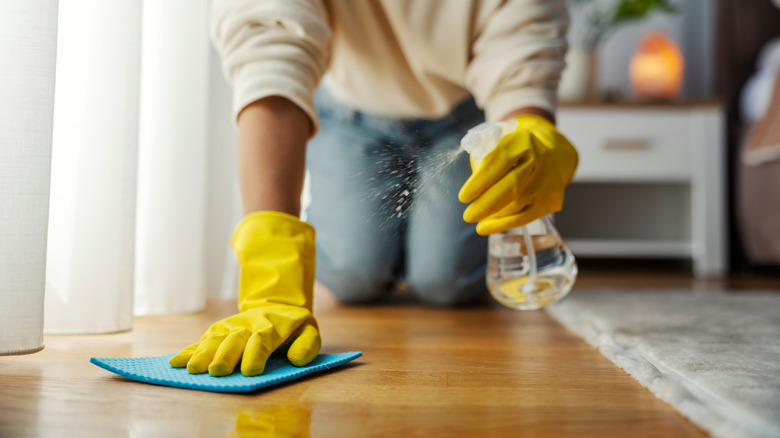
Wiping their pheromone trails with soapy water will help to throw the ants off the scent. But if you don't work out what tempted them indoors in the first place, they could eventually come back. It could be food items that aren't properly sealed, or a sugary spillage that's been left uncleaned. Dealing with such issues, and generally maintaining a clean household, can help reduce the chances of a repeat invasion. You should also work out how they managed to get inside. There could be a fault in your window seal that's granting them access, or a crack in your home's foundations. Whatever it is, fixing it can help to keep ants out.
Of course, that doesn't help if the problem is coming from inside your house. Some ants often nest inside homes, like ghost ants, and they can be tricky to root out once established. Generally speaking, you should avoid spraying the nest with anything — including your soapy water. This rarely kills all of the ants, and in some cases, can encourage the nest to divide into smaller colonies. Instead, use bait stations. These are available with different types of bait, depending on which species of ant is plaguing your home. When the workers find the poisoned bait, they take it back to the nest to feed all of the other ants, including the queen. Just know that baiting can take several weeks to work, and you may need to apply it several times for larger colonies. It can also be ineffective if you place the bait in the wrong place. If you're unsure, or you're still seeing lots of ants after several weeks of baiting, then the best advice is to call a pest control professional.