

Why Faded Blooms May Be The Key To Keeping Birds Happy During Fall
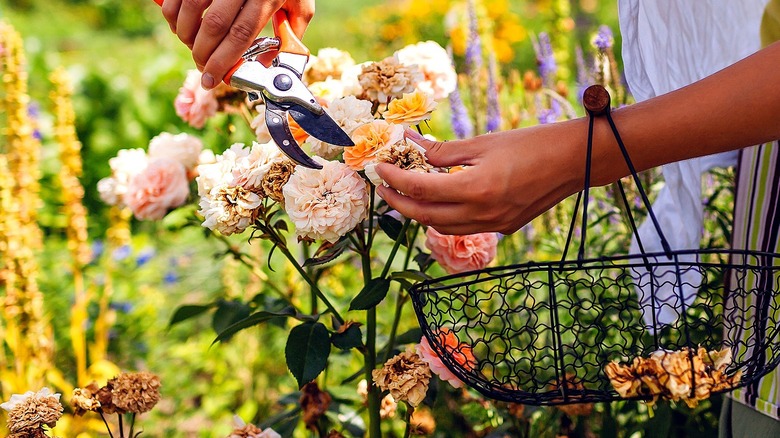
If you immediately snip dead blooms off your flowers — welcome, you're in good company. (We've even made club jackets.) After all, we've been told time and time again that it is the best way to keep your plants happy and blooming throughout the summer season. But don't get too snip-happy just yet; leaving a few deadheads on your plants in late summer may actually be doing the local birds a huge favor.
Don't get us wrong, deadheading isn't all bad. It can help your flowers create bloom after stunning bloom, cut down on self-seeding, and keeps your yard looking tidy. But is deadheading your entire garden an absolute must? Your local birds would likely vote no because those dried flowers and their seeds (or pods), when left alone, are considered gourmet meals for birds and other small wildlife in the colder months. What's more, the leftover plant stems holding up the faded flowers can be a refuge for birds on their long winter migration.
This said, there's one potential downside to letting your flower blooms turn into seed: self-seeding. By nature, plants create seeds as their flowers or fruit fade to ensure new plants. By not snipping these from your plants, you might have a few more volunteer plants sprouting up in that garden bed, or even in unexpected places next year. It's not the worst side effect in the world, though. At best, you have some extra color in your yard next summer; at worst, it's a tad bit more weeding to do come spring.
Skip deadheading to create a buffet for birds
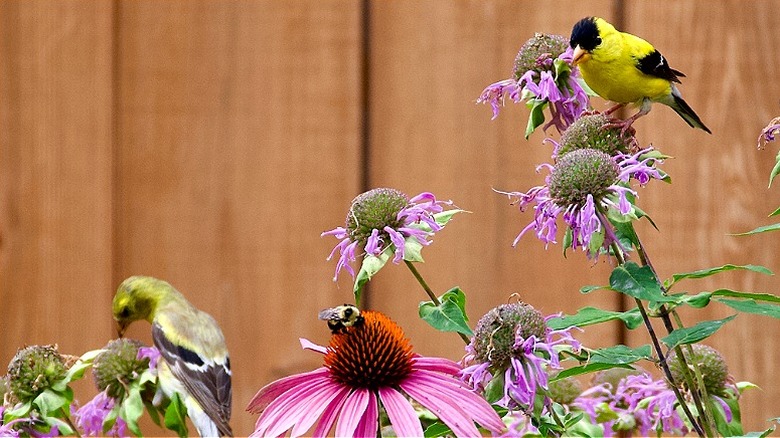
One of our favorite things about this hack is the simplicity of it. By simply not deadheading your old flowers and letting seeds develop, you'll have birds flocking to your yard in the fall. The first question many gardeners will have, though, is, "What plants should I leave for the birds?" And the answer is, it depends.
There are definitely certain plant varieties that attract fall birds more than others, namely coneflowers (Echinacea), sunflowers (Helianthus), American senna (Senna hebecarpa), Maryland senna (Senna marilandica), and Black-eyed Susan (Rudbeckia). That said, wildflowers and plants that are native to the area are always an excellent choice. And, when in doubt, ask your local Audubon society or master gardeners for the best plants for your area's birds.
If the idea of an untidy garden is more than you can handle, however, yet you also want to help the wildlife, we've got good news: You don't have to choose one or the other. Instead, create essentially a bird buffet bouquet. Deadhead your plants as needed, leaving the stems as long as possible. Gather the stems into a bouquet, ensuring the faded blooms and seedheads are facing outward, then tie them together.
Once secure, hang the seed bouquet from a nearby branch or in a quiet spot in your yard that passing birds can easily see, stop at, and enjoy as late summer turns into fall. And if you have lots of big blooms that won't fit into just one bouquet, lay them face up on flat surfaces or slide them into slats in your garden fence.