

The Homemade, Affordable Potting Mix Solution That's Just As Nutrient-Rich As Peat
We may receive a commission on purchases made from links.
Lots of people use peat-based potting mix because it's what they've always done. Plus, it's undeniable that peat is excellent for seed starting mixes because it holds moisture and is full of nutrients so it makes an excellent growing medium. But peat is also a finite resource and it plays such an important part in carbon storage. And peatlands are habitat for countless creatures. Transporting peat from where it's harvested to where it's eventually sold can add to its environmental footprint as well. The amount of people who want to lower their carbon footprint and grow organic food and those who just want a sustainable garden but thoughtlessly buy peat-based seed starting mixes staggers me.
I'm a master gardener and a permaculture specialist with over 20 years of experience, and I've been making my own potting mix for much of that time. And it works. If I can manage to grow healthy, productive crops and beautiful ornamental flowers year after year without using peat, then so can you. Plus, of course, because my focus is on permaculture and sustainability, it would be wrong of me on so many levels to use peat for my plants. I've experimented a lot and found the ratio of three simple ingredients that work well for me as a base recipe. If you don't want to go to all that fuss (it's not much fuss, I promise), there are many types of potting mix that don't contain peat available to buy. But if you want to try your own, all you need is finished compost, coco coir, and perlite.
Why you may want to avoid peat-based potting mix
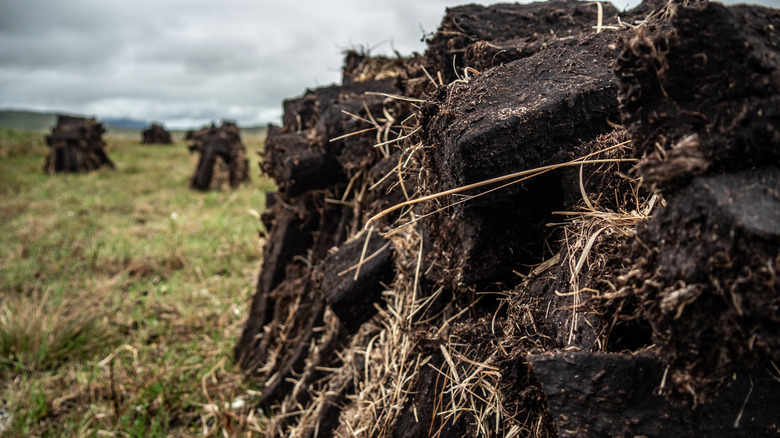
Using peat is an old-school gardening habit that needs to be forgotten. One of the reasons that people still choose to use peat-based mixes is because they don't understand why peat is so important. People assume that peat is just spongy soil, but it's much more than that. Peat accumulates extremely slowly, often at a rate of around 1 millimeter per year, meaning a meter of peat can represent roughly 1,000 years of development. Peatlands are incredible habitats and support a huge number of rare and endangered species of plants and animals, but more than that peat stores carbon, and not just a small amount. The few remaining peatlands in the world actually store double the amount of carbon as all of the forests on Earth combined, which, when you think about it, is truly remarkable. Draining, disturbing, or extracting peat can expose stored carbon to decomposition, resulting in greenhouse gas emissions.
Peat is far more than moisture-retentive soil. Plus, of course, not everywhere has peatlands so the product ends up being flown or shipped hundreds or thousands of miles across the globe, making it even more expensive in terms of carbon. And if you still don't think that peat is remarkable and should be preserved, remember that 30% of all of the carbon that's stored in soil is stored in peat and yet peatlands only cover around 3% of the Earth's land area. If we continue to damage and deplete our peatlands, we are significantly worsening the climate crisis. There is no good reason to do it when you can make your own potting mix out of simple, inexpensive items.
How to make your own peat-free potting mix
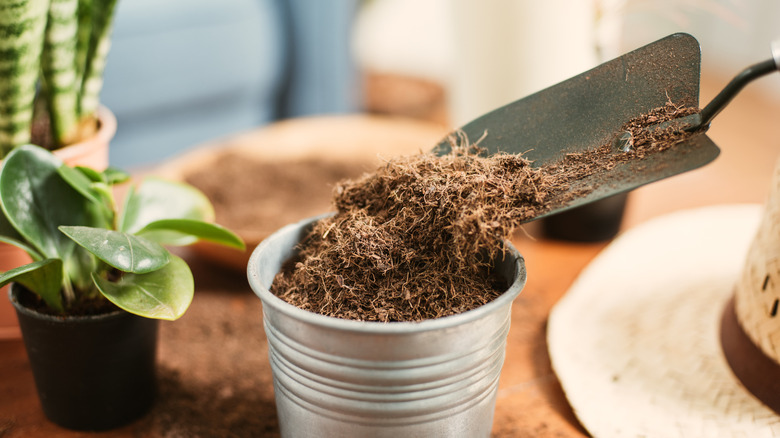
Every gardener who makes their own potting mix ends up with their own unique recipe. Once they gain some experience, they tweak the recipe a little to suit them. If you're new to making your own mix then I strongly advise you to start with an absolute basic recipe that you can tweak yourself as you gain confidence and find out what works for you. You don't need fancy seed starting mixes. For a basic homemade mix, you can start with a straightforward recipe and adjust it according to what you're growing. My base recipe is one part coco coir or coco peat, pre-soaked because it expands quite a lot, one part perlite, and two parts compost. Plantonix organic coco peat blocks are a good price and good quality, as is Plantonix perlite bliss organic horticultural-grade perlite. For finished compost, I use my own.
The coco coir is doing most of the work that peat would ordinarily do. It holds moisture while managing to keep the whole mixture nice and light with good structure. The perlite is for aeration and drainage, and the compost provides the rest of the structure and nutrients. Start with your coco coir and follow the directions on the pack to get it to expand. Once that's done, add your perlite and mix. It's the best way to get the perlite evenly through the mix. Finally, mix in two parts finished compost until the ingredients are evenly distributed. It's as simple as that. The result is an inexpensive peat-free growing medium that can be adjusted according to the moisture, drainage, and nutrient needs of your plants. For an extra nutrition boost, you can also mix in a half cup of worm castings. If you find this mix doesn't retain enough moisture, you can adjust it a little or try switching half of the perlite for vermiculite, which retains more moisture.