

These Fall Flowers Could Spell Doom For Pollinators In Your Yard, But You Should Plant Them Anyway
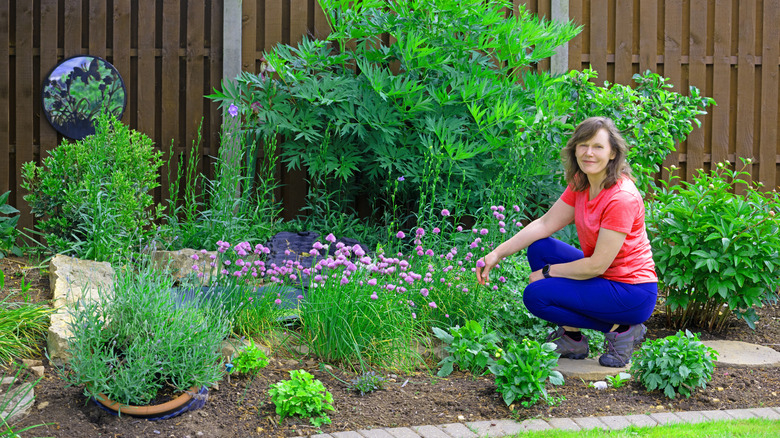
When you're starting a pollinator-friendly garden in your yard, you may learn one fact very quickly: those pollinator-magnet plants are indiscriminate. As a result, while your goal may be to attract more butterflies, bees, and other beneficial animals to your yard, other animals may also be drawn to these wildlife hotspots, and that includes predators. This means that flowers like goldenrod and aster may be some of the best pollinator-friendly flowers to add to your yard to attract more pollinators, but they could also spell doom due to one specific arachnid that they invite.
Don't let their small size fool you — flower crab spiders are skilled ambush predators in the garden. Goldenrod crab spiders have the interesting ability to change their color, switching from white to yellow thanks to their ability to produce pigment. Once they're the perfect shade, they can lay in wait on flowers, blending it well enough that they can then ambush any visiting pollinating insects that are small enough to become their next meal. Bees are a major menu item for these arachnids.
Of course, any plant in the garden can attract predators that pose a risk to your favorite pollinators. Other plants may attract other types of spiders, and some flowers may also attract omnivorous birds who are just as happy to make a meal out of pollinating insects as they are seeds. As a result, when considering the benefits of goldenrod and aster, it's often worthwhile to add these flowers to your garden anyway.
Why you should plant goldenrod and aster anyway
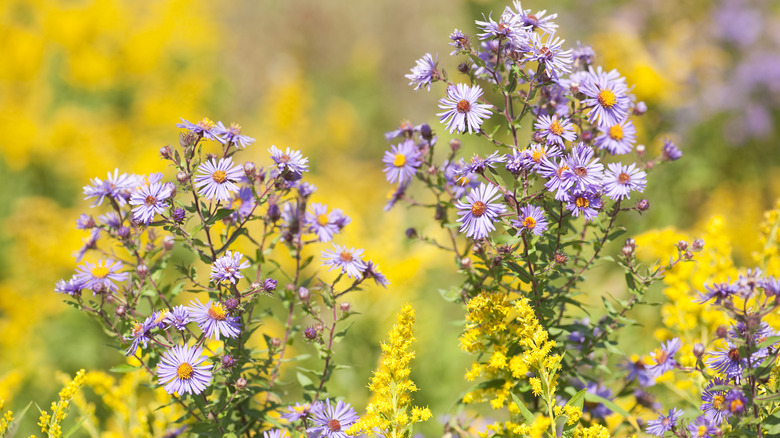
There are a few main reasons that you should plant goldenrod and aster anyway, despite the fact that they can also provide a safe haven for the occasional pollinator-targeting predator. Goldenrod blooms throughout the summer into fall, with some species sporting flowers up until October. Asters sport a similar bloom time, often starting to show off their bright colors around August and beginning to fade in October. Because of this timing, goldenrod and aster can last well into the later season when other plants that pollinators rely on are no longer available. While many people may think of spring and summer as the only times that pollinators are important, they remain significant even as the weather grows cooler, and long-lasting or late-season blooms like goldenrod and aster provide the perfect way to help care for your local pollinators while adding a splash of vibrant color to your yard.
There's also the benefit of the various species that goldenrod and aster attract to your yard. Together, goldenrods and asters provide day-to-day essentials for several different species of wasps, butterflies, moths, arachnids — including predators like goldenrod crab spiders — and more. Some of these species may rely on these flowers for food, while others use them for shelter during the breeding season or over the winter months. Goldenrod specifically provides for eleven native species of goldenrod specialist bees, helping create a more native-focused garden and bring more pollinators to your yard that may otherwise not visit. So, even though they may attract pollinator predators, the benefits of planting these species still outweigh the negatives.