

Is It Okay To Hose Down A Wasp Nest?
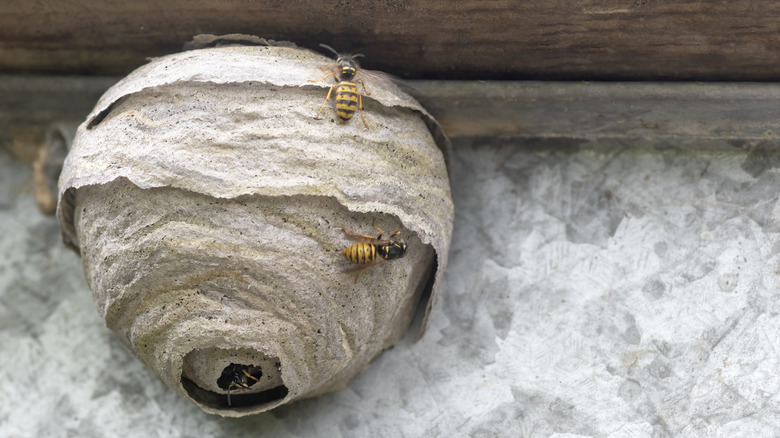
Nothing quite ruins a nice summertime lunch on the patio like a curious wasp buzzing around and potentially stinging someone. You could get over an odd solitary wasp, but a whole nest is another story. Naturally, you may think destroying the nest by hosing it down with water is a good way to say goodbye to wasps. Sure, why not flood it, maybe dislodge it, and kill some bugs in the process? But is that really a good idea? Well, not really.
Flooding a nest to get rid of these insects isn't a technique advised by pest control professionals. The main concern is safety (you might get hurt), but also efficiency (it doesn't work that well). If the nest is really close to where you eat and live, or if someone in your family is allergic to stings, there are other ways to handle the nest. And if it's far enough and not a danger, you might be surprised to learn that leaving it alone could be beneficial to your yard.
We know wasps have a bad reputation, especially compared to their cousins, the bees, but they're actually quite good for ecosystems. The first reason is that they are accidental pollinators, carrying pollen from plant to plant. And more importantly, they're a sort of natural pest control. They hunt insects that you don't want taking over your garden, like aphids, caterpillars, grubs, and weevils. Also, there are different types of wasp nests, and they're not all active. Each year in the fall, wasps die, and the queen alone makes it through winter to build a new nest the following season. Old nests aren't typically reused, so you don't need to worry about those.
Why hosing down a nest isn't a good idea, and what to do instead
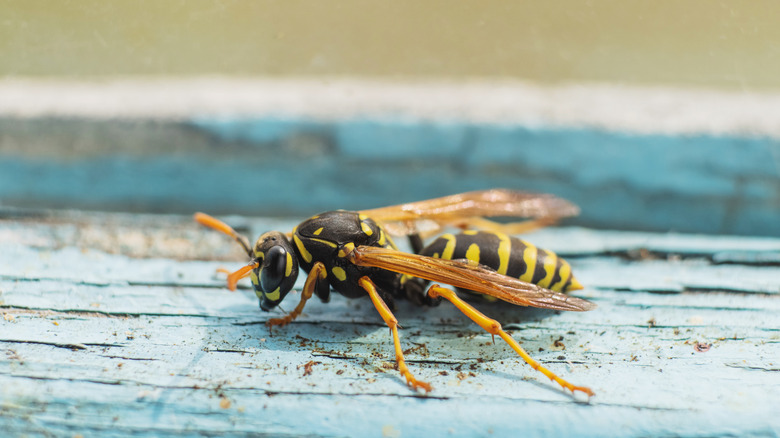
Like many DIY pest control solutions, hosing down a wasp nest might work in some cases, but the risks outweigh the benefits. As you might have noticed, wasps don't just sting you for no reason. It's not to say they're not dangerous, since they'll often sting in self-defense when you step on them, if you mistakenly swallow one with your food, or if they get caught in your clothes. Still, they don't just come out of nowhere to attack, unless, of course, they're being threatened. So, one way to make a wasp aggressive and vicious is to mess with its nest. Guess what might do just that? Spraying it with water. Hosing down a nest will damage it, but it won't kill all the insects. And once you've angered them, you're much more likely to get stung than if you'd left it alone to begin with. Plus, wasps can sting repeatedly, and they can release a pheromone to call others over and swarm. Yikes.
So, what's the safest way to remove a wasp's nest from your home? Unfortunately, the safest and most effective way to deal with a nest is to pay a professional. If you don't have the budget for it, you can do it on your own using pesticide spray. Read the instructions closely, or ask your local garden center for advice. No matter what, use serious protective gear. Make sure to be fully covered, and don't try to use a ladder, as you might fall. Do it in the evening or at night when the wasps are home, and if you notice it early enough, try to do it early in spring.