

This Outdated Part Behind Your Gas Appliance Could Be An Accident Waiting To Happen
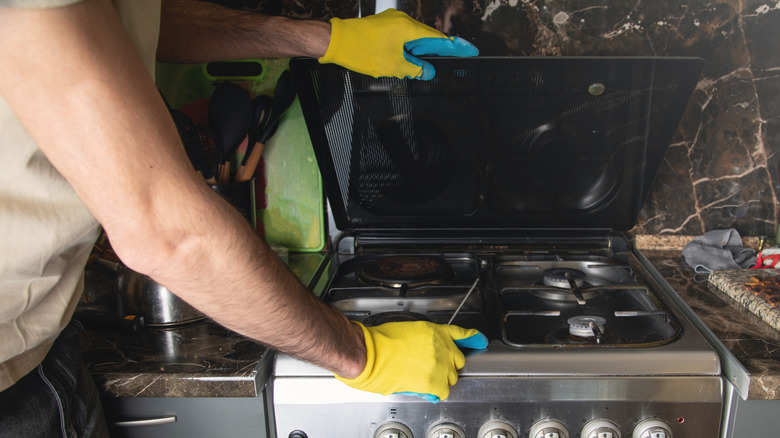
Old objects, such as appliances, can actually be more than a simple home interior eyesore — they can also be extremely dangerous. Gas appliances, in particular, can actually pose a significant safety concern because they may feature a type of connector — the piece that funnels gas from the pipes into the appliance itself — that was not sealed.
The reason this is a problem is that, when unsealed, the soldering of the connectors can wear down over time, making them susceptible to breaking. When they break, it allows gas to escape, sometimes leading to leaks, fires, and even explosions. As The Chairman of the U.S. Consumer Product Safety Commission, Ann Brown, stated "The CPSC has received 200 reports of these connectors failing." These breaks have resulted in serious injuries and even deaths over the years.
Luckily, it has been around two decades since these outdated connector types — typically made of brass — stopped being widely manufactured. However, if the gas appliances in your home are older than around 2010, it is best to have them checked out just in case. It is incredibly important that you do not try to shift the gas appliance yourself in order to check what kind of connector you have, as even a slight movement can cause breakage. So, let's discuss what makes these older connectors different to modern ones and who to call if you think yours need to be checked out to to prevent gas explosions and other accidents.
Brass appliance connectors and who should deal with them
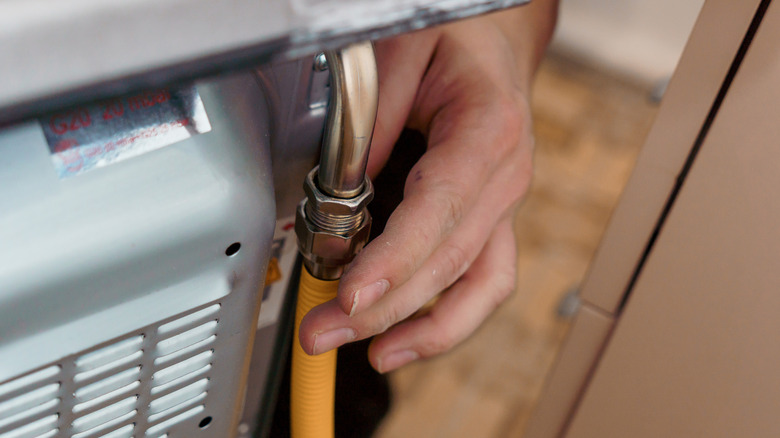
The main telltale of old brass connectors is that they are not coated, which leaves the solder prone to breaking down over time. Modern connectors, on the other hand, are typically made from stainless steel or brass covered in a layer of plastic to protect it. So, while present day specimens will still have the ribbed, flexible build of older ones, they will usually either look silver or bright yellow.
It's important to eave the examination up to professionals who are trained in how to maneuver them without causing leaks. You could try speaking to a technician from your gas company, who may be able to come and have a look at your connectors to see what type they are, or you could check with your local plumber to see if they have the proper training to deal with this issue. If the professional sees that your appliances do have old-fashioned brass connectors, they should change it out for a modern alternative as soon as possible, even if the old one still seems to be in working order, as it is not immediately obvious which ones are close to failing, so the safest option is to swap these out to remove the risk of a gas leak in your home .Finally, should you ever hear or smell gas, evacuate the house with the door ajar and call emergency services.