

Think Twice About Using WD-40 On This Type Of Natural Surface
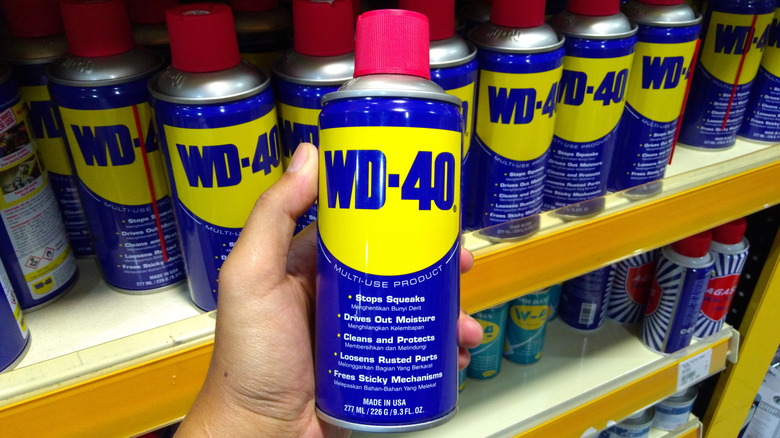
WD-40 is often referred to as "miracle spray" for a reason. This light lubricant can purportedly fix many mechanical and household problems, like loosening stuck hardware, removing adhesive residue, and even keeping grass clippings from sticking to lawn mower blades. However, while there are unexpected ways you can use WD-40 around the house, there are also places that the famous multi-use product should not be used. One of them is on natural stone surfaces. Although it's tempting to use the lubricant to polish countertops and tiled areas in the house, you shouldn't take the risk, or you'll end up ruining the beauty of the stone material. Since natural stone is quite porous, it can readily absorb WD-40, leading to discolorations or stains.
Stone like granite, marble, travertine, and limestone are all places that WD-40 should not be used. As a petroleum-based oil, WD-40 can seep deep into stone countertops and walls, leaving behind marks and blemishes that are hard to remove. It can also disintegrate any wax finishes on the stone. It's for this reason that experts warn against using WD-40 on natural stone surfaces and instead urge homeowners to use products that are designed for the specific material.
How to remove WD-40 stains from natural stone surfaces
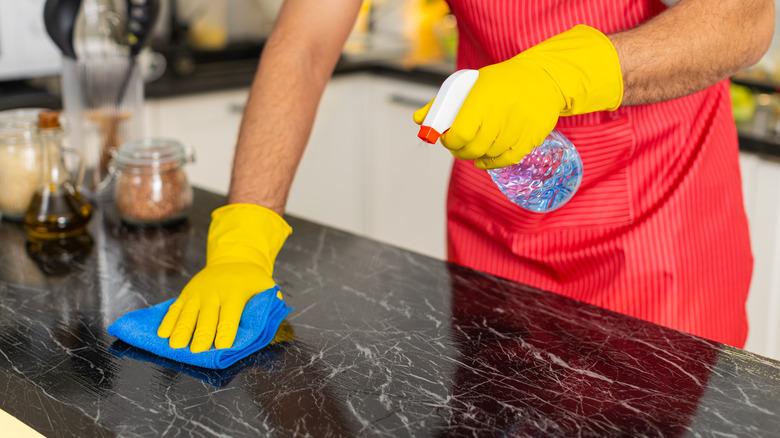
There are ways to keep natural stone countertops looking their best, like resealing the surface every six to 12 months and keeping it clean with non-abrasive and non-acidic products. However, if you have already mistakenly used WD-40 to polish your stone countertop, floor, backsplash, or what have you, don't fret. If caught early, there's a way to prevent it from causing permanent damage to the natural stone's surface. What you need to do is draw out WD-40's oily residue from the porous rock using an oil-absorbing poultice before it penetrates and settles in a much deeper layer of the material.
To make the poultice, combine baking soda and water to form a peanut butter-like paste. Apply a thick layer of the poultice over the stained area and cover with cling wrap. Secure with painter's tape and leave the concoction spread for around 24 hours. This will give the baking soda enough time to draw out the lubricant from the stone. Once enough time has passed, remove the cling wrap and let the poultice completely dry out. Then, remove the dried mixture using a plastic scraper. Finally, wipe the surface clean with a soft cloth and check for any remaining marks. You may need to repeat the process if you spot any residual streaks and oil blemishes from the lubricating fluid. If the WD-40 stain doesn't lighten at all, then it might have set in too deep and removing the stain is best left to the professionals.