

Most Unhinged AI Gardening Hacks You Don't Want To Fall For
Social media is awash with genuinely useful tips and ideas for gardeners of all levels, from clever propagation hacks to affordable alternatives for plant supports and raised bed building. Unfortunately, it's also given rise to an endless supply of hacks that range from ridiculous to the downright dangerous, unnecessarily complicated to actively destructive and harmful. With the rise of AI-generated content now in the mix, it's just getting worse.
Now, some of these viral garden ideas probably won't do much beyond waste your time and money. Others could damage your plants, interfere with healthy soil, and expose you and your pets to unnecessary chemicals. I'm a master gardener with over 20 years of experience as a permaculture specialist. I love to see people share useful tips and tricks that can improve soil health and the quality of your plants, but I can also spot the bad ideas easily, even when they sound reasonably sensible at first glance. I've gathered some of the strangest unhinged AI gardening hacks currently circulating on social media so you can see what's nonsense, how to know whether what you're looking at is worth trying, and whether it's AI.
Planting seeds with a stiletto
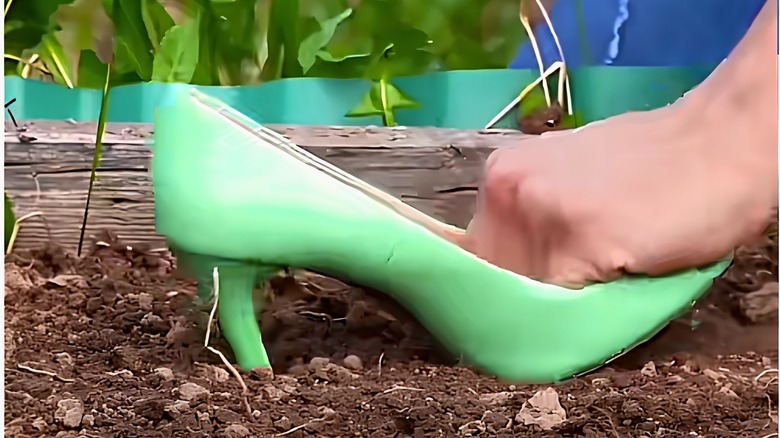
This AI hack is harmless, but so silly. I don't remember ever looking at a seed packet and thinking that planting instructions would be greatly improved by a pair of high heels. Social media, however, disagrees. This video demonstrates pushing the heel of a stiletto into the soil repeatedly and dropping seeds into the resulting holes. The best I can say for this hack is that it might make fashionistas find planting a little more enjoyable.
There's really no reason that I can see to waste time and over-complicate something as simple as planting seeds by involving a shoe, aside from the fact that I don't even own any heels and would rather spend my time in comfortable not-toe-crushing flats. This tip just doesn't make sense. If you want to plant seeds that require individual holes and you've properly prepared your soil, you can just use a finger. If you don't want to repeatedly drill your finger into the soil, use a stick. If you want to be really fancy, get yourself a lovely old-fashioned dibber, which is just a fancy polished stick with a nice grip (though it does make you feel like a proper real gardener).
Surrounding tomato plants with bottles of water
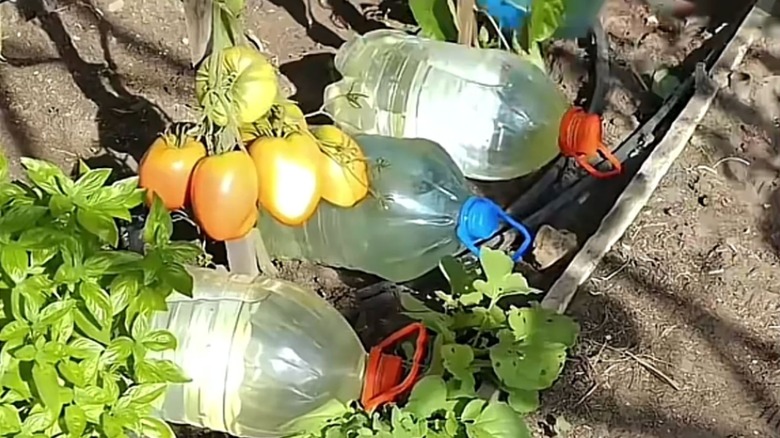
Now before I trash this hack, I should say that using water as thermal mass is not total nonsense. Water does absorb heat during warmer periods and then releases it as the temperature falls. This is why large water containers can sometimes be part of a passive greenhouse heating system. That doesn't mean though that a handful of bottles scattered on the soil around tomato plants will function like tiny radiators.
Those big bottles lay against foliage and can reduce airflow around the lower growth, which creates damp, sheltered spots where slugs and other pests like to hide out. They can also create the ideal environment for fungal pathogens. Plus, if you use a lot of bottles, you can risk compacting the top layer of soil, which isn't good for soil or tomato health. Perhaps most importantly, a few bottles around your tomatoes just won't store enough heat to make them useful protection against frost. The better alternative is to mulch well. If you are expecting an unseasonable cold snap, add a fleece row cover as this will add much more reliable.
Making an exactly pot-sized planting hole
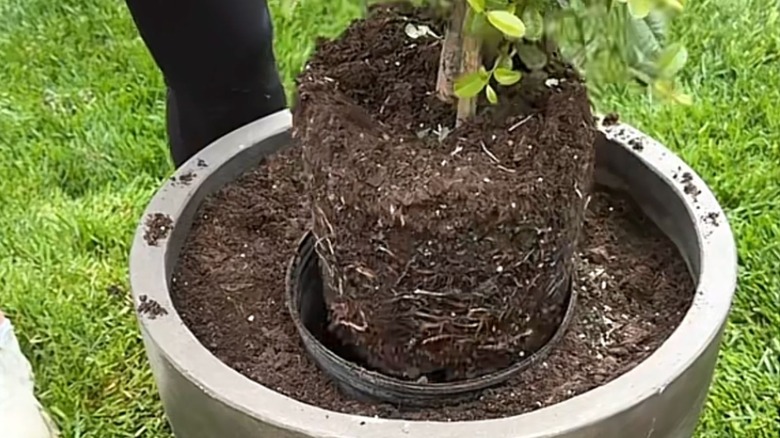
At first glance, this one seems like a mildly good but slightly pointless idea. The gardener uses an empty nursery pot to create a hole that is precisely the same shape and size as the root ball, then slides the plant neatly into place. There are a couple of issues with this though.
Firstly the plant she's showing is visibly root-bound, so creating a hole that's the exact same size as the nursery pot means there's nowhere for their circling roots to go. Container-grown plants often end up with roots that circle around the inside of the pot. While this is normal when potting up, you should tease apart, cut, or otherwise correct the roots when necessary, so that they can grow outward in a more healthy fashion. You may even need to do a little root pruning. If you just let the roots circle they'll continue growing in that pattern and eventually girdle the plant, forcing the nursery pot down into the larger pot in this way. It's just easier to make a rough hole with your hands, unpot the plant, inspect and tease out the roots, drop it into the hole you made, and then backfill.
Planting tulip bulbs inside cardboard tubes
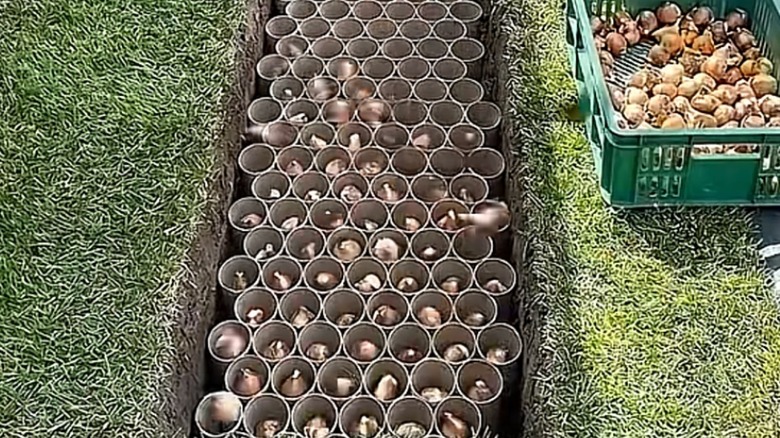
If a video were to say, "AI made me and nobody stopped to question whether it was a good idea," it would be this one. The hack is simply utterly and completely pointless. The video shows cardboard tubes packed into a deep trench before tulip bulbs are dropped into the individual tubes. This is not an established bulb planting technique. It's just one of those weird AI-generated gardening hacks that seems visually satisfying and offers a solution to a problem that isn't actually a problem.
There are many fantastic tips for growing tulips in your garden. This isn't one of them. I can't see any good reason why you would plant tulip bulbs inside cardboard tubes other than perhaps you'd get them in neat rows. You can do that with a string and a pair of sticks at either end of the row anyway. It's just a lot of unnecessary work. As the cardboard becomes wet, it will get soft and collapse, and could stay wet against the bulb and cause rot until it decomposes. You can plant tulips closely and in a straight row, or a pattern for a beautiful dramatic display, without having to construct an underground cardboard tube system.
Burying a raw egg under a plant
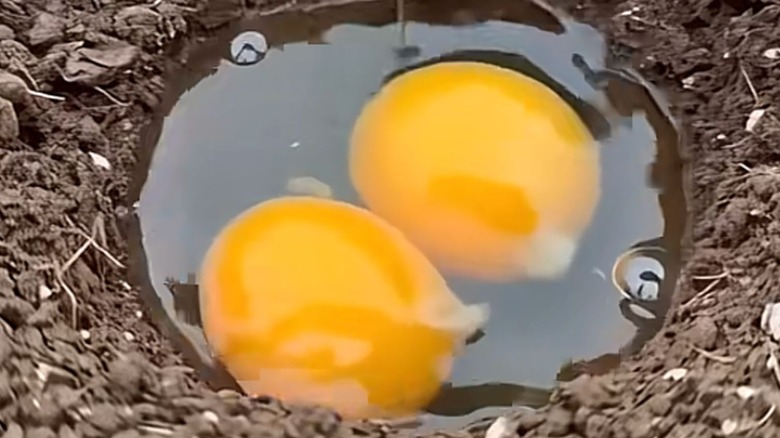
Burying a raw egg under a plant is easy to understand in theory, because eggs contain nutrients. It makes sense that some people might think that cracking a raw egg into the bottom of a planting hole might be a good way to fertilize new transplants, but it's not. At least not when done the AI way. Burying raw fish scraps is a better option in my opinion, as the scraps contain the right balance of nutrients to make a real difference to your plants. Raw fish scraps make excellent tomato fertilizer, and work for other heavy feeders, too. If you follow the proper process and bury raw eggs deep enough, then honestly, while they're not harmful, a couple of raw eggs wouldn't make that much difference to soil health, as they are mostly water by weight.
If you were to follow the advice in this video, you'd end up burying a lump of protein, fat, and moisture in a small container very close to the surface. It would smell as it broke down, attract animals because it's a food source, and potentially create an environment for harmful bacteria, as it is so close to the surface. If you want to bury kitchen scraps like raw fish or even raw eggs, make sure that you bury them in the earth and not a container — 18 inches below the surface, to be safe.
Making planters from cement-soaked fabric
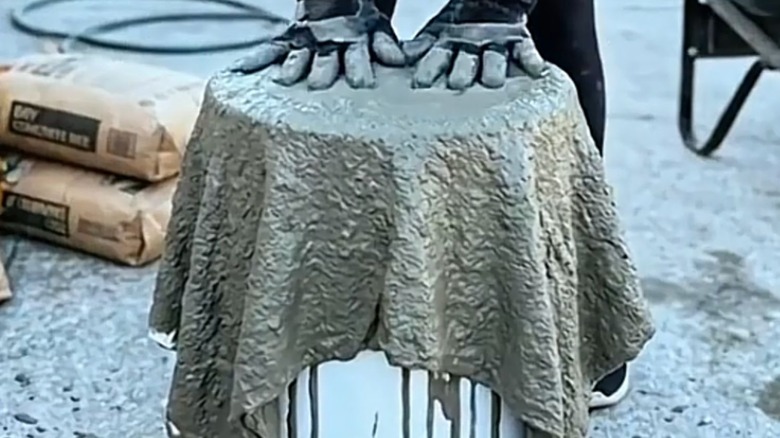
Although this video is yet another one of the AI slop creations making the rounds (just look at the wheelbarrow with all the handles), the hack itself isn't new. Some version of cement-dipped towel planters have been circulating online for years and they're all equally terrible. The tip usually involves draping a towel soaked in cement over an upturned bucket, letting it harden, turning it the right way up, and then calling it a planter. Really, it's just a waste of perfectly good cement and towel. It's garbage. A thin coating of cement over a towel might look pretty when you first paint it, but it's not practical as a planter. It's weak, fragile, and can break just with the pressure of wet heavy potting mix.
Plus, if you don't put drainage holes in a container, excess water can't escape and you will rot the roots of your plants. Fresh cement is also very alkaline and can change the pH of nearby soil. As for the first few weeks, lime-containing compounds leach from the concrete into the surrounding soil. Save yourself frustration and disappointment, and just look for a beautiful secondhand concrete planter at a local yard sale. There are also plenty of household items you can turn into beautiful planters.
Using a homemade sharp metal tube to transplant seedlings
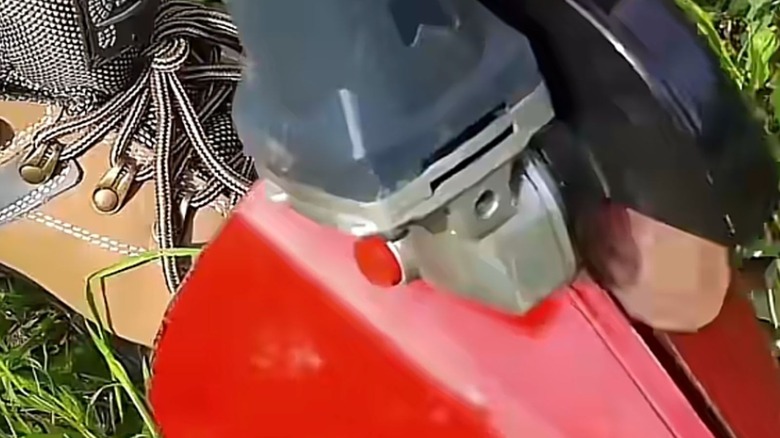
Another insane, pointless, and dangerous so-called hack that "solves" a not-problem. While there are specialized transplanting tools for very specific plants and situations, this badly improvised version is one that I wouldn't touch with a 10-foot pole. This irresponsible video shows using an angle grinder with a cutting disk attached, wearing just a gardening glove and cutting right above his foot, while only wearing a walking shoe. Don't ever do this if you want to avoid serious injury. The tool itself is nonsensical. You'd be wasting a huge amount of time and effort creating this "tool" for no reason at all.
The device essentially forces a small plant and its root ball through a narrow gap into a planting hole, but it has rough edges and probably isn't a good size. Nor will it work in anything but the loosest soil. Save yourself time, energy, and loss of toes, and just dig a hole with a trowel, a dibber, or even a stick.
Mixing diaper gel into potting soil
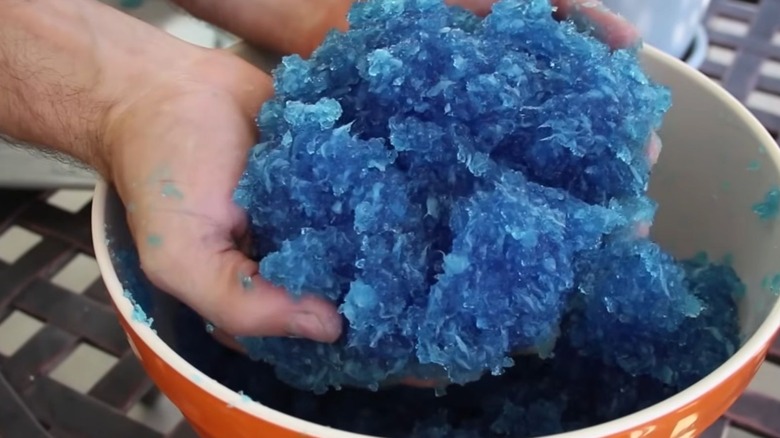
I have seen this supposed gardening hack floating around for a long time and it always makes me shake my head in despair. Do not put diaper gel into your potting soil. This "advice" is always presented as common sense. Diaper gel is super absorbent and you want to retain moisture in your soil, so it follows that something that holds moisture like diaper gel is just a common sense solution. But, please don't fall for it.
Mixing diaper gel with soil alters how the growing medium stores and releases water and nutrients, and it's impossible to get rid of once it's in there. You have no idea of the lasting damage diaper gel can cause, because you don't know what it's made of. It's a hygiene product, not a horticultural amendment, so you don't know if there is a safe application rate or what the long term effects of using it in your garden beds will have. If you have a problem with water retention, improve the growing medium with appropriate organic matter. If you don't want to spend money on a costly horticultural water retaining product, instead add perlite to your growing medium or add some coco coir, which will slowly break down and improve the soil structure. Compost in place or use a type of mulch that's good for your garden that will help stop water loss, as well as improve the structure of your soil over time.
Spraying shrubs with fabric softener to repel pests
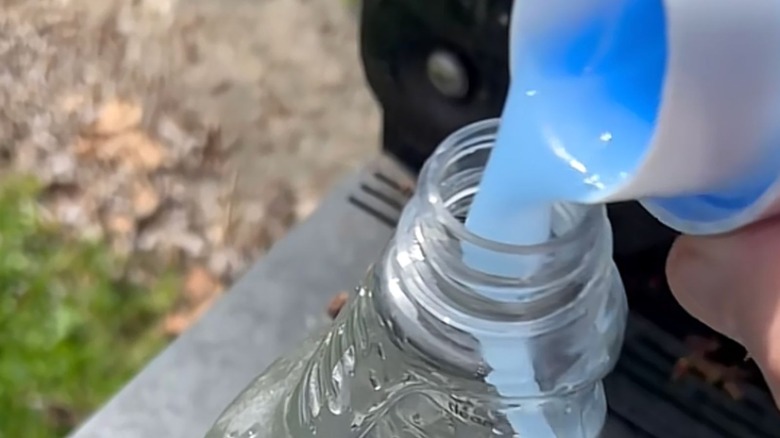
I don't know where this hack came from, but it is terrible. Do not spray your plants or your soil with fabric softener. It's a genuinely awful idea. I love a home remedy, and I use all kinds of home-made soil amendments and DIY sprays in my garden, but I would never ever do this. It's shared online as a homemade pest repellent, but there is no good reason to coat plant foliage with a chemical concoction that's designed to soften and fragrance textiles.
This hack is irresponsible and harmful to your garden. Fabric softeners contain surfactants, as well as a variety of other additives, including fragrance, and they are chosen based on their performance on fabric, not for their compatibility with living plant tissue. Detergents can disrupt the waxy cuticle that protects plant leaves. This causes the plant tissue to dry out and become damaged. You're also introducing unknown and unnecessary chemicals into your soil where they can harm all of the tiny living things in the soil biome that help keep your garden healthy, plus they can be potentially harmful to wildlife and pets. I wouldn't want to eat any edible plants that have been grown in or exposed to fabric softener, either. There are plenty of natural plant and human-safe options for controlling pests, and one of the benefits of companion planting is help with pest control.
Melting household plastic into garden pavers
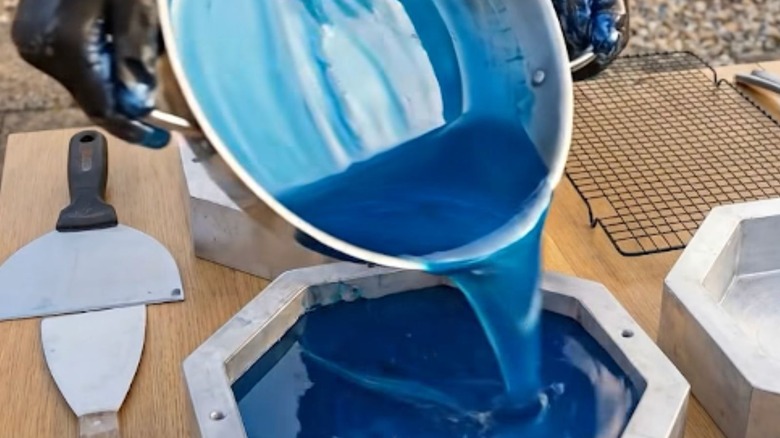
More mind-numbing AI drivel in this video, and it's an alarmingly common theme. There has been a weird rise in the number of AI slop videos showing people melting down shredded plastic waste and turning it into other things. In this case, it's garden pavers and stepping stones. Please don't try this. It's absolutely not safe, and the end results won't be anything like the fake video suggests. Aside from the practicalities, such as different plastics requiring different behavior when heated, there are the inherent dangers. Heating or melting plastics causes thermal degradation, and when that happens, all kinds of fumes, including carcinogens, and tiny particles are released. This can be exceptionally dangerous if inhaled.
The idea behind these hideous videos is that the end product is eco-friendly, because you're diverting plastic from landfill. But a plastic paver like this would just degrade if it was placed outdoors, and it would shed microplastics into the surrounding environment. Plus it wouldn't stand up too much to abrasion, foot traffic, or temperature swings. If you did walk on it when it was wet, it would be slick and incredibly dangerous. This is definitely one supposed hack that I strongly recommend you skip for your own safety. Just take your unwanted plastics and put them in the correct recycling or disposal receptacle.
Building a tiny tire pond and filling it with koi
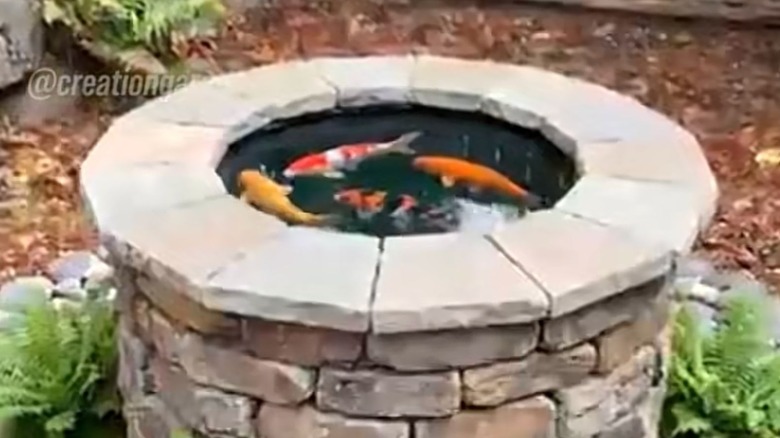
A koi pond is a lovely addition to your outdoor space if you build it well and maintain it, but a tiny pond made of two old tires filled with koi is a dreadful idea. This video is another piece of AI garbage that should never have been posted. It's junk of the worst sort, and the idea of keeping any fish, let alone large koi, in this kind of tiny setup is indefensible and ridiculous. Koi are big fish and they need lots of space, good water circulation and oxygenation, as well as excellent water quality.
This hideous video has so much wrong with it, from the idiotic idea of using two tires stacked to create a pond and calling it good, to filling it with fish without adequate space or any filtration or pump. If you want to have a koi pond, do it properly. Build a pond or buy a molded pond liner of a suitable size to house the number of fish you want to keep in a healthy manner. Remember you need ample volume of water per fish to minimize water temperature changes and to give them more space, so they're not overcrowded. You'll also need a decent filtration and oxygenation system to keep your fish healthy and water quality at suitable levels. If you want an up-cycled water feature then do so, but make sure you use suitable materials, not an old tire (which is hazardous environmental waste), and keep it fish free. You can build a fantastic water fountain with concrete blocks and a little elbow grease.
Pouring bleach over gravel to kill weeds
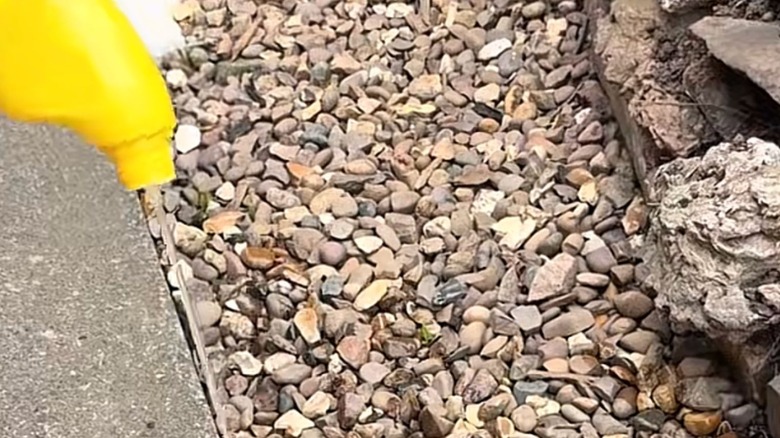
Even though I am a permaculture practitioner, I get the desire for some gardeners to use weed killer, but I will never understand anybody pouring household bleach in their gardens, whether that's on the patio or in their garden beds. It's an incredibly hazardous chemical and is remarkably destructive. It is not in any way safe to use in your garden, as it is a strong disinfecting chemical and reactive cleaning agent. It will ruin the health of your soil and is toxic to basically all life forms, including beneficial soil organisms and any pets, insects, or wildlife that have the misfortune of coming into contact with it after you have irresponsibly poured it in your garden.
Even diluted bleach solutions that are used to disinfect gardening equipment should be disposed of properly and not poured into the garden, as they can harm both plants and wildlife. Yes bleach will kill any weed it comes into contact with, but whether you spray it or pour it, it will move beyond the plant you're targeting and will seep through into the soil and cause widespread contamination and damage. I know it looks like an easy solution, but it will cause many more problems than it fixes. Instead, get a weed gun for burning weeds in gravel between patio slabs, or choose another weeding tool. If you must use a synthetic product, then use a proper herbicide specifically labeled for the weed and the area you are trying to get weed free.