

What To Do With Your Hydrangea In September
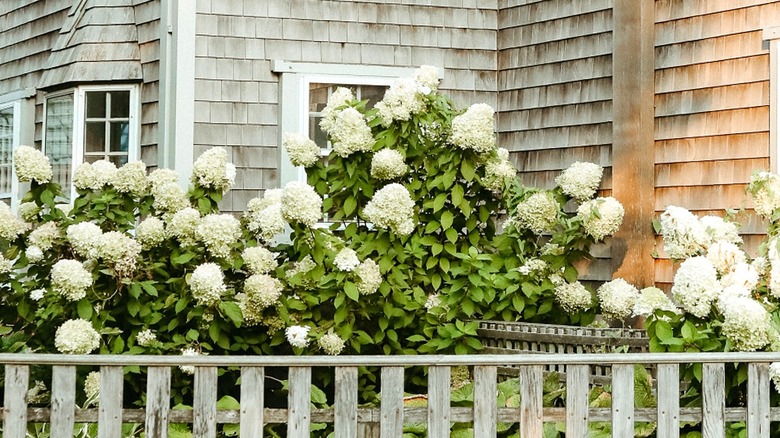
We may receive a commission on purchases made from links.
The Halloween decorations and pumpkin spice lattes may have made their return, but September is still the growing season in many parts of the country. If your first frost date is still weeks away, you might be wondering what your plants need as fall creeps in. When it comes to fertilizing hydrangeas, a light feeding is a good choice right now; fall fertilization for shrubs can give them the boost they need to start next season off with a healthy root system. In September, the granular Espoma Organic Holly-tone fertilizer can be applied around the drip line of your hydrangeas at about half the spring rate.
Holly-tone ($15.10 at Amazon for a 4-pound bag, at the time of writing) is labeled for use on everything from asters and azaleas to rhododendrons and strawberries. It has an NPK of 4-3-4, and how much you use on your hydrangeas depends on the size of your shrub; the drip line corresponds to how far the shrub's leaves and branches extend/spread. Based on this measurement, in the fall, give plants ½-cup of the fertilizer per foot of the drip line diameter. The fall application feeds the root system, which is still actively growing even though the plant has stopped producing new shoots.
After you sprinkle Holly-tone on the ground around your shrubs, water it thoroughly so it reaches the roots. Just don't overdo it, since too much nitrogen can encourage a late flush of shoots that won't have time to harden off before winter comes, especially if your first frost is only a few weeks away.
What else your hydrangea needs in September
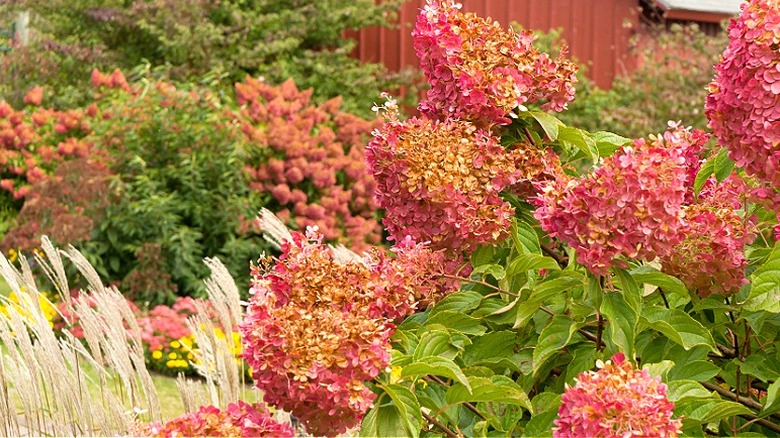
Whether you're excited about the signs of fall or in denial about the changing seasons, September is a good time to start thinking about winter-proofing your hydrangeas. What you do and don't do at this time helps determine next year's blooms. For example, September is past the time for pruning, which you should avoid doing once July ends; both bigleaf and oakleaf species are setting buds on old wood right now. You can leave faded hydrangea blooms on or snip them off (they break off during winter anyway).
On the topic of next year's blooms, one more reason to apply Holly-tone fertilizer is that it could help with color. It contains sulfur to acidify soil, which could help garden soil reach the 5.0 to 5.5 pH needed for blue blooms. Slightly acidic soil, with a pH level of 5.6 to 6.5, meanwhile, will have a better chance of producing lavender flowers.
Another crucial hydrangea winter prep task is watering. If September is dry where you live, deep weekly waterings will help your plants overwinter. Since winter injury is one of the biggest reasons hydrangeas don't bloom, the idea is to set your hydrangea up for a smooth transition to dormancy rather than pushing it into more growth during the fall.
This being said, if you live in a cold, mountainous region or a hardiness zone with early fall frosts, skipping the fall fertilizer altogether is a better idea. Since hydrangeas bloom better when they're starved a bit, this won't really be a problem, so long as you provide the plants with enough water during dry spells in the fall and winter months.