

These 17 Ornamental Grasses Thrive In Shade While Adding Texture And Color To Your Yard
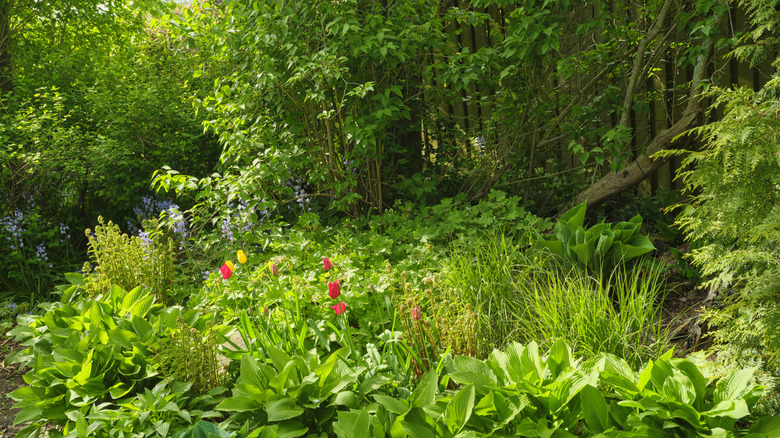
When it comes to designing your dream landscape, ornamental grasses may not be the first to come to mind, especially when you have showier options like vibrant blooms or towering trees and shrubs. However, there are many advantages to growing ornamental grasses, including the fact that they're incredibly versatile, and there is a wide range of species with different textures and colors that can elevate the visual appeal of your yard while balancing out more ornate specimens. And, with so many different species available, you can easily find choices that can fit into even the shadiest parts of your yard.
Importantly, not all shade is the same. You can have partial shade, which receives some direct sunlight for at least a portion of the day, or full shade, which receives none. There's also dappled or filtered shade, in which sunlight passes through tree canopies or shade cloths before reaching your garden. Many times, choosing plants for these areas is not easy, especially if you're looking for bright color. However, many ornamental grasses, like blue oatgrass, tufted sedge, and river oats, provide a surprising amount of vibrancy and visual interest. Even green grasses can be interesting due to their unique textures, making ornamental grasses an excellent choice if you want to grow a gorgeous, healthy shade garden in your backyard.
River oats
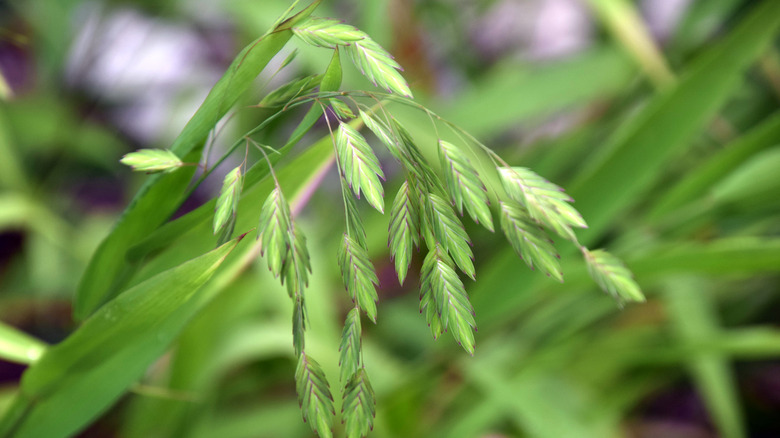
Also known as northern sea oats, river oats (Chasmanthium latifolium) are a native ornamental grass with bright green foliage. The seed heads are flat and feathered, and their resemblance to oats gives them their name. The leaves, however, are tapered and smooth like bamboo. Although they love shade, if your river oats receive more sunlight, those green leaves will turn gold come fall. And as far as sunlight goes, river oats prefer either dappled sunlight, which is where they receive irregular patches of sunlight through a tree canopy throughout the day, or partial shade. This plant is hardy in USDA Hardiness Zones 5 to 9.
Greater wood rush
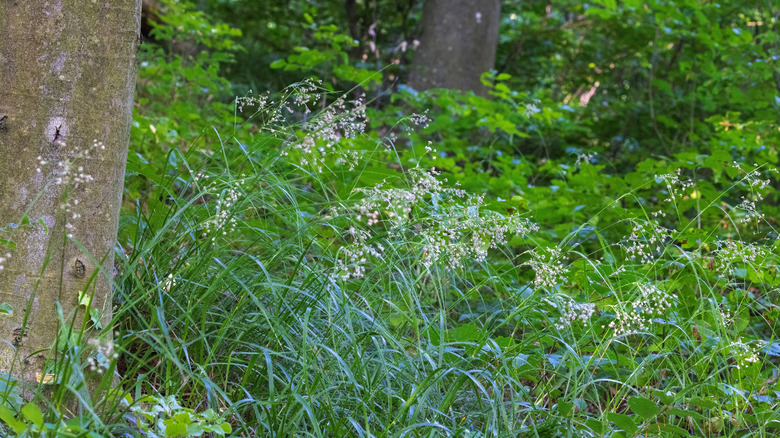
Greater wood rush (Luzula sylvatica) is another bright green plant to add to your shade garden if you're looking for texture. It grows in dense, shaggy clumps with glossy leaves. It also produces small brown flowers, but these tend to be more discreet rather than stealing the show from the vibrant foliage. It grows well in both partial and full shade. As a result, you can use it to add texture and color to even the darkest spots in your yard, as long as you're in its hardiness range of zones 4 to 9. There are also different cultivars with slight color variations.
Pennsylvania sedge
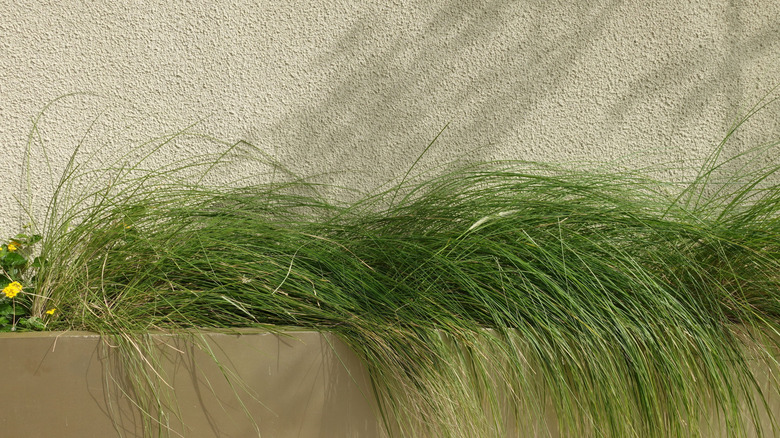
Although sedges are not technically true grasses, they have a very similar look and growth habit, and Pennsylvania sedge (Carex pensylvanica) can make the perfect addition to shade gardens in need of a bit of color and texture. This semi-evergreen, hardy in zones 3 to 8, sports thin, linear leaves that are showy on their own, as well as small spring-blooming inflorescences. When it comes to sunlight, Pennsylvania sedge is a true shade lover. It does well in everything from deep shade to partial shade, as well as dappled sunlight. It can work well as a turf alternative, too — just keep in mind it doesn't hold up well to heavy foot traffic.
Tufted hair grass
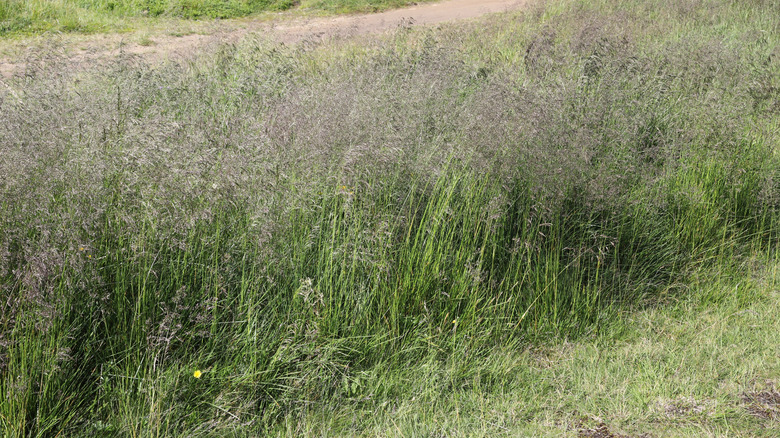
Tufted hair grass (Deschampsia cespitosa), also known as tussock grass, transforms depending on its environment. Factors like soil and the amount of light it receives dictate how it looks in your yard, causing variations in the quality of its flowers and foliage. Luckily, as a shade-loving ornamental grass, it looks its best in partially shaded conditions. It has dark green foliage that turns gold during the latter portions of the year, and its long-lasting flowers start blooming in the summer in colors ranging from purple to cream to gold. It's hardy in zones 4 to 9.
Feather reed grass
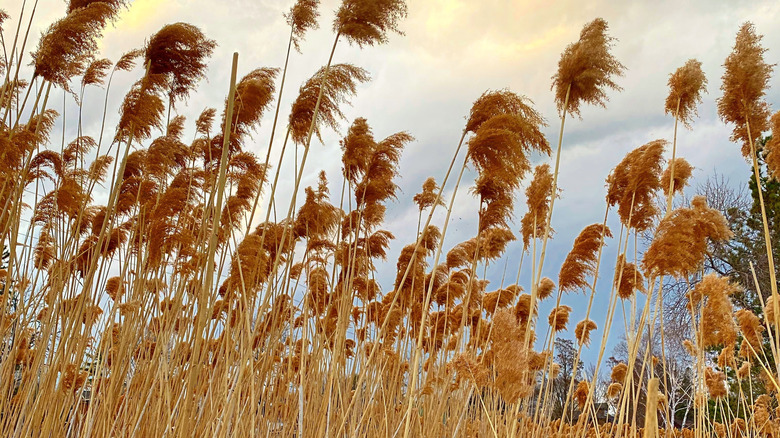
Feather reed grass (Calamagrostis x acutiflora) is actually a hybrid of two different ornamental grasses. While its texture is similar to grasses like tufted hair grass, its height and coloration allow it to stand out. It can grow up to 5 feet tall with its plumes, which are almost purple in color, with green stalks. There is one thing to keep in mind with this plant, however. While it likes shade, it prefers light shade. Shade in the afternoon, for example, will provide it with the right amount of light without reducing health. It's hardy in zones 4 to 11.
Blue oat grass
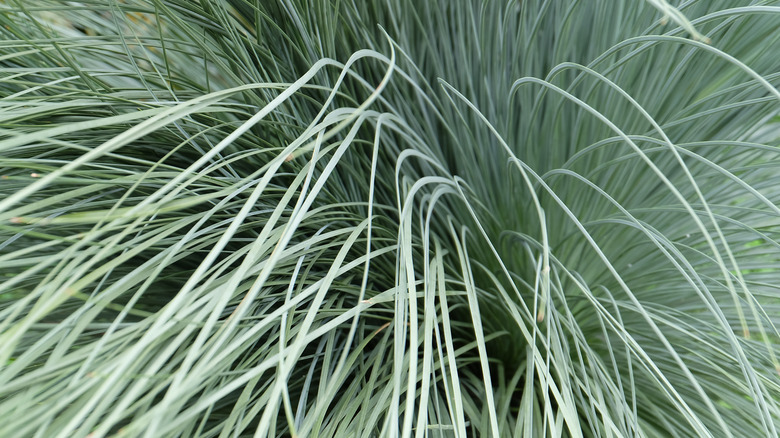
If you want something more understated in color, consider blue oat grass (Helictotrichon sempervirens), which can provide your garden with a subtler green. Blue oat grass is a clumping ornamental grass with thin, arching foliage that is silver-blue in color and overall cool-toned, which helps it contrast with the warm options discussed so far. This colorful ornamental grass is hardy in zones 4 through 8 and grows well in partial shade; drier soils help produce the most notable coloration.
Long-stalked sedge
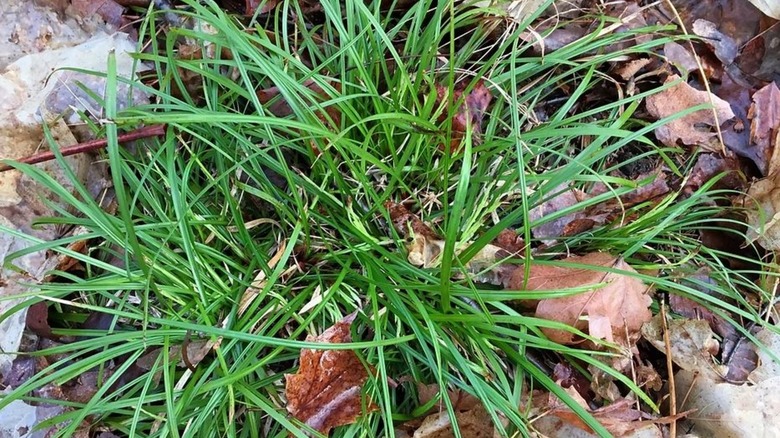
Another sedge species, long-stalked sedge (Carex pedunculata), forms dense, luscious dark green clusters. The rosettes of leaves will add color in your yard while the feathered seed heads, which look similar to river oats, offer texture. It's a bit smaller than some other ornamental grasses on this list, only growing to be around 1 foot tall when fully mature. But it is a shade lover, and it can grow well in both dry and moist soil conditions, which makes it perfect for areas that may experience the occasional dry or wet spell.
Glaucous sedge
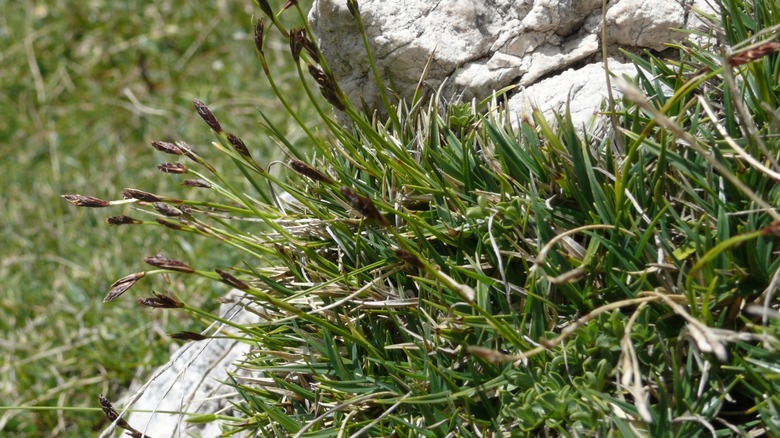
Glaucous sedge (Carex firma), sometimes known as firm sedge, is an eye-catching ornamental that does great in rocky environments, since it's native to mountains. The term glaucous sedge refers to the fact that, while some varieties sport green foliage, others have a more bluish tone. This pairs perfectly with plants like blue oat grass if you're trying to create a monochrome shade garden. The blooms on this sedge are typically insignificant visually. Instead, you'll get most of the visual appeal from the foliage itself. It's hardy in zones 4 to 9 and grows well when offered partial shade.
Hakone grass
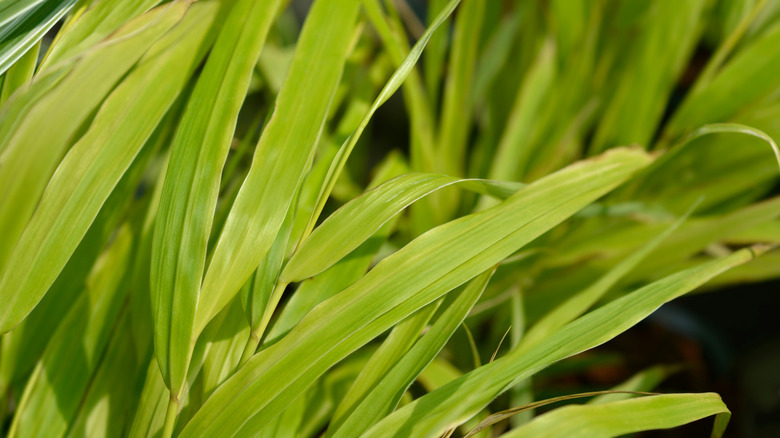
Hakone grass (Hakonechloa macra) goes by many other names, including Japanese forest grass or just forest grass. With its vivid green color and fascinating texture (it also comes in variegated varieties), few grassy plants can steal the show in your shade garden like this one, which is hardy in zones 5 to 9 and native to Japan. As a deciduous plant, its foliage changes color in autumn to pink and red. It is a notable shade lover, thriving in deep or partial shade as well as dappled sun.
Tufted sedge
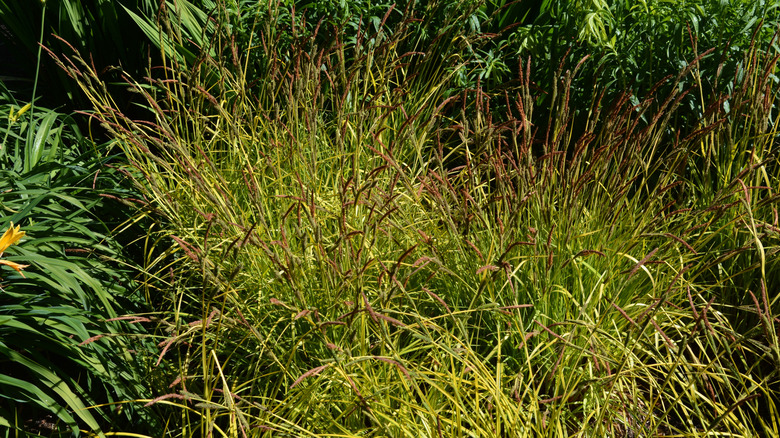
Growing plants in shade can already pose difficulties; add in wet soil, and things get even more complicated. Fortunately, tufted sedge (Carex elata) is a wetland ornamental grass, which means that, while it has no tolerance for drought, it thrives in wet conditions, even standing water. It grows well in partial shade and sports vibrant, evergreen leaves that are green or gold in color. Their narrow shape adds a classic sedge silhouette. Tufted sedge is hardy in zones 5 to 9.
Palm sedge
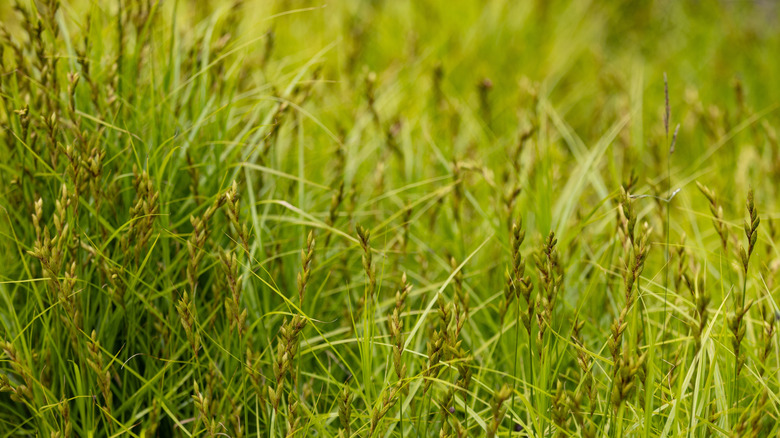
If you're looking for more cold-hardy sedge that prefers wetter conditions while still thriving in the shade, try palm sedge (Carex muskingumensis), hardy in zones 1 to 4. Palm sedge grows naturally in floodplains and low-lying areas that are rich in nutrients. It can grow in water too, so long as it's shallow, which may be beneficial if you're looking to create a thriving shade garden next to a water feature. It grows best in partial shade, and it blooms throughout the spring, summer, and fall. It's also deer-resistant, if you've had a problem with grazers in your yard.
Yellow Indiangrass
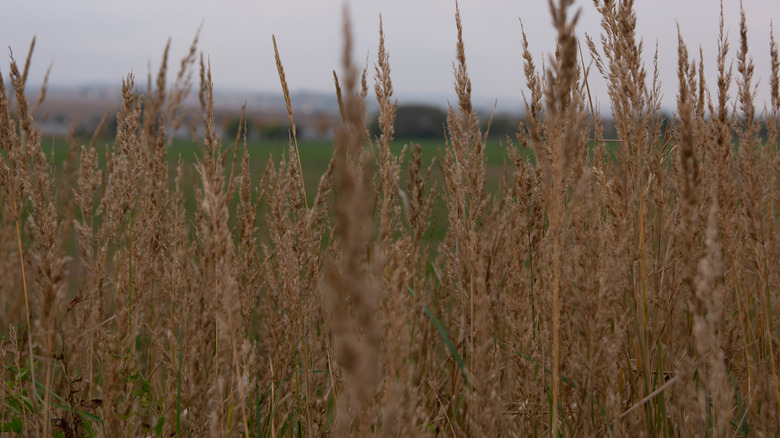
Yellow Indiangrass (Sorghastrum nutans) isn't just an eye-catching ornamental to add to your shade garden; it's also an important native species that thrives in tallgrass prairies. It can reach towering heights of up to 8 feet and showcases vibrant cool-toned leaves, yellow flowers, and golden seed heads. When it comes to sunlight, it's fairly versatile — it does well in full sun, but it can also handle shade. As an added bonus, seed-eating birds and mammals love this plant, helping create a more wildlife-friendly yard. It's hardy in zones 4 to 9.
Bottlebrush grass
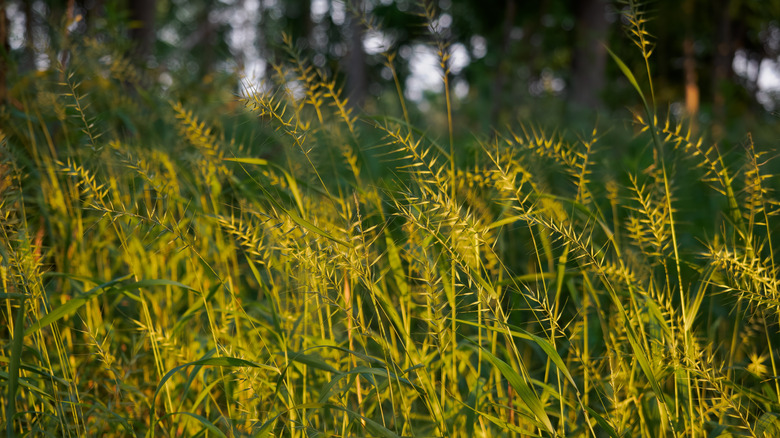
Bottlebrush grass (Elymus hystrix) is another native grass that sports eye-catching color and unique texture. This grass, which prefers dappled sunlight or partial shade, can grow up to 3 feet tall and is hardy in zones 5 to 9. The green foliage is simple in appearance but has a rough texture, and it blooms with spiky, bottlebrush-like flowers in the summer and fall. These also happen to make good cut flowers, if you're looking to extend some of that shade garden beauty indoors. They last for a long time on the plant, and their unique look helps them stand out.
Porcupine sedge
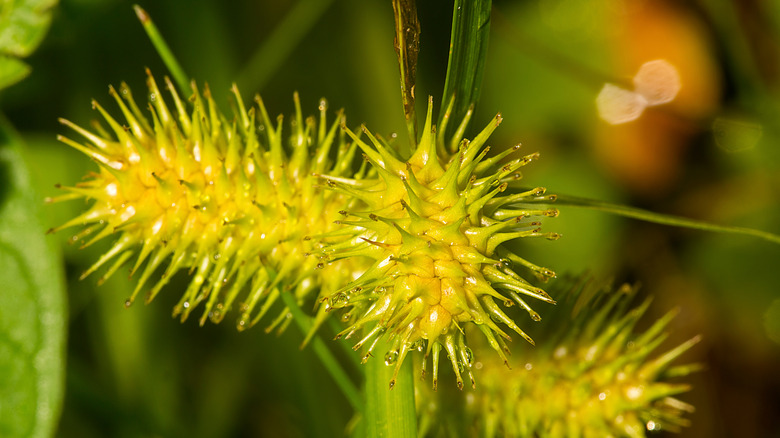
On the topic of plants that add brilliant greens while also providing show-stopping texture, you won't want to forget about porcupine sedge (Carex hystericina). Another sedge species related to glaucous and tufted sedge, porcupine sedge holds its own thanks to the spiky seed heads it produces. The foliage itself is bright green, narrow, and erect, creating stunning plumes of ornamental foliage for your shade garden. Porcupine sedge can grow in both full sun and partial shade, and it produces brown flowers during the summer. It's hardy in zones 3 to 9.
Golden wood millet
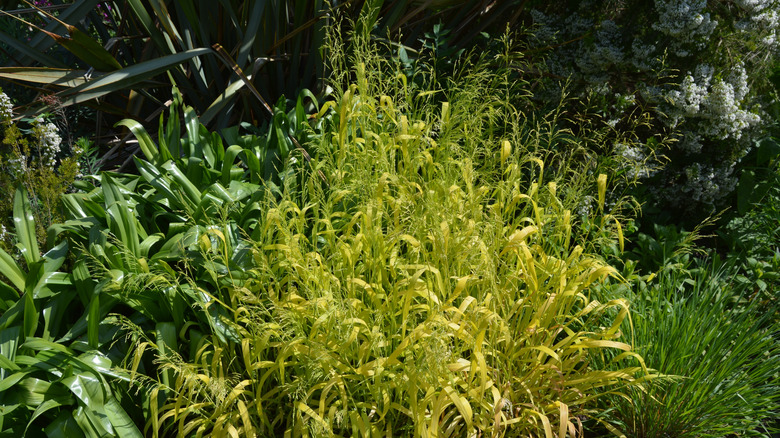
Also known as Bowles' golden grass, golden wood millet (Milium effusum 'Aureum') is a cultivar of wood millet with yellow-green foliage, which makes it attractive for adding color to a shaded yard. The plant grows in dense clusters, making it perfect for utilizing as a filler plant to fill in gaps in the garden, while the foliage itself grows with an arching shape that adds textural depth. With a spread of up to 2 feet, it also works well as a groundcover. It grows best when offered partial or full shade and is hardy in zones 5 to 9.
'Blue Zinger' sedge
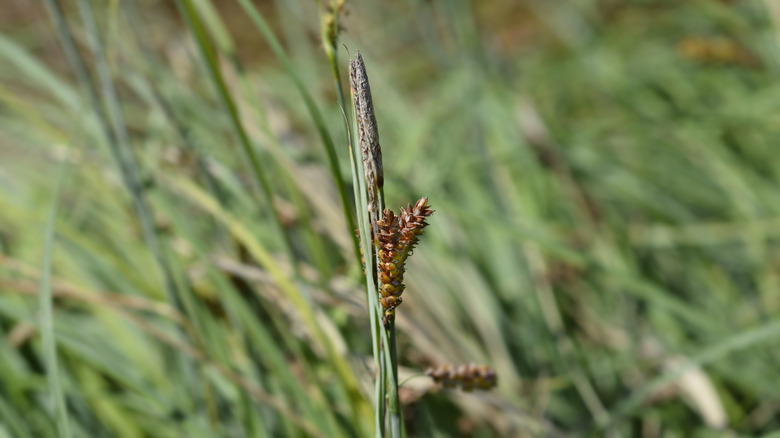
Another sedge variety, 'Blue Zinger' sedge (Carex flacca 'Blue Zinger'), is a cultivar of blue sedge. Like its cousin, tufted sedge, one feature that stands out about this plant is the fact that it can easily tolerate small amounts of standing water. If you're battling a shady spot in your yard where water tends to pool, this sedge cultivar can be an excellent option for adding texture and color with its blue-green narrow foliage. It can handle both partial and full shade with ease, all while holding up to grazing deer. It's hardy in zones 5 to 9.
'Everillo' sedge
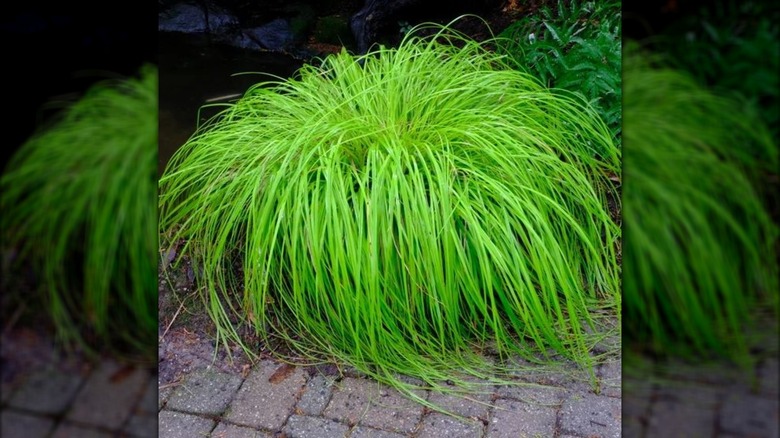
A cultivar of a sedge called Oshima kan suge, 'Everillo' (Carex oshimensis 'Everillo') is eye-catching and hardy, holding up well to wet conditions and deer. While it grows best when offered a moist medium, it can also handle the occasional dry spell, adding to its durability. The leaves are narrow, like many sedges, and sport a bright yellow-green hue. You'll get the most vibrancy out of this plant when it's planted in partial shade, as full sun can dull its color while full shade fails to provide enough light. It's hardy in zones 5 to 9.