

Not A Cup Or Dish: The Valuable Wedgwood Piece That Collectors Dream Of Finding Secondhand
For more than 260 years, Wedgwood has produced timeless pottery. One such piece is a jasperware teapot, a beautiful example of classic earthenware with delicate details. Although it came in several colors and designs, perhaps the most iconic is the pale blue variation. A search of websites like Etsy or eBay will turn up actually hundreds of matches, with many teapots dating back 50 to 80 years. These Wedgwood teapots from the 1950s to 1980s can go for anywhere from $70 to around $200, with the condition of the piece, of course, being a factor.
As with most things vintage, the older the piece, the more valuable it likely will be. For example, though 19th-century jasperware teapots are, unsurprisingly, more difficult to come by today, it's not impossible to track one down. You might find in your search something like this jasperware tea set from the 1880s, for instance, available at Chairish for over $700.
Wedgwood, the valuable pottery brand you don't want to pass up if you're lucky enough to see it, first produced jasperware in 1774 , about 15 years after potter Josiah Wedgwood founded the company. As the jasperware story goes, per the company site, it took Josiah Wedgwood "thousands of experiments" before the unglazed material was achieved. Why is it called jasperware? It's name refers to the opaque mineral jasper, a hard rock that rates a 7 to 7.5 (out of 10) on the Mohs hardness scale, right between quartz and topaz. Jasperware pieces, like the valuable jasperware teapot, feature a matte finish and are decorated with sprigging, a technique that adds low-relief details and shapes to a piece before it's fired.
How to spot an authentic Wedgwood teapot
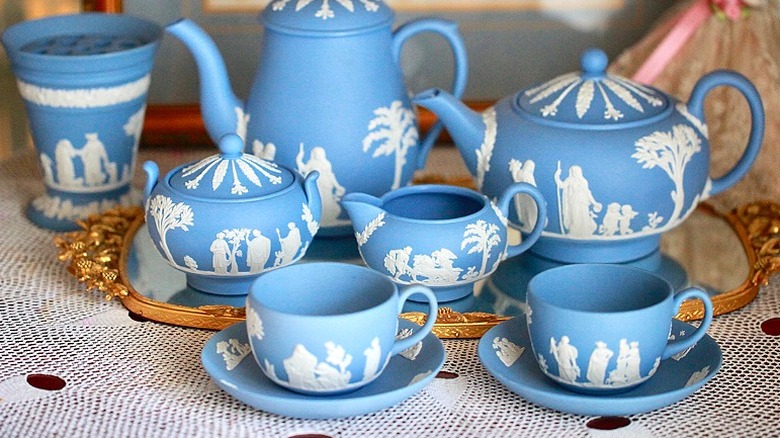
Jasperware is known for its unglazed, matte finish and neoclassical design, with the added sprigs often inspired by Greek-style figures and motifs. A typical Wedgwood jasperware teapot will also have the maker's mark, a Wedgwood stamp imprinted on the bottom, although the font and style of the mark have changed throughout the brand's history. When researching the maker's marks, consult guides, like this one from Potteries Auctions, where you can find example stamps from 1759 on.
A note on marks: For Wedgwood pieces from the late 19th century, specifically 1860 to 1891, the company added a three-letter code to the bottom of pieces, where the last letter corresponded to the year (for example, "O" was for 1860). That said, experts say that these codes are not typically found on jasperware.
In your search, you likely will discover complete sets, too, which can be particularly valuable. For example, this deep blue jasperware set at 1stDibs dates back to circa 1830, includes 10 pieces, is in good condition, and has an asking price of $2,250. Even sets assembled from pieces made in different years can command impressive prices, which can make finding just one teapot while thrifting even more exciting.
If you spot one while browsing a secondhand shop, remember there's a reason brand collectors look for this rare and valuable pottery brand at thrift stores. You could have the beginning of a surprisingly valuable Wedgwood collection. And, if you fall in love and decide to keep the classic pieces, don't forget to apply these styling secrets that make vintage ceramics the centerpiece in your home.