

The Minty-Fresh Aromatic Herb That'll Fill Your Garden With Pollinators

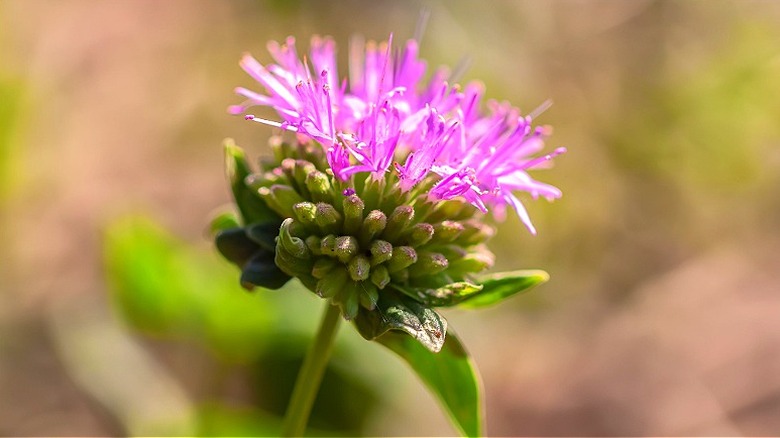
There are plenty of plants that are native to the U.S. that are effective in attracting pollinators to your garden. For example, coyote mint (Monardella villosa), which is native to California, is known as a pollinator favorite, with its fragrant leaves and lavender blooms. This subshrub is perennial in growing zones 6 to 10, and it's also evergreen.
Coyote mint naturally grows along rocky slopes, in woodland areas, and in chaparral, making it a strong candidate for a sloped garden, containers with good drainage, or as ground cover, as it's not a big plant, growing to no more than 2 feet tall. The subshrub's flowers are round in shape, which provides pollinators like butterflies a place to land and stay for a while.
This mint family member blooms each year for around four months, starting in May. It's easy to maintain and drought tolerant, so if you're starting a pollinator garden, a strong case could be made for adding this aromatic herb. In the famed English horticulturist Theodore Payne's 1941 catalog, coyote mint's "beautiful lavender blossoms" were described as "Very showy and a good subject for rock gardens."
Growing coyote mint for visiting pollinators
Though coyote mint prefers full shade, it can grow in part shade, which is part of its easy-to-grow profile. Another reason it's considered an easy grower is because of its minimal water requirements; once established, you only need to water coyote mint twice monthly, which is why you can count it among the beautiful ground cover plants that also happen to be drought tolerant. Its spread is about twice its height at 3 feet, and it also works well for edging.
Along with its low-watering needs, just be sure your subshrub doesn't sit in water. If there's poor drainage and the roots get flooded, you may have to deal with root rot, especially once the weather turns cold. You won't need to get specific soil for coyote mint, though, so long as it's a well-draining type, like chalk, loam, or sand. Pruning is mainly done to keep the plant's appearance "tidy".
As for pollinators, Calscape (from the California Native Plant Society) keeps track of all cases of wildlife support for native California plants, and in coyote mint's case, the total count of confirmed cases is 47, with 112 likely. From butterflies to bees to hummingbirds, coyote mint is a favorite. Meanwhile, this plant is also deer resistant, quite possibly because of those fresh minty leaves.