

It Was Only Sold For A Year — The Discontinued CorningWare Color To Look For Secondhand
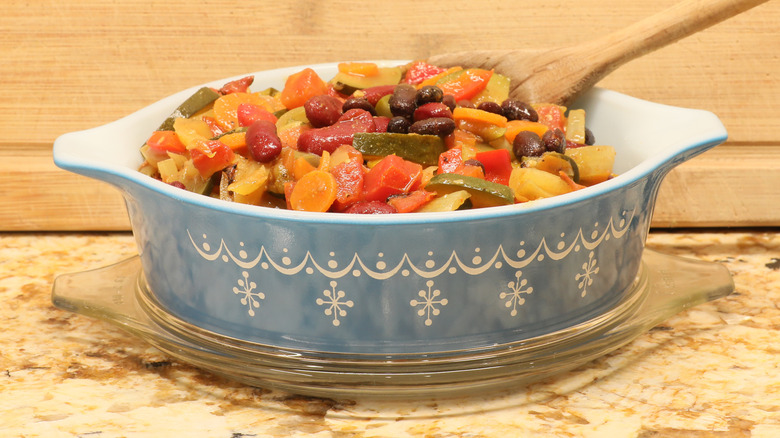
We may receive a commission on purchases made from links.
For ardent dishware collectors, rare CorningWare dishes are worthy treasures to hunt for in antique shops and second-hand stores. These dishes are the embodiment of family dinners past, where grandma's famous macaroni casserole steamed in a glass dish adorned with a simple floral pattern. However, some of the designs that graced CorningWare's dishes, like its butterscotch pattern, weren't actually patterns at all. They were solid colors that were almost plain-looking compared to some of the company's other designs. But when looked at with the eye of an antique dealer, it's easy to understand why this simple pattern has become a thing that CorningWare collectors dream of finding at an estate sale or thrift shop. Keep your eyes peeled for one of CorningWare's limited-run butterscotch dishes.
Created in 1958 from a scientific experiment with glass gone wrong, CorningWare glass is known to be sturdy enough to go from freezer to oven without cracking. Its most well-known pattern, the blue cornflower, ran from 1958 until 1988. Rarer CorningWare patterns, like butterscotch, had more limited production runs — in its case, the butterscotch color was only produced in 1969.
CorningWare's golden-hued dishes of the late 1960s complemented other collections the company had put out, such as its floral bouquet gift line; this pattern featured golden flowers on casserole-type dishes that came with a candle warmer cradle. The butterscotch dishes also complemented other similarly sunny patterns, like Laurel or Summerhill patterns, in its Centura line.
How to spot CorningWare's butterscotch pattern
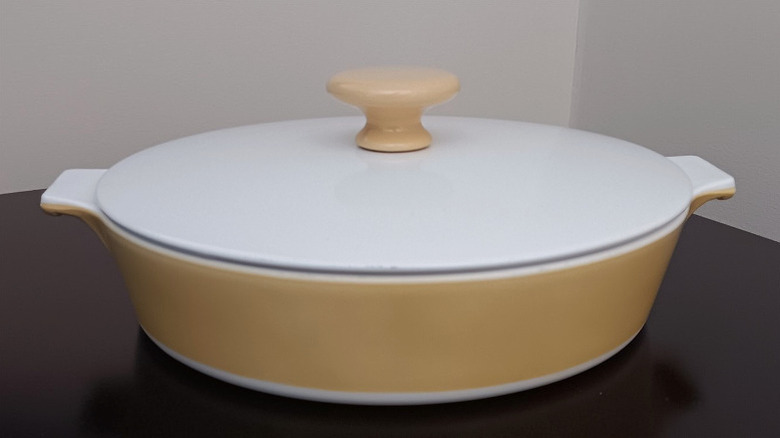
Of CorningWare's stand-alone collections, the round six-piece butterscotch set stands out. The classic clear tempered-glass lids that many CorningWare dishes are topped with are absent from this collection, instead featuring a white lid with a round yellow knob in the center. The set includes various dish sizes and types, from saucepans to Dutch ovens. Like other vintage CorningWare products, these pieces' built-in handles could fit longer detachable metal and Bakelite handles, enabling cooks to use the dishes as skillets or pans.
Since the butterscotch pattern was only produced for a year, it's rarer than, say, the company's ubiquitous blue cornflower pattern. That factor alone immediately makes it valuable '60s-era bakeware. And if you can find the pieces in good condition, that'll amp up the dishes' worth. Ditto for CorningWare that comes with its lids still intact. And if you have the original box the dishes came in, you've hit the jackpot.
If you're looking for your own set of these golden-hued dishes, you'll find them in the wild in the usual places: on eBay or Etsy, at estate sales or second-hand stores, or via collector forums and auctions. Rare or short-run pieces that fit the above criteria can generally fetch hundreds of dollars on the market, but you can also find plenty of pieces from the butterscotch collection through online auction sites for under $50. Wherever you find your CorningWare, these simple yet stunning pieces are worth taking home.