

Not Gravel — The Durable Material To Use As Permanent Mulch For Your Hardy Plants
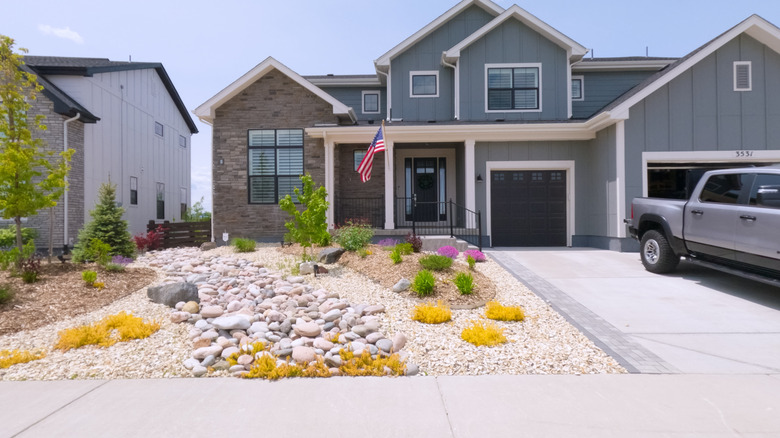
Gravel gardening is having a moment in 2026, and while anyone can appreciate the easy care and low-maintenance approach of gravel paths and xeriscapes, not everyone likes the industrial look of gravel. There are some lesser-known gravel types to consider when landscaping, especially if you want a permanent mulch. If you've ever hiked a well-worn trail in the mountains and felt the gritty crumble underneath your boots, you likely have an idea of what to expect from decomposed granite. It's the perfect material to use as permanent mulch for tough, durable plants like yarrow, bunchgrasses, and Mediterranean herbs.
Much smaller than regular quarry process gravel, decomposed granite is more like a gritty, sandy soil that is often sold at a size of ⅜-inch or less, which includes fine grains and dust. It comes in shades of tan, gold, pink, and gray, depending on the source. The fines help settle it into place, so you get a firm layer of mulch that's also remarkably porous. You can get it with or without a binder, but the type with the binder compacts, so it's better used for paths than as a permanent mulch.
Although larger stones don't make good mulch, gravel that's smaller than a half-inch can provide benefits like reduced evaporation and weed suppression when it's placed a few inches deep. The "decomposed" part just refers to it being worn down into tiny particles. Unlike traditional wood bark mulches, granite won't rot away. Decomposed granite also lets water through better than wood mulches.
Install decomposed granite as mulch in a hardy landscape
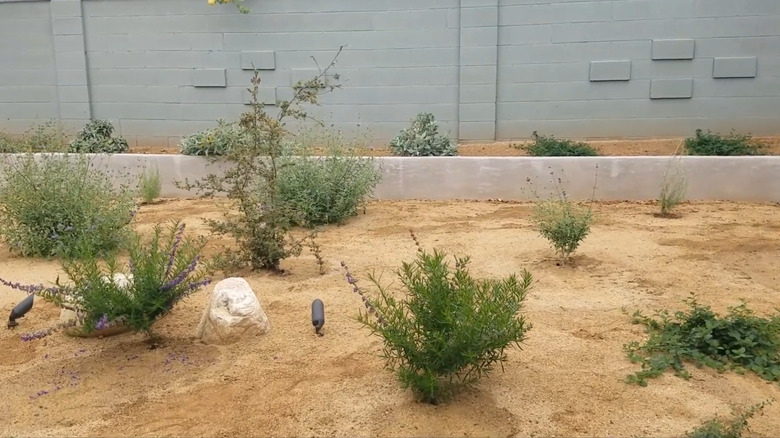
It costs about $60 per ton for decomposed granite, which is comparable to the cost of gravel, if not slightly more expensive. However, it's a good choice for fire-resistant landscapes and creating defensible space in your yard, working best in dry climates and water-wise gardens. Combining decomposed granite with native plants and shrubs like creeping juniper (Juniperus horizontalis) and bearberry (Arctostaphylos uva-ursi) is a fast way to get a hardy, naturalistic landscape, which is why it's popular in states like Texas, Arizona, and California.
You can skip using landscape fabric underneath your decomposed granite, since that just gets clogged over time and weeds tend to root on top of it anyway. Instead, consider installing a drip system so that when you water, it only goes to the plants you want to grow, and the mulched areas stay dry and inhospitable to weeds. If you're using large stones placed around your yard for a more natural effect, place these first before spreading the decomposed granite.
After planting and arranging, lay decomposed granite as a mulch on flat areas only, since it erodes away on slopes during hard rains. Spread decomposed granite about three inches deep to block weeds. You can cover the drip lines you laid earlier to achieve a nicer aesthetic and protect them from UV rays and accidental damage. When you use this mulching and watering combination, you may still have to weed, but pulling weeds up from the granite shouldn't be difficult. Another tip is to use decomposed granite and natural plantings as a driveway border idea to boost curb appeal.