

7 Reasons To Build A Retaining Wall (And 6 Reasons You Shouldn't)
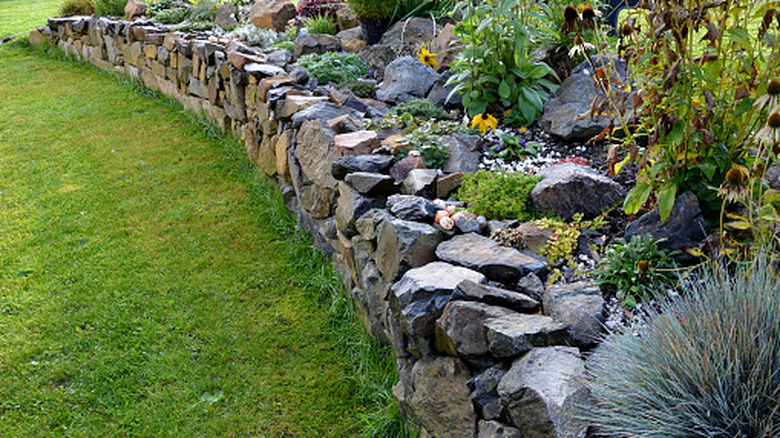
There are plenty of reasons to build a retaining wall. Those seeking a little extra privacy from prying neighborly eyes can benefit from one, as can gardeners who are tired of tearing their hair out over soil erosion. Not only that, there are so many retaining wall ideas that can look great in the garden, that even if you don't have "issues" to solve, you're still likely to enjoy one.
With that being said, there are also some very good reasons to rethink a retaining wall installation. It largely depends on what you're trying to achieve, and how you're planning to achieve it. But, as with any hardscape installation, maintenance can be a big factor in the decision making process, as can the expense of both building it and ensuring it remains safe and stable. If you're on the proverbial fence over whether or not you should build one, this guide to retaining wall pros and cons may just help you pick the right side.
It can help to prevent soil erosion
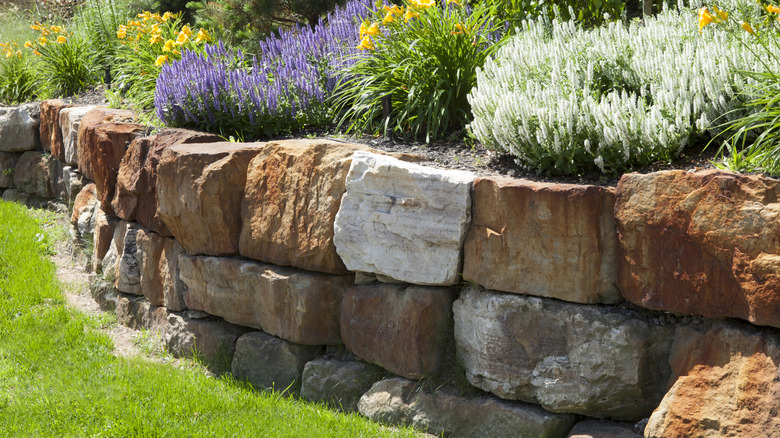
In sloped gardens, soil erosion can feel like a simple fact of life that pragmatic horticulturalists just need to get over. But it needn't be. In actual fact, there are various ways that you can mitigate against such annoying problems. For example, it's possible to prevent soil erosion by digging a dry creek bed, lining it with stones, and allowing the water to funnel through that instead. However, doing so effectively sacrifices that stretch of your yard to drainage. Similarly, there are lots of ground cover plants that can mitigate against soil erosion, like coral honeysuckle, although they'll naturally soak up space in your yard, too.
Retaining walls, as we'll see later, can not only prevent soil erosion, but they can also be immensely practical for a number of other reasons. With that being said, they need to be built right. Depending on the severity of the slope and the amount of soil that you need to contain, it can become quite an involved, complicated, and expensive process. But if you want to prevent soil erosion while maximizing your enjoyment of your yard, building a retaining wall can be an excellent way to do it.
A retaining wall can add curb appeal and increase property value
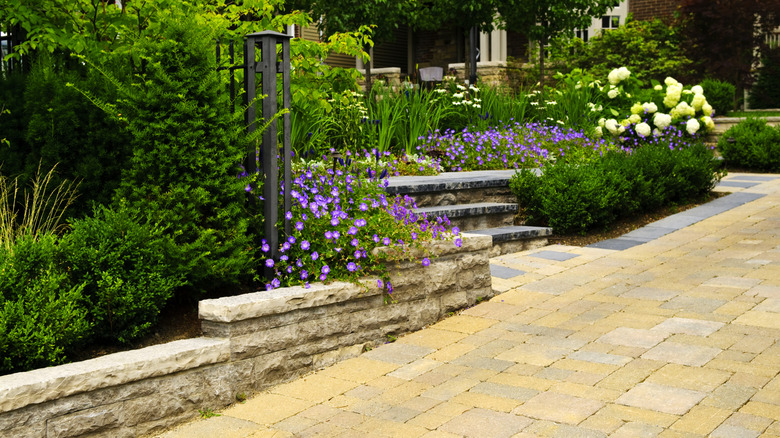
This point is really just a bonus if your primary reason for a retaining wall is to prevent soil erosion. Even if it's not, it's useful to know, especially if you're planning to sell your property soon and are looking for ways to boost your home's value. However, if you decide to build a retaining wall purely in the hope that you'll make money on it, there are some things worth knowing first.
For example, while retaining walls often recoup between 100% and 200% of the investment cost, that's not a blanket guarantee. The amount that you get back will depend on various factors, not least the location of the wall and how it "interferes" with the aesthetics and natural views of your garden. The materials you build it with will make a difference, as will the nature of the build itself. In other words, if you knock together a wall yourself, it may return less than a wall that was engineered and built by a professional. With that said, provided that your wall is professionally built and works to improve your yard's aesthetic, it may well be seen as a valuable feature by potential buyers.
You can use retaining walls to create zones in your garden
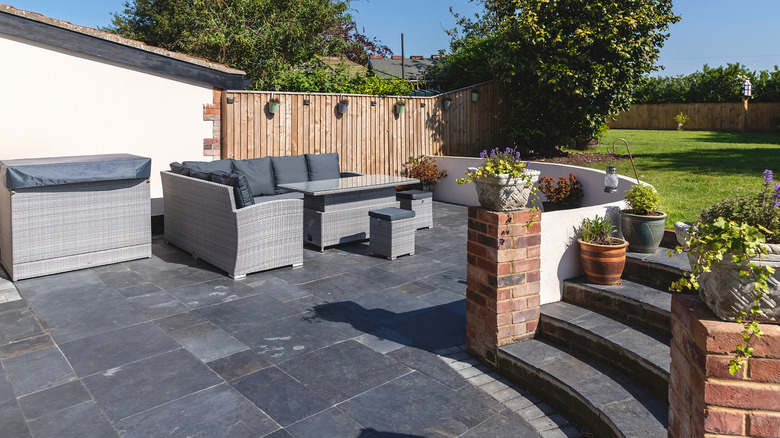
Following on from the previous point about enhancing your yard's aesthetic, a retaining wall can also increase the usability of your garden. For example, let's say you have two or more areas around your yard that, due to slopes, exist at different heights. If so, they can be separated with retaining walls. This, in turn, creates leveled areas, or zones, that all of a sudden become much easier to use.
As for why this might prove reason enough for you to build one, just think about what you could do with those spaces. By using a retaining wall to "wall off" the end of a slope, and then leveling the area at the base, you could easily create a patio or outdoor kitchen. Alternatively, you could use that space to finally start a raised bed garden — something that may not have been possible with your previously higgledy-piggledy garden. You could even use walls to organize your garden into multiple terraces, with different growing areas.
Retaining walls usually require little maintenance
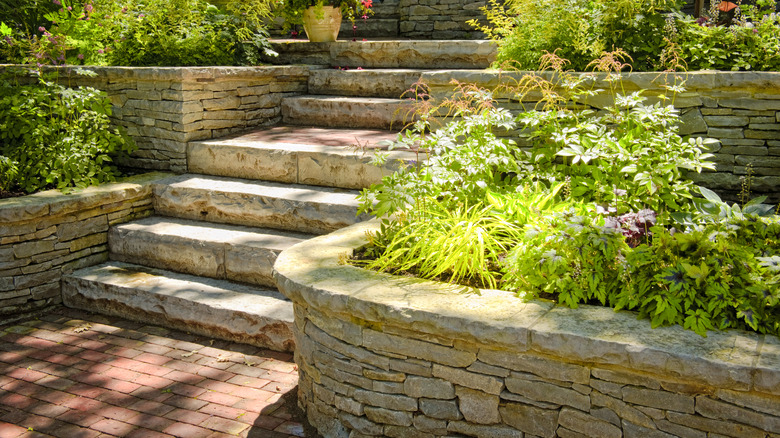
Now, the first thing to say here is that the amount of maintenance required hinges on some very important factors. We'll cover these in more detail later, but essentially, your wall needs to be both well-built and constructed from robust materials. That's not only to minimize the amount of maintenance required, but also, more importantly, to ensure that the wall is safe. However, provided that you achieve those things, it shouldn't require too much maintenance to ensure that it remains structurally sound.
You may still need to weed it from time to time, since, if there are gaps between the blocks, weeds may well poke through from the soil behind. You may also want to give the wall a good clean from time to time. But other than that, it ought to last while demanding minimal maintenance on your part, as compared to fences and other landscape features.
There are different types of retaining walls to suit different spaces
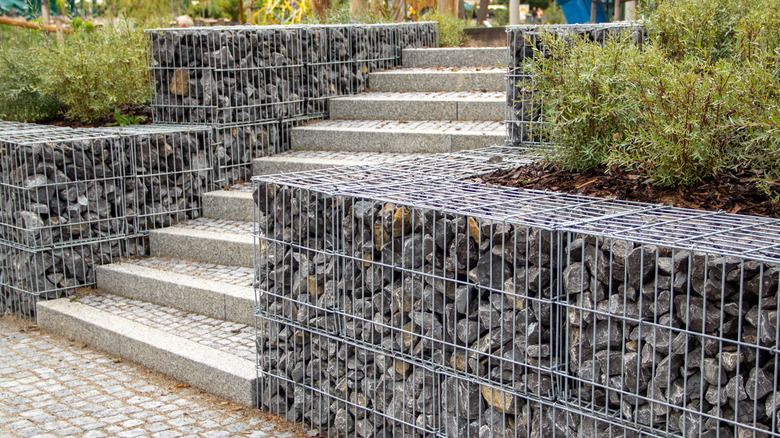
Another reason to consider building one is that "retaining walls" actually encompasses a whole list of different structures. Depending on the severity of your slope, you can choose a type that's most likely to be effective in your garden. Gravity walls, for example, are the simplest, and usually the most suited to DIY retainer wall builds. They're typically quite short and rely on their own weight to hold soil back, which is fine on minor slopes or where they're used primarily for decorative purposes.
For steeper slopes, where the wall will have to cope with lots of heavy soil, there are more complicated options that you can use to your advantage. Sheet piling walls, for example, feature either wood or steel that's driven into the ground to form a barrier. Others require anchors to be installed into the ground, and there are those which use alternating layers of soil, reinforcement materials, and anchors. The only downside is that you'll need to consult a professional to assess your yard for these, and ideally have them build it for you. However, it's at least reassuring to know that even in severely sloped yards, it's possible to benefit from a retaining wall.
Retaining walls can be planted on to enhance their aesthetics
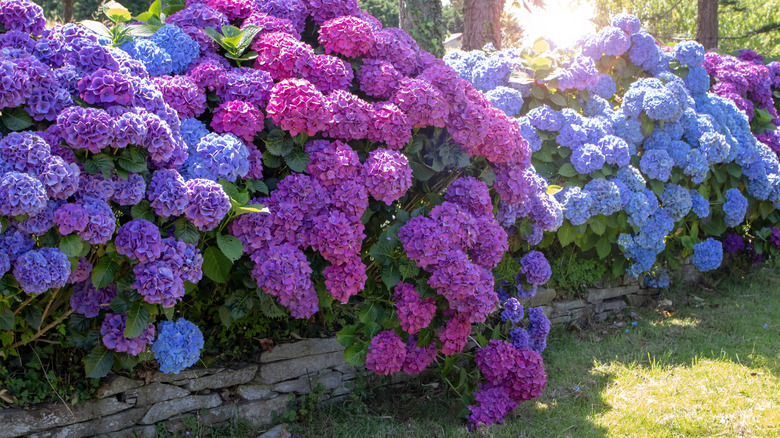
This has to be one of the most attractive reasons to build a retaining wall. As well as holding your soil back, preventing erosion, and providing yourself with more usable space, it's also very easy to plant on retaining walls and make them blend into the wider garden. You can use climbers, tall grasses, or shrubs — the choice is up to you. The point is that you can easily soften the wall's look, allowing it to blend more seamlessly into your garden's natural landscape.
Alternatively, if you've always wanted to grow your own food, but never had the usable space to do so, you could turn the retainer wall into a vegetable garden. By planting the soil above with herbs or vegetables, you'll have a ready supply of chosen kitchen goodies to pick ahead of dinner time. Not only that, but since you'll be able to stand at the base of the wall and simply reach in, tending your patch will be much easier. You'll save your back on all of the planting, weeding, and general maintenance that comes with growing a vegetable garden.
You can add shelter and improve privacy with a retaining wall
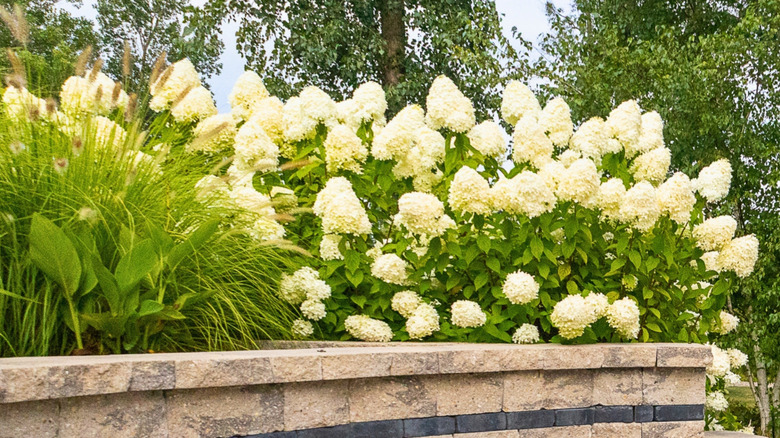
Installing a wall is one of the most effective ways to add privacy to your backyard. Of course, the amount of privacy that it affords will depend, to an extent, on the height of your structure. However, if you pair your retaining wall with some of those aforementioned shrubs or tall grasses, it shouldn't take long to block the sightlines that your neighbors need to be nosy.
In order to make the most of this, you'll want to refer back to our previous point about zoning your yard around your wall. Positioning your seating area at the base of your new wall will give you the best chance of shielding yourself from view. The wall should also help to buffer your seating area from the worst of the wind, and you may also find that it helps reduce noise pollution, too.
Retaining walls can be dangerous
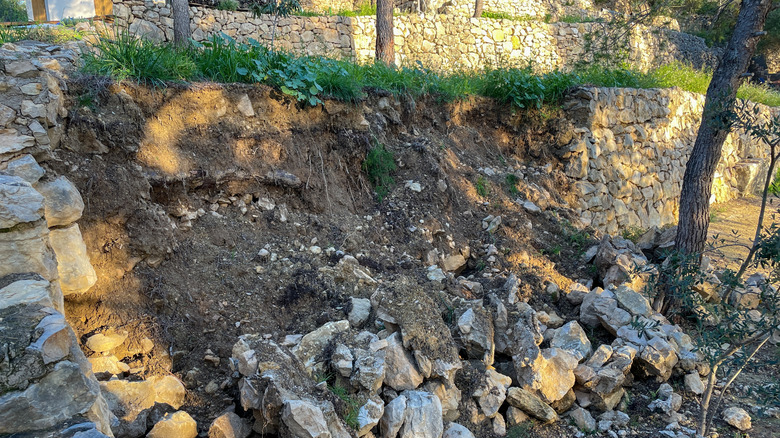
So far, we've covered plenty of reasons to consider adding a retaining wall to your yard. Indeed, if you've gotten this far, the idea is probably feeling like a no-brainer. And we certainly don't want to bring the vibe down. However, it is important to provide balance, especially when it comes to safety. Now, if a retaining wall is installed properly — with consultation labor from a professional — then this shouldn't be an issue. But if you do it yourself, and you don't properly factor in the weight of the soil that's pushing against the inside of the wall, it could simply collapse. This can also happen if your wall isn't regularly inspected and maintained by a professional.
The other safety consideration pertains to children, and indeed anybody using your yard who's not fully familiar with it. Children running around (and adults, for that matter) could easily fall over the edge of the wall if they don't realize that it's there. You can, of course, get around this by installing a fence on top of your wall. However, that will add to the amount of maintenance that your wall needs to remain safe. It'll also add to the overall cost of installation, which, as we'll see shortly, isn't always cheap.
Retaining walls risk spoiling the aesthetics of your landscape
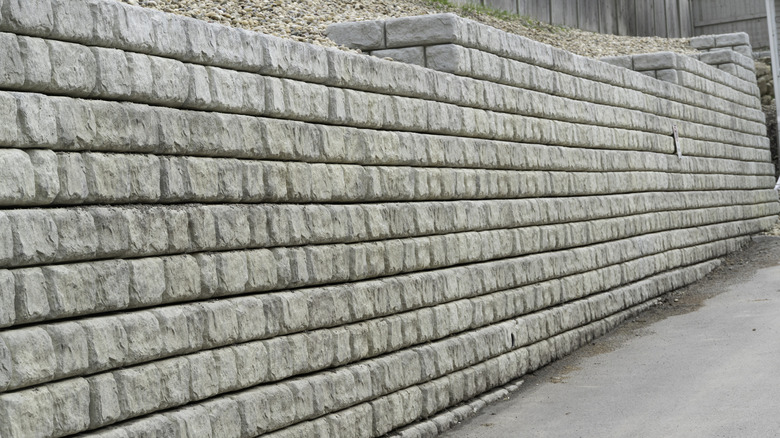
This one depends, in part, on what you build your wall for. If it's purely to aid with drainage at the base of the slope — because you have no other way of doing so — then it could risk feeling out of place. However, if it's built in a bid to also "zone" your garden with intentional landscaping in mind, then that intention can help to improve the look.
It also depends on how the wall is planned and built. If you install a dull, dreary wall that contrasts the otherwise-natural beauty of your garden, then it'll look conspicuous. To avoid this, you could enlist a professional landscape architect. They'll be able to find a way to develop your retaining wall so that it's both effective and attractive to look at. They may be able to find ways to make the walled landscape interesting, even using the wall as a way to tie your landscape together more cohesively. Of course, the main downside to this is that hiring a professional costs money. However, if you genuinely need a retaining wall — and you don't want it to spoil your garden's aesthetic — it could well be worth the cost.
You'll likely need to have your wall inspected regularly
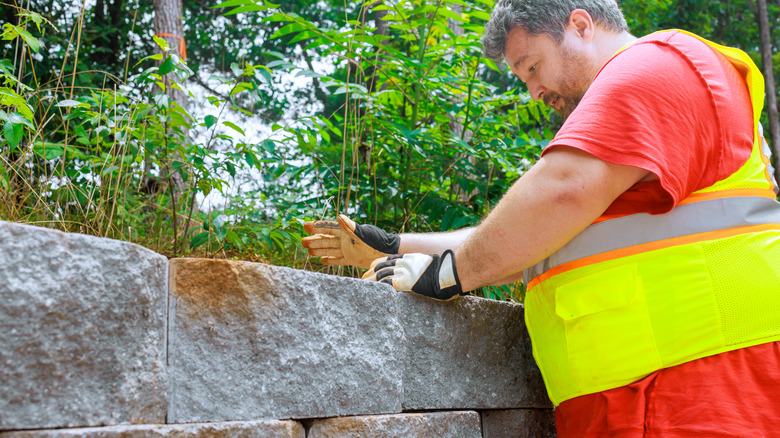
While retaining walls usually require less maintenance than, say, garden fences, they do still require annual inspection and occasional maintenance. These structures can be susceptible to erosion and even cracking, particularly if the soil behind them is constantly becoming wet and drying out. If it freezes and thaws, then cracks are even more likely.
For this reason, not only is regular inspection and maintenance necessary with most retaining walls, but depending on the size and complexity of your wall, you should also hire a professional to do it. On smaller walls, you may be able to seal and repair any cracks and faults yourself. But larger structures can become very unsafe if not professionally maintained, and unless you're trained, that maintenance is unlikely to be within your abilities.
They can be expensive to build
The expense of retaining walls is relative to the issues that they solve. If you have soil erosion problems, for example, or a garden that's so sloped that you can't use it, then they're often considered worth the expense. Not only that, but not all retaining walls cost the same. As a general rule, professionally-built retaining walls tend to cost between $20 and $50 per square foot. But that's by no means a blanket rule.
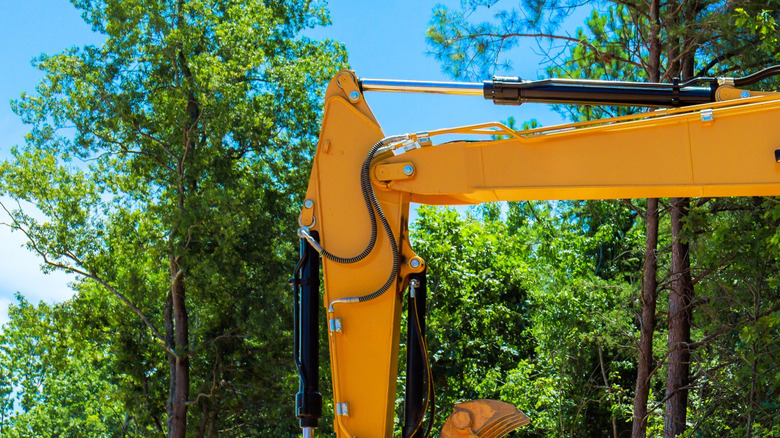
For example, if you're going with a simple gravity retaining wall, which is typically quite low and easy to build yourself, then you can keep costs down. You can do the work yourself if you're comfortable, and you can use cost-effective materials like bricks, concrete blocks, or even wood. But if you need to build a larger wall, or one to retain the soil on a steep slope, then for safety's sake you will need to hire a professional. Such structures often require complex planning and engineering, and unfortunately, that all comes at a cost. We don't just mean the cost of their labor, but also that of the materials, any heavy equipment they need to build it, plus any ongoing inspections and maintenance.
Retaining walls are not suitable for every situation

As we mentioned, there are many scenarios in which a retaining wall is a great idea. It can provide more privacy, give you space to grow a garden, and create usable space to both relax and entertain. But it's not always the best idea. Unfortunately, some gardens are simply unsuitable for one. It could be down to the severity of the slope in your garden, or there might be large trees with hefty root systems that make such a structure unrealistic. You may even have cables or utility lines running beneath the proposed structure, which would likely write off the project before it even gets started.
For this reason, it's usually best to consult a professional to see whether or not your retaining wall project is feasible. And yes, that's likely to come at yet another extra cost. But it's important. The last thing you want is to hire a contractor, have them build your wall, only to find that it's sitting directly over a water line. If that water line bursts, then in many cases, your local authority would be well within their rights to demolish and remove the wall — and often at your expense.
Depending on the nature of your wall, you may need to get a permit

Following on from the previous point about suitability, you may well need to source permission from your local authority before building a retaining wall. Yes, there are some landscaping projects that can be done without a permit, and they often include low retaining walls. But for taller structures, that's unlikely to be the case. Admittedly, it depends on where you live and the specific building codes in your area. For example, in many areas, there are restrictions placed on walls over 4 feet high. There are even some places where walls over 3 feet must be coded.
Another thing you'll need to research is what your authority will need from you in order to approve your retaining wall. For larger structures, your word that it'll be built safely and by a professional is unlikely to be enough. Instead, you may be required to provide professionally-approved engineering plans. And guess what? Those will need to be paid for, too!