

Use This Bathroom Staple To Easily Remove Yellowed Sunscreen Stains
We may receive a commission on purchases made from links.
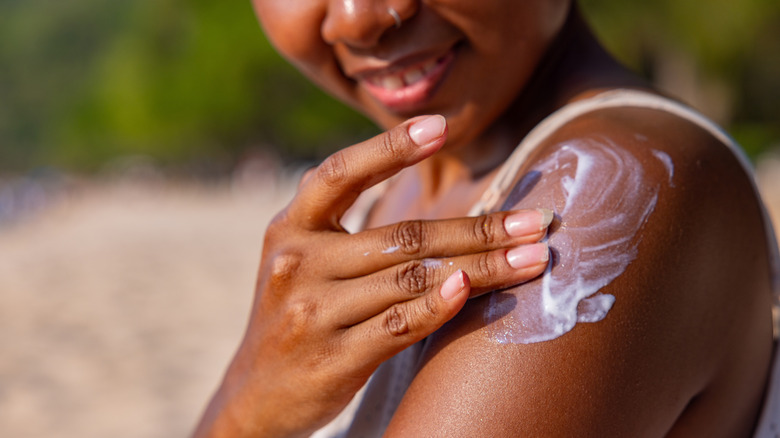
Getting a stain on your clothes or other accessories can be annoying — especially those yellow-tinted, hard-to-remove stains from your favorite sunscreen. And each year, it seems like it's just bound to happen at some point during your summer fun. So, should you just pitch the item when you can't remove the stain, or can it be saved? Good news. It turns out that you may be able to save your accessories when you get these sunscreen stains that won't go away. It involves using an affordable product that you likely already have in your bathroom: hydrogen peroxide.
That's right, the fizzy antibacterial agent is also a superb natural cleaning ingredient and, thanks to its amazing bleaching properties, can be used to remove these yellow stains. It's worth noting that this recommendation is best used for materials that are light-colored or white. The reason is because it may cause spotting on darker-colored clothes, even when diluted. Hydrogen peroxide is essentially an oxidizing agent that will break down the dyes in these fabrics, leaving you with faded areas and blotches.
If you don't keep hydrogen peroxide on deck, simply head to your nearest pharmacy or grocery store to buy a bottle, which typically costs under $5. Amazon also has Dealmed 3% Hydrogen Peroxide for sale, though you can expect a slightly higher markup than what you'd pay locally. So before you toss out those stained boating shorts or your go-to tote bag, try putting this hydrogen peroxide hack to the test, as it's often touted as one of the most reliable ways to get tough laundry stains out for good.
Steps for using hydrogen peroxide to remove yellowed sunscreen stains
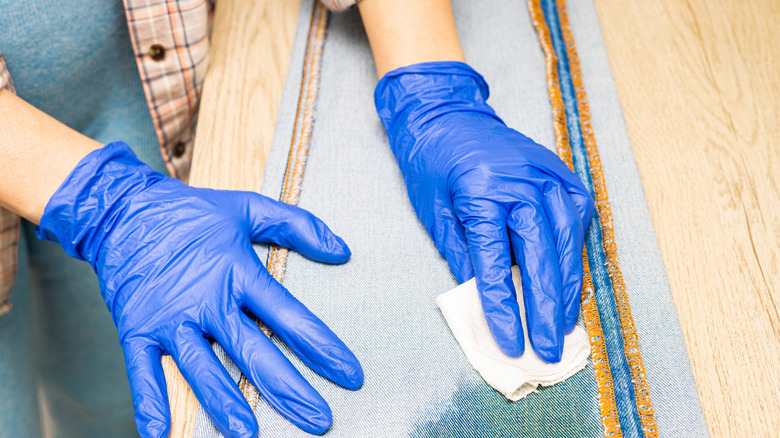
If you do get sunscreen stains on your clothes, it's best to use a flat edge like a credit card to remove any excess immediately. You don't want to rub it with a cloth, as it can cause the sunscreen to sink further into the material. To tackle the stain, even if it's yellowed and already set in the fabric, try mixing a tablespoon of peroxide (it should be fresh and fizzy) with 2 tablespoons of cool water. It's best to have on a pair of gloves, as repeated contact with hydrogen peroxide can cause skin irritation. If you don't wear them during this process, and your fingers start tingling, stop and rinse your hands with water right away.
Before trying the peroxide on the entire stain, especially if it's a larger stain, it's best to test it on a small area first. Different types of fabrics will have different reactions. For example, synthetic materials and blends will react differently than pure cotton weaves. If the spot test goes well, use a clean cloth to blot the entire stained area, allowing the peroxide to deeply penetrate the stain.
Let the fabric air dry completely, then check your results. If the stain is still visible, repeat the process once more before tossing the item in the washing machine on a hot water setting (because it's an oil-based stain). When you're finished, be sure to safely store your hydrogen peroxide by keeping it in a cool, dark place with the lid tightly secured.