

The Best Perennials For Attracting Songbirds To Your Garden In All Four Seasons
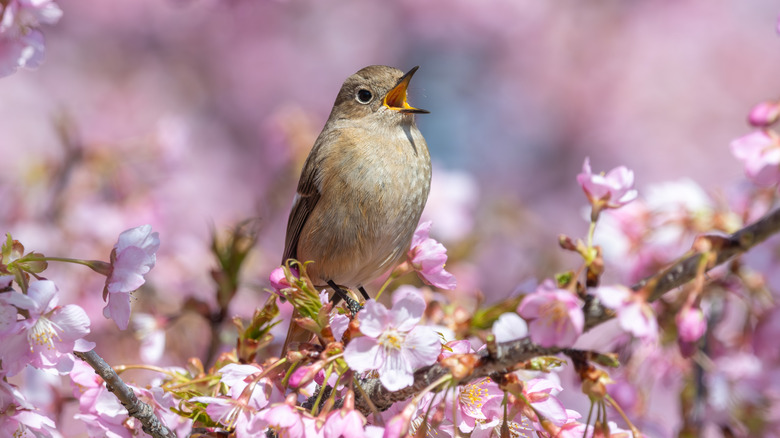
One of the simplest pleasures of gardening is hearing songbirds chirping and singing as they perch in trees or forage for insects. In my work as a professional gardener, I not only witness these birds' behaviors and habits in my daily work, but I understand the ways they bring biodiversity into the garden. If you want to attract songbirds to your garden all year round, there are a number of perennial flowers and shrubs that are surefire ways to bring them around.
A diverse ecosystem in the garden allows plants, insects, birds, and other wildlife to coexist in ways that encourage sustainability. Different birds have different food needs: some (like hummingbirds) eat nectar from flowers, some eat insects or worms, some eat seeds or nuts, and some eat berries and other fruits. Even if you don't have room to plant trees, there are smaller shrubs and plants that will attract many songbirds to fill your garden with beauty and song.
In early spring, migratory birds are looking for insects. Leaving your brush pile undisturbed and some small piles of leaves unraked until after the last frost date allows more pollinators and other beneficial insects to proliferate. Late spring and summer bring flowers with nectar, and more insects. Then in fall, late flowers, berries, and fruits complete the cycle. In winter, birds seek out plants to give them shelter and protection, but also may enjoy any remaining nuts, seeds, and fruits on trees and shrubs to feast on. These perennial plants are among the best ones to plant to help attract an array of lovely songbirds to your garden across all four seasons.
Elderberry
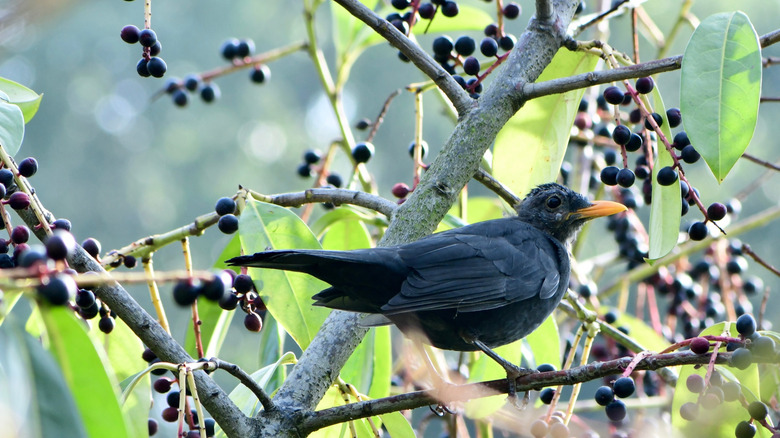
Berry bushes can provide many benefits for songbirds, including flower nectar that attracts insects, nutritious berries, and branches that provide protection from predators and shelter during the winter. The elderberry (Sambucus) has berries sought out by many birds, including cardinals and tanagers. Rose-breasted grosbeaks rely on the nutrient-dense berries as their main food source during fall migration. The dense clusters of branches make a good winter shelter from cold winds.
Highbush blueberry
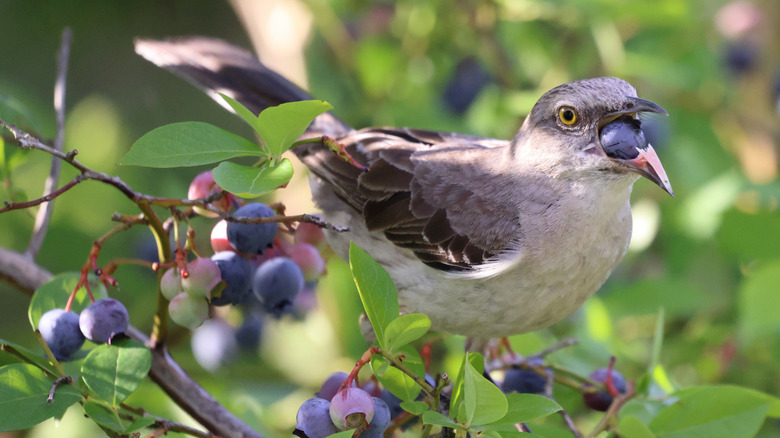
Did I mention songbirds love berries? Growing highbush blueberries (Vaccinium corymbosum) provides them with abundant food all summer. These wild blueberries are native to the eastern USA, and attract a variety of honeybees, as well as cardinals, tanagers, bluebirds, thrushes, mockingbirds, and catbirds. They grow between 5 and 15 feet tall, and produce small but flavorful berries that make delicious jams and pies, if you can get the birds to share. These shrubs need full sun. I use natural pine bark mulch to protect the roots and lend acidity to the soil, to help them get established after planting.
Baptisia
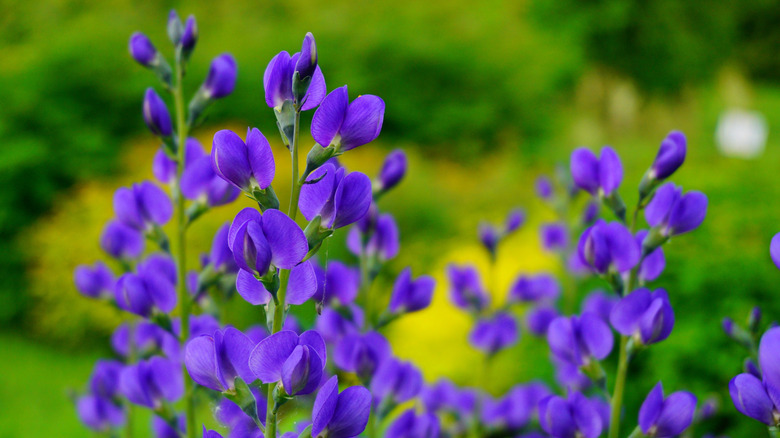
Also known as false indigo, Baptisia australis is a hardy perennial with tall stems that produces bright violet flowers in late spring, followed by seed pods in late summer. The flower nectar attracts pollinators, and the seed pods attract birds through autumn. I've seen birds perching on the curving stems pecking at the pods. Hardy in USDA Zones 4-9, this is a resilient perennial, but it doesn't really like to be divided or moved, so give it a good spot with room (it spreads to about 3 feet wide) and plenty of sun.
Serviceberry
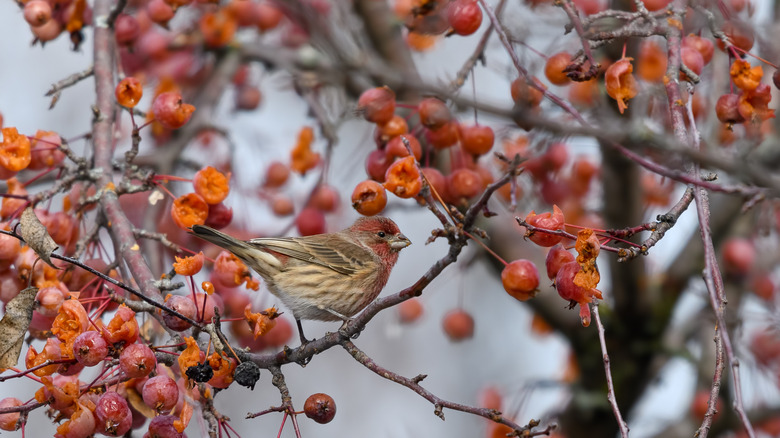
The serviceberry (Amelanchier) is an easy-maintenance fruiting shrub that birds love, as it provides nutritious berries and habitat. If you have room for a small tree, the downy serviceberry (Amelanchier arborea) grows between 15 and 25 feet tall. Serviceberries attract many songbird species, especially cardinals, thrushes, grosbeaks, and finches. The flowers of both shrubs and trees attract pollinators and insects in spring (helping feed birds).The berries often remain on branches into the winter season, providing food for migrating songbirds in fall and other birds who remain as the weather turns cold.
Ironweed
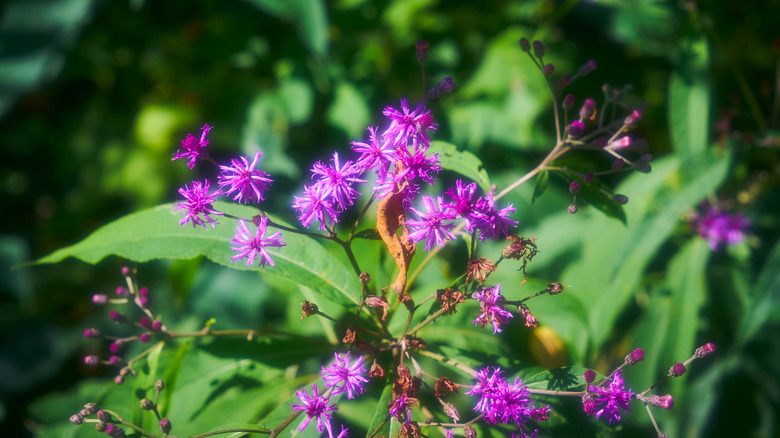
New York Ironweed (Vernonia noveboracensis) is a native wildflower seen throughout the Northeast USA. It grows quite tall (4 to 6 feet) and produces colorful clumps of bright violet purple flowers in late summer. It's very easy to grow and tolerant of many soil conditions. It provides abundant flower nectar for various pollinators, and the tiny seeds produced by the flowers in autumn are eaten by various songbirds, most notably different varieties of finches.
Viburnum
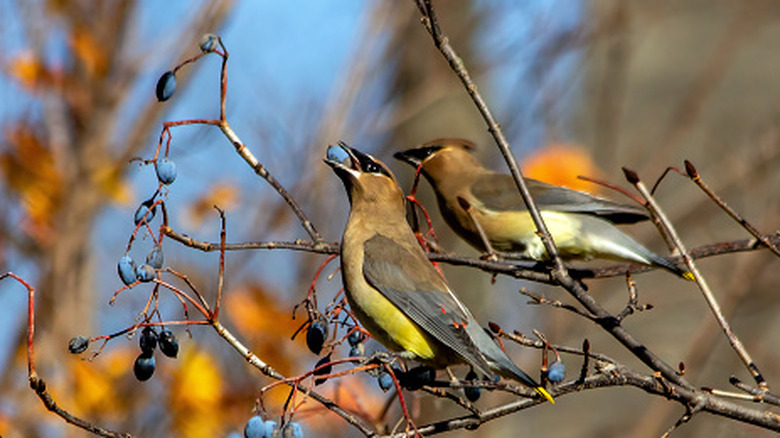
Viburnum shrubs provide good shelter and cover for birds all year long. Two of the best varieties for attracting songbirds are Arrowwood viburnum (Viburnum dentatum) and Possumhaw (Viburnum nudum). These cold-hardy shrubs produce white flowers in spring and abundant black berries in late summer that continue ripening through autumn, as the leaves turn deep burgundy and fall off, leaving some berries for winter bird snacks. Popular possumhaw cultivars with colorful pink and blue berries include 'Winterthur' and 'Brandywine.' Some species of viburnum, like European cranberrybush (Viburnum opulus) are invasive in the US, so be careful when choosing your variety.
Asters
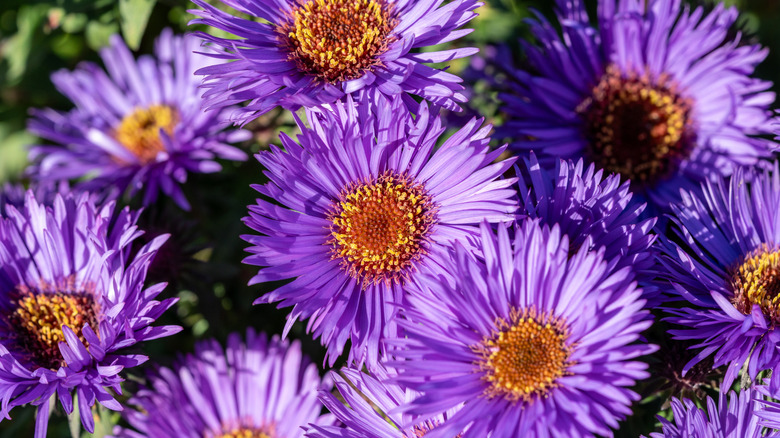
Asters (Asteracea, or more specifically, Symphyotricum) are daisy-like flowers that bloom from September through November. The nectar offers late season food for pollinators, while the tiny seeds are loved by finches (who also love evergreens). The most commonly-grown varieties are Belgian, New York, and New England asters, which come in a wide array of colors and sizes. I like to combine short, medium, and tall asters. Try low-growing 'Wood's Blue' or 'Wood's Pink' planted with 'Purple Dome' (18 to 24 inches) or 'Eventide' (24 to 30 inches), and tall (3 to 4 feet) 'September Ruby'. Asters really light up the garden with color and attract butterflies, bees, and birds.
American beautyberry
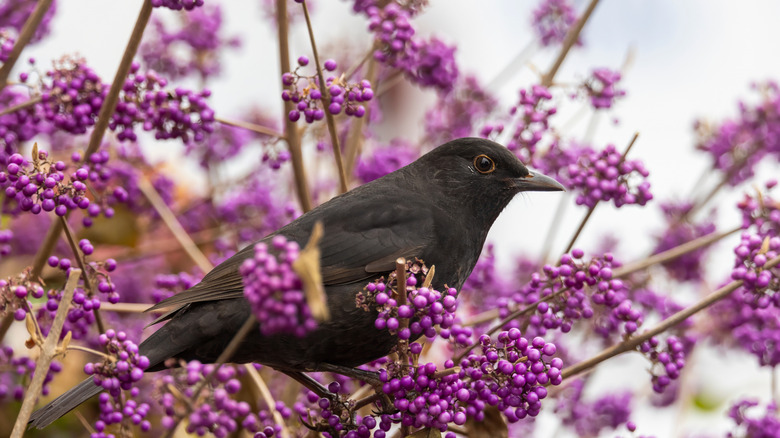
The American beautyberry (Callicarpa americana) is an attractive shrub native to the Chesapeake Bay area. It's hardy in USDA Zones 6-10 and produces bright purple berries in late summer that last through early winter. The berries attract many songbirds, though I've found it may take several years after planting one for it to naturalize to the point where birds take an interest, especially if there are other berries available. The dense, criss-crossing branches also provide good winter shelter for birds. Prune them back hard every other year in early spring to encourage a neat growth habit.
Sulphur buckwheat
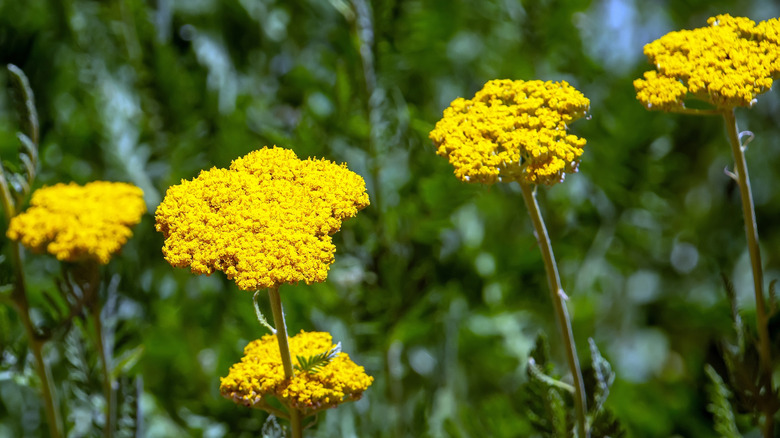
Sulfur buckwheat (Eriogonum umbellatum) is a wildflower native to the western US. It's a hardy groundcover that is easy to grow and drought tolerant, well-suited for USDA Zones 3-8. The 'Kannah Creek' cultivar has bright yellow flowers in late spring and summer, and foliage that changes color from silvery green to deep burgundy in fall, providing four season interest and a healthy habitat for pollinators, beneficial insects, and birds. This is a great choice for native plant gardens, not fussy about soil or weather.
Coneflower
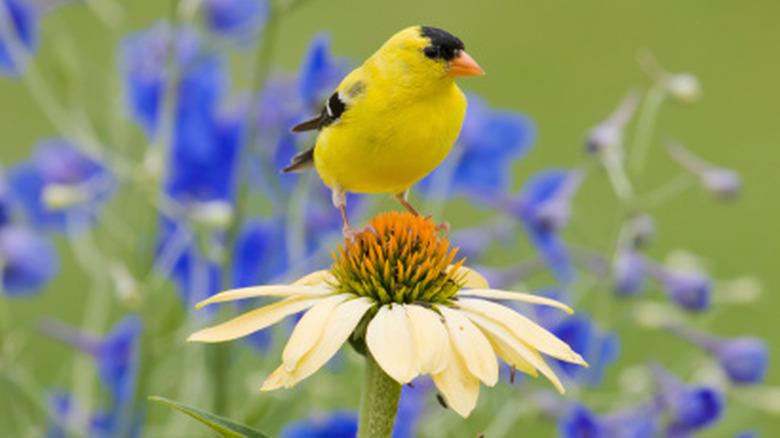
The conefower (Echinacea) is a great perennial for so many reasons. It's low maintenance, long-blooming, and drought-tolerant. Best of all for nature lovers, coneflowers attract both pollinators and birds! The cone centers have sweet nectar to lure hummingbirds in summer, then produce seeds that provide nutritious food for songbirds (including finches, cardinals, and blue jays) from fall through early winter. The powder-puff cultivars are pretty, but don't provide the seeds for birds, so be sure to choose the right varieties with the prominent cones. I love the cultivar 'Tiki Torch' (bright orange).
Northern spicebush
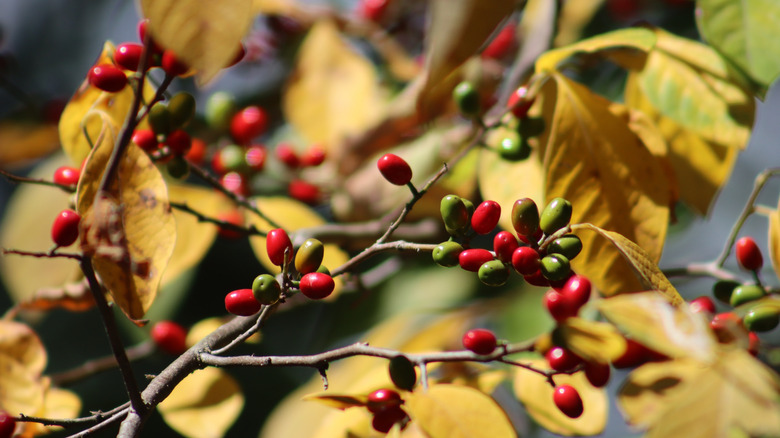
The northern spicebush (Lindera benzoin) is considered an important food source for migratory songbirds, as well as several specific butterfly species. This shrub thrives in partial shade and slightly damp soils, so it's a great choice for woodland gardens. To pollinate effectively and produce berries, you need both a male and female plant, so be sure you have room for them (they grow between 6 to 12 feet tall). It gets showy yellow leaves in fall, and the bright red berries attract a wide variety of birds, including chickadees, crows, titmice, cardinals, and nuthatches.
Wild geranium
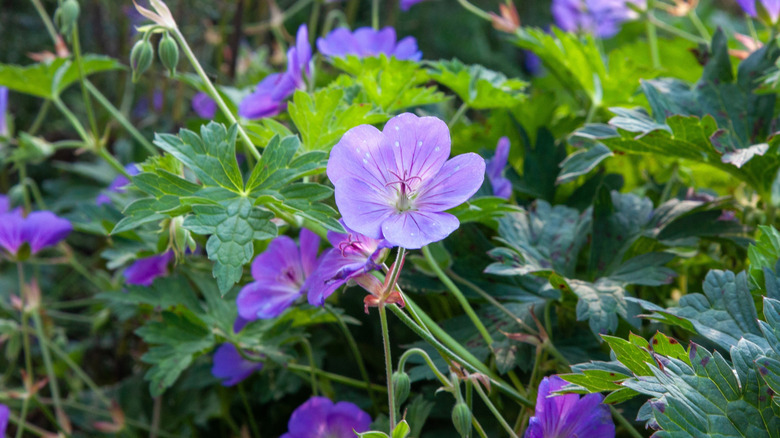
Also known as the spotted geranium or cranesbill geranium, Geranium maculatum is a low-growing, winter-hardy ground-cover geranium with large colorful flowers in spring. It attracts various pollinators and caterpillars, and the small seed pods (shaped like a crane's beak, which gives the flower its common name) provide food for various birds. This plant can provide food for a range of songbirds including titmice, chickadees, finches, cardinals, nuthatches, and crows.