

Using This Popular Tool To Remove Weeds Could Make The Problem Worse If You Get The Timing Wrong
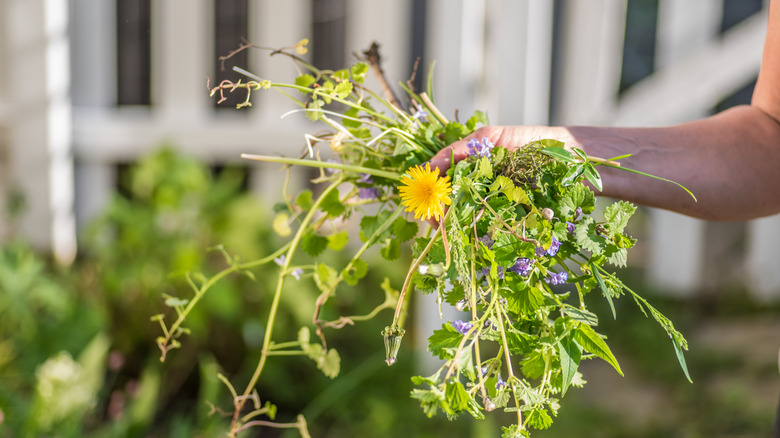
Having combed through hundreds of reviews and finally found the right string trimmer for your lawn, you're probably desperate to get it set up and start ripping through weeds. But before you do, ask yourself: is now the best time to do it? Yes, a string trimmer will make light work of most visible weed structures. And since you can usually stand up straight while you use it, it shouldn't give your back many reasons to grumble. But if you time it wrong, you could easily end up exacerbating your yard's weed problem. Weeds can spread themselves in myriad ways, depending on the species that you're dealing with. Many of them set seeds if they're allowed to grow and mature. If you then take your string trimmer to those heavily-laden seed heads, there's no telling where they'll end up spreading.
To put this into perspective, it's important to identify common garden weeds and take a look at how many seeds they typically grow per plant. Dandelions, for example, can grow up to 15,000 seeds per plant. Purslane, meanwhile, produces around 52,000, and there are others, like mullein, whose seeds can number over 220,000 per plant. If they're scattered in the right conditions, every one of those seeds could take hold.
So, what does this mean for you and your weed-management strategy? If you've been diligent about the weeds in your yard and they haven't gone to seed yet, then breaking out the weed eater won't be a big deal. But if you're finally embarking on an overdue project and the weeds in question are heavy with seeds, then you'll want to adopt a slightly different approach — and add a note in your diary to be more proactive in the future.
Use your string trimmer before weeds produce seeds
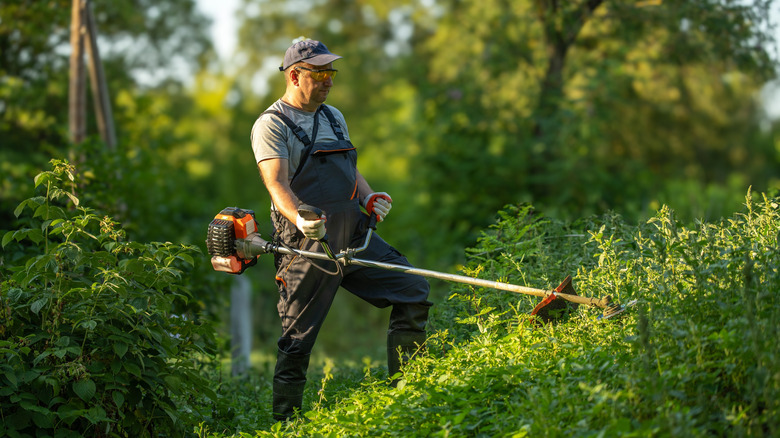
As we've touched upon, the least risky time to use a string trimmer is before the weeds in your yard have set seeds. Not only does this reduce the chances of unwanted seed spread, but getting rid of weeds and preventing them from returning is often easier when they're young and small. Unfortunately, to make matters more complicated, not all weeds set seeds at the same time.
For example, if you have summer annuals growing — like crabgrass — those tend to set seed towards the middle and end of summer, making early summer control essential. Winter annuals, like shepherd's purse, set their seeds in early summer, meaning you'll want to keep your eyes peeled and deal with them through the spring. You may also have biennial weeds, like common mullein, which grow over a two-year cycle before setting seed late in the summer or early in the fall of their second year. And don't forget about perennial weeds — pesky plants like dandelions that re-emerge every year, regardless of the wickedness of winter.
So, what should you do? Well, short of making an appointment with your string trimmer for every weed species in your yard, the best advice is to weed regularly throughout the spring and summer. By using your string trimmer frequently, you should be able to prevent seeds from developing in the first place. And if it's too late, don't be afraid to ditch the trimmer altogether. In that case, you can place a bag over the seedheads and remove the weeds by hand. Remember, the goal here is to avoid making your problem worse. Anything that you can do to deplete their seed bank and prevent new germination will contribute to fewer weeds in the future.