

Is It Okay If Garden Tools Are Left Out In The Rain?
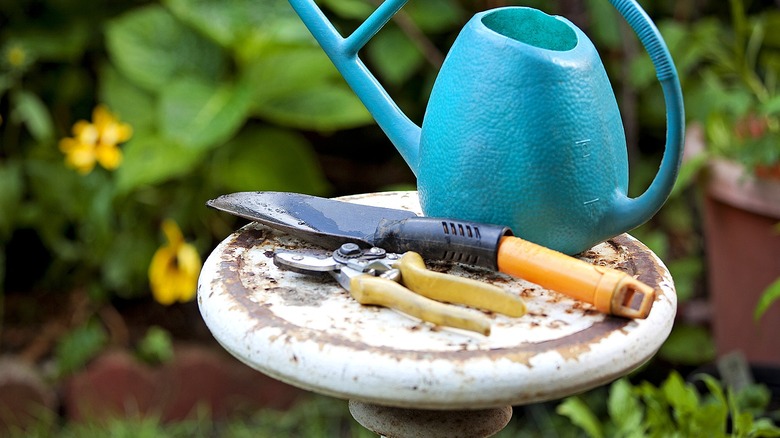
After a long day spent gardening, sometimes the extra step of having to organize your shed or dig through a storage bin to put gardening tools away can seem like a bit of a headache. Can't it wait ... but what if it rains. Is it okay to just leave garden tools out in the open to be rained on, and call it a day? Unfortunately, the answer is no. If you occasionally forget and leave your tools out when the skies suddenly open up, they'll survive. But this practice shouldn't be done often, or for extended periods of time.
In fact, it's best not to leave your yard or garden tools out at all, even if it's not raining, as ambient humidity can still cause them damage. When exposed to moisture, metal, of course, will rust, and wood can warp, rot, or crack in time. Plastic tools, meanwhile, might be waterproof, but ultraviolet rays can still damage them all the same (and yes, UV rays are an issue even on cloudy and rainy days).
This is even truer for heavier machinery, such as a leaf blower or lawn mower, which should be stored in dry places. Sure, you might use those on wet grass or when it's slightly raining, but leaving them out in the rain is much worse. Beyond rust, the water might seep into fuel tanks, or it could corrode electrical plugs. Considering how expensive those powered tools are, it's a much bigger mistake to forget them out in the rain overnight than it would be with a rake or shovel.
Rain can lead to rusty garden tools
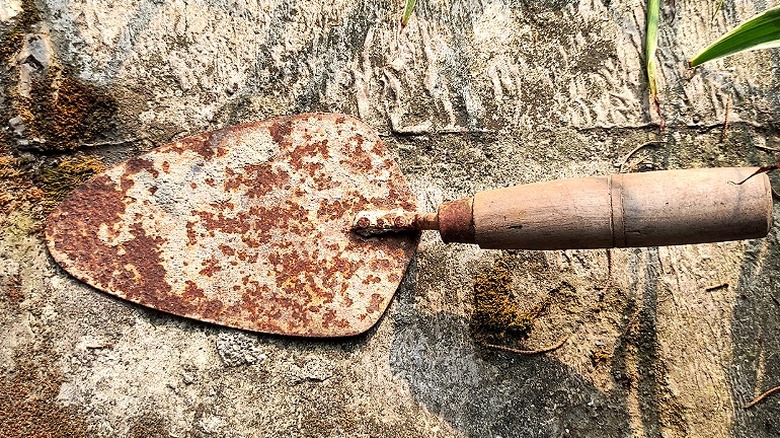
There are crucial reasons why you shouldn't use rusty garden tools. For one, rust gives tools uneven edges that can cut into plants, which can cause them to get infected by diseases. Plus, it also makes using the tools more dangerous for you (let's skip the tetanus shot, shall we). So, even if you're on top of other garden tool maintenance tasks, your priority should be to prevent or delay the arrival of rust. Storing tools in a dry place — and not leaving them out to get rained on — is an easy step you can take to that end.
And that's the thing really; the alternative to skipping on garden tool storage isn't that much work. After gardening, budget around 10 minutes of cleanup and organization time at the end of your day — that's it. Use this time to clean and disinfect your garden tools. This is especially true for gardening tools like pruning shears that touch plants and collect sap. For those, use a cloth and rubbing alcohol or a household disinfectant. With tools like hand trowels, shovels, and cultivators, meanwhile, the main concern is dirt residue and organic matter, so scrape such material off, then rinse. No matter what, dry the tools off completely before storing them where they won't get wet — like a garden shed, the garage, or a waterproof storage box.