

Plant This Fragrant Shrub In September For Pretty Fall Foliage And Winter Blooms
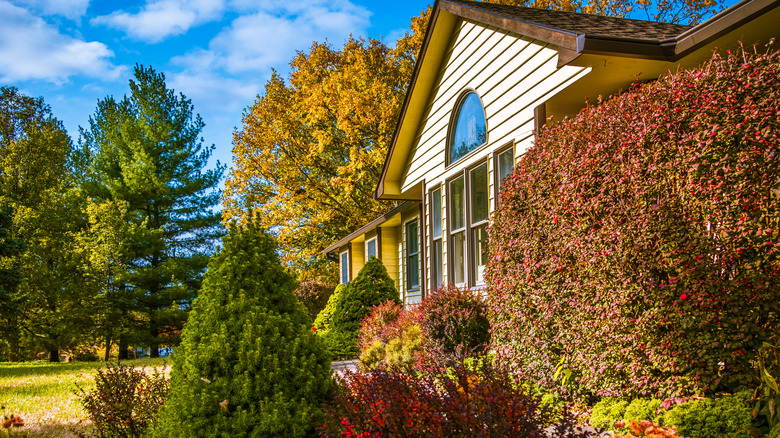
Browsing the nursery for a new plant is a bit like adopting a pet. You know what works best for your home, but ultimately, the cutest and cuddliest may claim your heart. In the same way, at the nursery, you might consider the season and your yard's growing conditions, but the most striking plants are hard to resist buying on the spot. However, there's a shrub that often gets overlooked when gardeners flood nurseries in the spring. The 'Arnold Promise' witch hazel (Hamamelis x intermedia 'Arnold Promise') doesn't look very special in spring or summer, but in the fall and winter, its stunning foliage and blooms will make it the centerpiece of your yard.
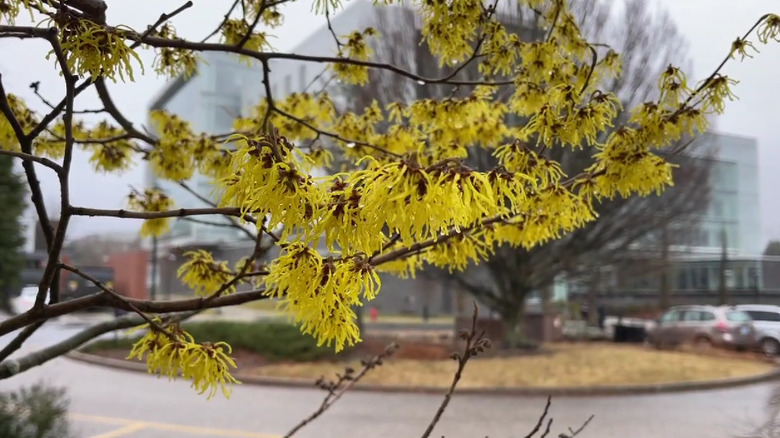
If you're looking for a beautiful blooming shrub that can survive frost in winter, witch hazel is ideal, as it actually needs winter temperatures for optimal flowering and thrives in USDA Hardiness Zones 5 to 8. This deciduous shrub, the result of an accidental hybrid between Chinese and Japanese witch hazels, shifts into brilliant golden foliage in the fall before welcoming fragrant crinkly yellow petals in February and March. The plant is nondescript the rest of the year, when it's covered in green oval leaves with pronounced veins.
The best time to plant the 'Arnold Promise' witch hazel is either in the spring after the frost has passed or in September, which gives the shrub time to establish roots before the winter cold. It thrives in rich, crumbly, well-drained soil, needing steady moisture for best blooming conditions. It can grow in part shade to full sun, but needs at least six hours of direct sun to reach its full flowering potential.
How to plant and care for 'Arnold Promise' witch hazel
One caveat when choosing the 'Arnold Promise' is that the shrub is a slow grower. Remember, patience is a virtue. During the initial growing season, water it deeply and consistently, and then taper off once it is established. Apply a light amount of fertilizer or compost during the spring as leaves appear.
The best time to prune 'Arnold Promise' witch hazel is after the flowers drop. Keep the cuts to a minimum, focusing on trimming back leggy branches, pruning dead wood, and shaping the bush only as much as necessary. Pruning too heavily could risk removing the following year's blooms. If legginess is an ongoing issue, reconsider where you plant the witch hazel for the best growth. Moving the shrub to a sunnier spot will likely solve the problem. With enough time, 'Arnold Promise' can eventually grow to be more like a small tree at 12 to 15 feet tall.
Because the Arnold Promise is such a showstopper, it works well as a specimen plant, taking center stage near an entryway or a prominent spot on a patio where passersby can enjoy its fragrance. On a snowy day, the plant's vibrant flowers are particularly breathtaking. You can also time its flowers to coincide with other early bloomers like crocuses, daffodils, snowdrops, or hellebores — a long-living perennial you can enjoy for years to come. If you want to space out the color and interest in your garden, plant the Arnold Promise alongside shrubs that bloom in late spring, like viburnums or deutzia, or other spring-flowering perennials that last through early summer.