

12 Big Do's And Don'ts To Know Before Cleaning Your Own Drains
We may receive a commission on purchases made from links.
Nobody wants to pay a plumber just to pull a disgusting wad of wet hair and soap residue out of the bathroom drain. In most cases, you don't need to, as the entire job should only take a few minutes. Most slow sink and clogged shower drains are simple enough to deal with yourself without the expense or hassle of calling in a professional. Drain cleaning, however, is also one of those jobs that can look like an easy, manageable DIY task, but can very quickly turn into a plumbing or personal emergency.
One bottle of caustic drain cleaner and an overenthusiastic plunge could cause significant injury, and one too many kettles of boiling water poured into the wrong pipe can lead to an extra leak you weren't expecting. Keeping your drains clean as part of your normal household chores will stop or slow the ordinary sink and shower buildup of soap, hair, grease, food debris, and other general pipe gunk. When a clog does inevitably occur, you need to know how to fix it, what not to do, and when to call in a professional so that you don't create a bigger problem than the one you already got.
Do try a plunger or a snake before reaching for chemicals
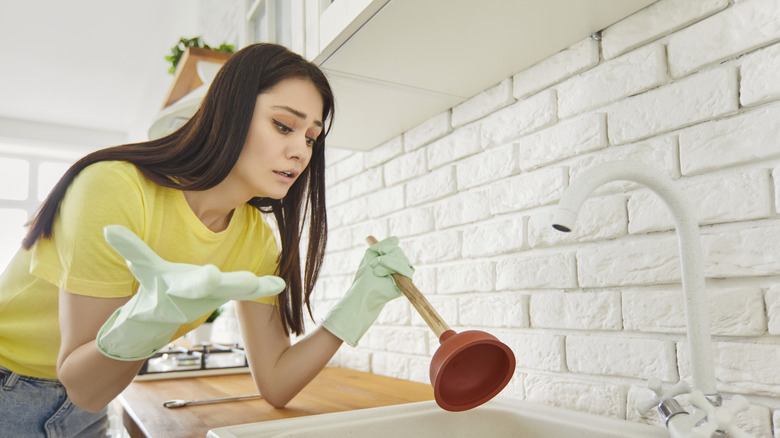
Most people reach for a bottle of drain cleaner at the first sign of a clog, largely because it offers a simple, mess-free solution. The idea is that you pour it in and walk away, and the chemical does its thing and miraculously clears the clog. But a plunger should still be your first option. Yes, it's a little more labor-intensive, but a plunger or a snake physically removes or breaks up the clog, whereas a bottle of drain cleaner ends up with a dangerous and corrosive liquid sitting in your plumbing. If that chemical cleaner doesn't work, it stays in the pipe and can burn whoever has the misfortune to try and clear the drain next. Plungers and drain snakes aren't glamorous but they are the handiest tools for unclogging sinks.
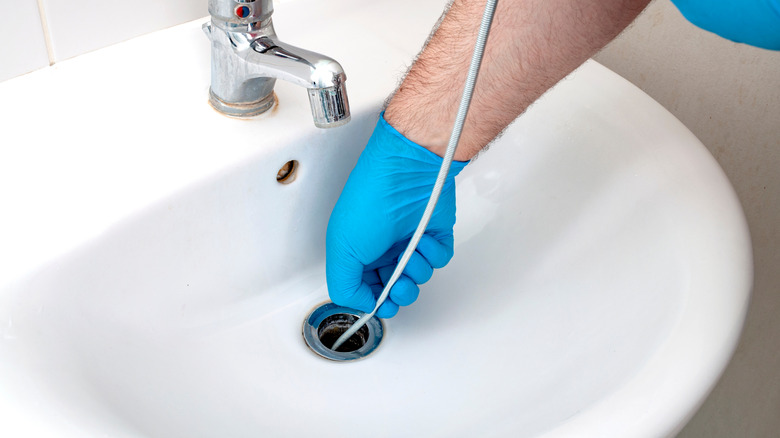
For most household drains, you're better off starting with a flat or cup plunger. If it's the toilet that's giving you problems, you'll need a flange plunger, which has a built-in extra fold of rubber to give a tighter seal. Plunging will clear a surprising number of clogs, pretty rapidly. You need to make sure you seal any overflow, such as the little overflow openings on sinks, with a wet rag and then plunge firmly for around 15 seconds. If you repeat this process a few times and the clog doesn't clear, then go for a hand snake next. Feed the snake into the drain until you feel resistance, then gently work it back and forth, rather than ramming it deeper. The snake's cable has a corkscrew tip to hook debris and break it up or drag it out. Just make sure you keep your eyes covered while you crank the snake back out.
Do clean the stopper and P-trap before attacking the deeper line
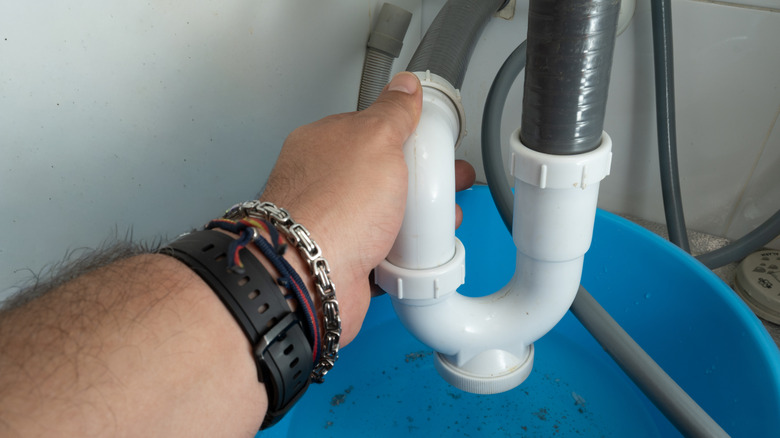
One of the most common places for a clog to occur is the curved P-trap beneath the sink. It's the place where grease, hair, bits of food, and other debris tend to settle. If plunging didn't work and you're not keen on or don't have a drain snake, a quick solution is to check the P-trap. However, don't try this if you've already poured drain cleaner down the opening. If the clog is still in place, the caustic chemical will be backed up behind it.
If you haven't used any caustic chemicals, then put a bucket and an old towel underneath the P-trap under the sink. Then unscrew the connectors at either end and gently remove the trap. Next, empty the contents into the bucket. You can then scrub out the trap and clean the stopper assembly before putting it all back together. Once that's done, keep the bucket and towel in place and run a small amount of water down the drain so you can check both ends of the P-trap for drips and leaks. If you've got an old metal trap or just one that refuses to budge, don't keep wrenching at it. Otherwise you risk damaging it to the point where you'll need a replacement.
Do get on a regular cleaning schedule
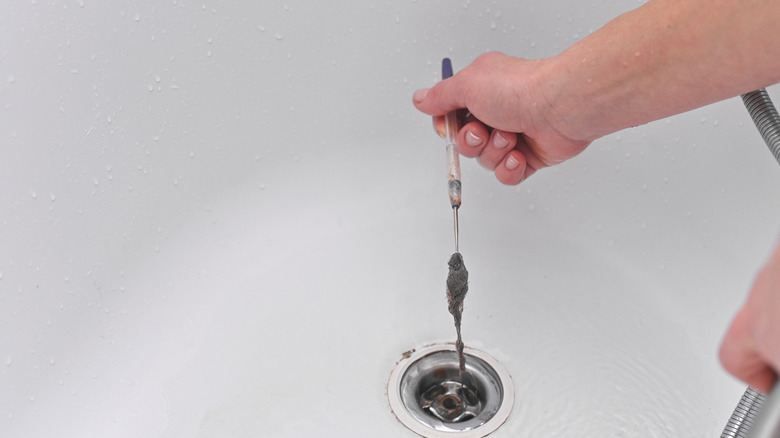
You can avoid most clogs and blockages that are caused by an accumulation of nasty stuff by simply keeping up with a reasonably regular cleaning schedule. Get in the habit of pulling hair out of the drain every week and you should manage to avoid having to tackle a fully matured hairy drain monster six months later. Flushing kitchen drains every week with hot (not boiling) water and then a monthly mix of baking soda and vinegar, helps to break down any buildup before it hardens. It works to keep the pipes clean without you having to resort to caustic cleaners.
You can also use a flexible drain brush, like this Bozenu Flexible Drain Brush, every month or so if you feel your drains need a bit of extra help. Kitchen drains generally need monthly attention, because they have to contend with high volumes of grease and food debris, which tends to be sticky and builds up fast in the pipes. Bathroom drains, on the other hand, can generally go three to four months between cleanings, as soap and hair tend to accumulate more slowly, especially if you pull the hair out of the drain every week. It's also a smart idea to have periodic professional inspections or cleanings.
Do fit a mesh strainer over every drain
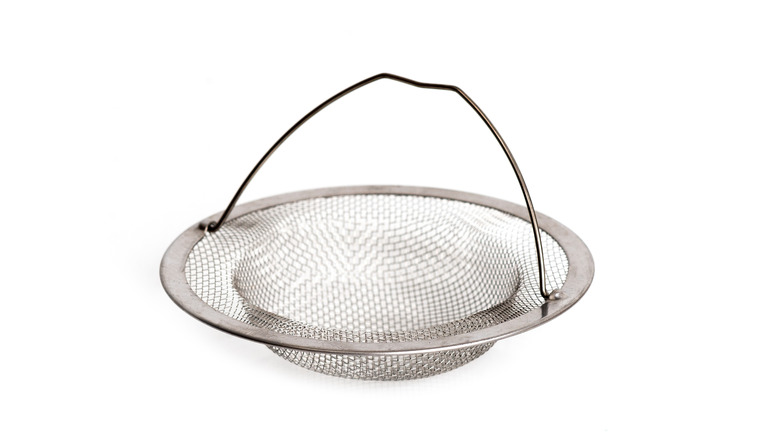
One of the best tips for unclogging a kitchen sink is to avoid a clog by never letting debris get into the pipes. And the easiest way to achieve this is with a mesh strainer over every drain. These are really inexpensive. You can get cheap multi-packs, like these Sink Strainers from Honmein, and they will slide over kitchen and bathroom drains. Kitchen drains tend to get clogged with an accumulation of food particles and grease, while one of the biggest causes of bathroom drain clogs is an amalgamation of hair and soap scum. Hair is particularly problematic and is a common reason the shower gets blocked, because once it gets past the drain, it tangles around stop mechanisms and will continuously catch soap scum until you have a thick tough hair scum rope blocking the pipe.
A simple mesh strainer or hair catcher helps stop this issue in both kitchens and bathrooms, as food particles and hair get caught by the strainer. Use a fine stainless steel mesh strainer in the kitchen and a removable hair catcher in the shower or tub. Just remember to empty it on a regular basis. Scrape kitchen debris into the trash after washing up and lift hair from the bathroom hair catchers every week.
Don't use chemical cleaner on a drain that's completely stopped
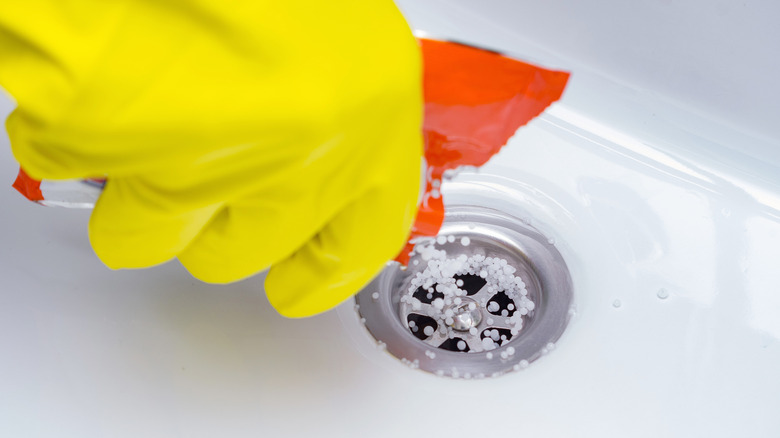
Many people who have a completely blocked drain immediately reach for a bottle of caustic drain unblocker, thinking that it will power through the clog and give them a free-flowing drain in no time. The problem is that because there's no flow to carry the product through the pipe, it can sit above the clog as a highly caustic chemical bath. Additionally, some drain opening products also generate quite a lot of heat when they react with organic matter, so if it doesn't clear the clog, you then have a sink backed up with a clog underneath a layer of hot, dangerous chemicals. As it fizzes, bubbles, and expands, it can also splash back and get on your skin or in your eyes, which can result in significant injuries. These are a few of the many reasons plumbers warn against products like Drano.
Plus, if the unclogger doesn't work, whoever has to deal with the sink next, once the drain cleaner hasn't worked, is at serious risk of getting splashed with this corrosive mixture. If the drain is completely blocked, your better option is to remove any debris from the surface of the drain and bail out any standing water. Then you can have a go with a plunger or a snake drain, and if those basic methods don't work, you'll know it's time to call a plumber.
Do wear gloves, eye protection, and ventilate the room when using chemical cleaners
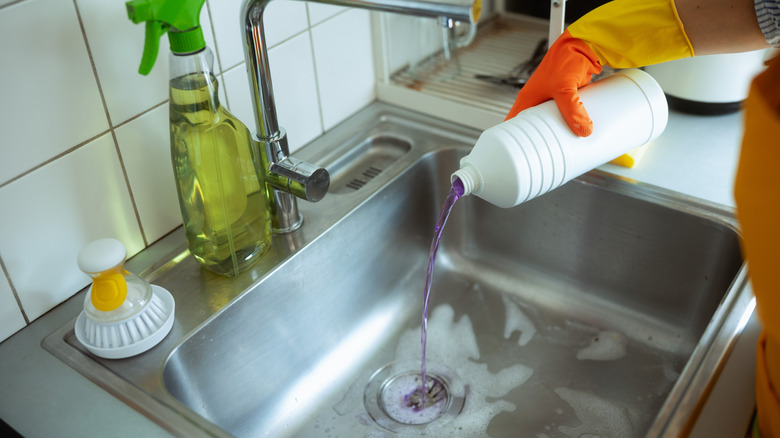
Even though it comes in attractive glossy packaging, chemical drain cleaner is a dangerous, corrosive product. It's not like dish soap or surface cleaner. Non-enzymatic drain uncloggers are concentrated acids or alkali, and they are capable of causing serious chemical burns, not to mention the potential damage from strong fumes if you happen to inhale them.
If you are intent on using chemical drain cleaner, make sure you're protected. Wear chemical-resistant gloves and splash-proof safety glasses before opening the container. Make sure you run the exhaust fan or open nearby windows and doors to keep the area well ventilated. Minimize the chance of splashing by keeping the bottle as close to the drain as possible as you pour, so that the liquid doesn't have a long way to fall into the drain. Make sure you only use the amount specified on the packaging. It's also a good idea to wear long sleeves and clothes that you don't mind getting irreparably stained, just in case you do have a splash. Once the chemical is in the drain, move your face and hands away and leave the product to sit for the stated contact time. While this might sound like overkill, drain opening products really are that dangerous if mishandled.
Don't ever mix drain cleaner with bleach or another cleaner
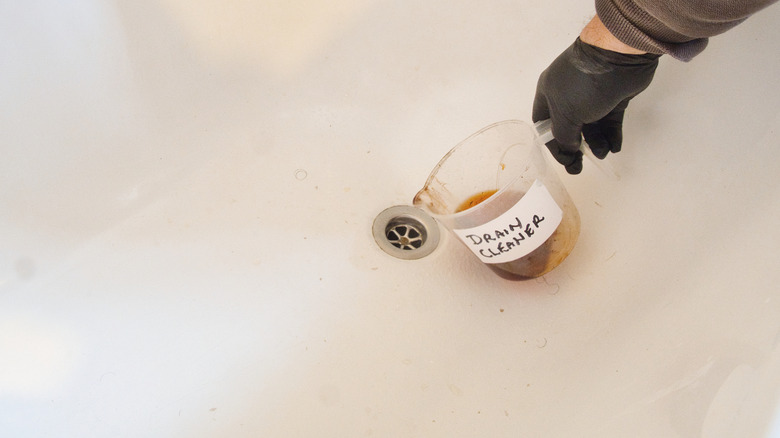
Don't ever mix household cleaning products. This is a good rule of thumb for all chemical cleaning agents in your home, not just drain cleaner. However it's particularly important with drain cleaner. These products tend to be strong and dangerous acidic or alkaline products, and you likely don't know which is which.
Adding bleach, ammonia, toilet cleaner, or another household product to your drain cleaner can create an exceptionally dangerous reaction. If you mix acid products with bleach, you create chlorine gas, while if you add bleach to an alkaline drain cleaner, you'll create chloramine gas. Both of which cause serious breathing problems. If you're in a tiny bathroom with the door shut, the reaction can occur very quickly and you'll find yourself gasping for air before you realize what's happening. Only use one product. Don't be tempted to add a second just because the first one failed. And, whatever you do, don't mix two separate drain cleaners to try and create an uber-potent drain clog buster. Don't even mix all chemical products will all-natural ingredients to unclog a drain, like baking soda or vinegar, as these can still react with the aggressive caustic synthetic product.
Don't plunge or snake a drain after pouring in chemical cleaner
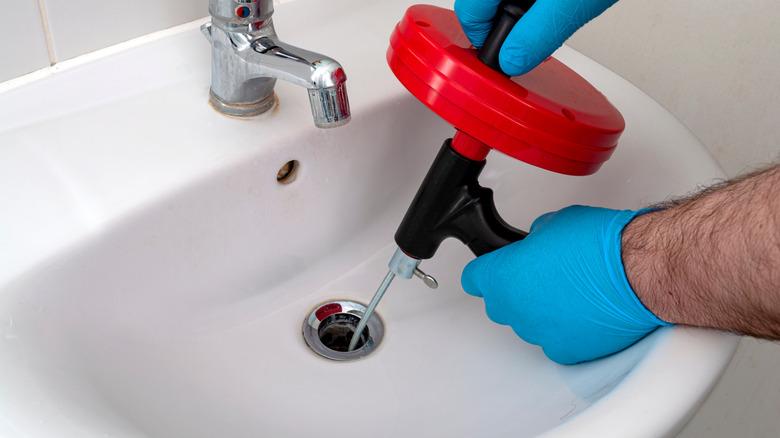
If you've poured chemical cleaner down the drain and it hasn't shifted the clog, remember that you have got a pool of dangerous, caustic, potentially heat-generating chemicals sitting close to the surface of the drain above the blockage. If you start plunging or snaking, there's a good chance that you will force that liquid back up the drain, towards your hands or face. With plunging, the process works by rapidly forcing water and air around inside the drain, so as you draw the plunger back up, you draw the liquid back towards you as well. With a snake, it might go in just fine, but even if you manage to dislodge the clog, as you retract the snake and it comes back out of the drain, it can whip around and flick the cleaner back at you.
The same issue happens if you've poured chemical drain cleaner and then you start taking apart the P-trap. If the clog is after or around the P-trap, then once you start to remove it, the backed-up cleaner will flow right out of the opening, potentially all over your hands. If you've already used a chemical cleaner and you followed its instructions exactly, but the drain is still clogged, it's too late to try with the plunger or the snake, or to try dismantling the P-trap. Instead, you'll need to call a plumber and tell them what product you used, approximately how much you poured down, and when you used it. Then they can come out and safely open the drain for you.
Do know your pipe material before pouring in boiling water
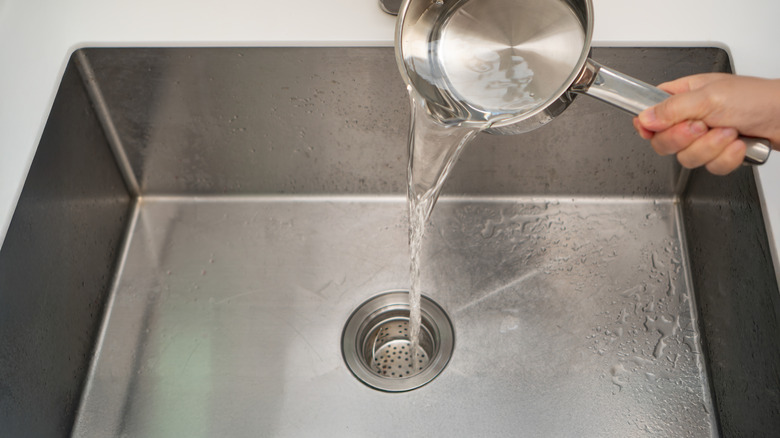
Lots of people resort to flushing their drains with a kettle full of boiling water every week or so. Doing this occasionally is not a problem. However, if you have PVC pipes and you do this on a regular basis, you can soften and stress the plastic, solvent-welded joints, and seals. Most residential PVC drain pipe is rated for temperatures up to 140 degrees Fahrenheit, but boiling water is around 212 degrees Fahrenheit. Therefore, repeated boiling water application can result in leaks over time and can shorten the lifespan of the pipes and joints.
Metal pipes do tolerate boiling water better than plastic, but you likely don't know if at some point down the line the pipe switches from metal to PVC. Flushing your drains regularly with hot water is a good way to help keep them free of debris and limit the chances of an accumulation causing a blockage. Just make sure that the water is only hot, rather than boiling.
Do switch to an enzyme or bacterial cleaner on a septic system
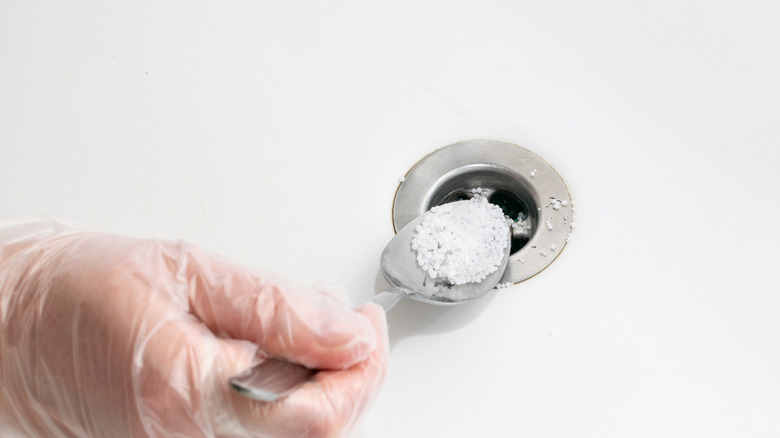
If you have a septic system, then it's not a good idea to use conventional drain cleaning products. A septic system requires microbes or bacteria to break down the waste. Although these remarkable microscopic life forms thrive in the waste we put down our drains, they are incredibly sensitive to strong chemical products like drain cleaner that can contain sodium hydroxide, as well as bleach and other aggressive compounds. These can kill off the bacterial colony that keeps your septic system functioning properly.
Enzyme and bacterial cleaners, however, are septic system-safe because they use a biological approach. This means that enzyme-based, bacterial, biodegradable, and non-corrosive products can take longer to work, but they won't destroy the micro population in your septic system. They are just as effective at removing organic buildup like grease, food residue, hair, and soap deposits as the caustic cleaners. They can just take longer. Look for products that are labeled as septic tank safe or biodegradable, and make sure that they are free of bleach, lye, and sulfuric acid, as well as other caustic cleaning agents. Green Gobbler Enzyme Drain Cleaner is a good example of such a product.
Do treat multiple drains backing up at once as a main line problem
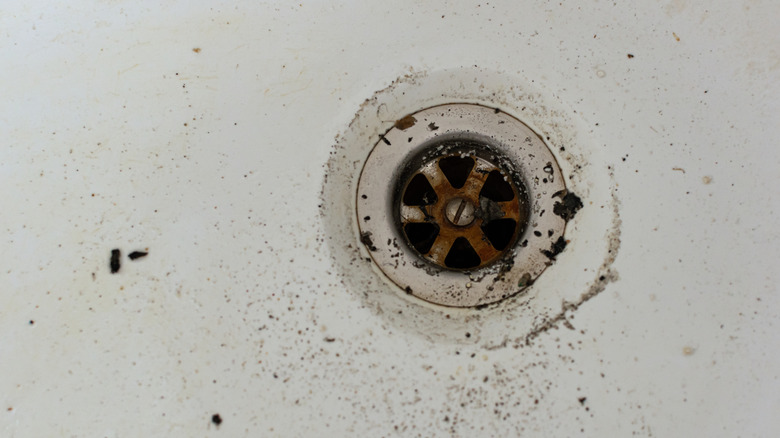
A single slow-running drain is annoying but generally a localized problem that's fairly easy to solve. If you have multiple drains that are performing slower than usual or making weird noises, or a shower that's gurgling when you flush the toilet, then you could be looking at a significant mainline plumbing problem. Every individual fixture eventually joins that main sewer line, so if you've got several drains that start underperforming or that start reacting to one another, it could indicate a mainline issue. For example if you find water bubbling or rising in a bathtub or shower drain when you flush the toilet, that's an indicator of a serious issue.
If it happens, you need to stop using water as much as possible and call a plumber. You need to minimize what waste water is going into the main sewer line, because every extra gallon you send increases the amount of water that has nowhere to go, so therefore you increase the risk of backflow. A mainline blockage is a plumbing job that should only be tackled by a professional plumber. You really won't be able to fix a mainline blockage yourself. It requires a professional with the right kind of equipment. They'll run a camera down the line to find out exactly where the block sits, what's causing it, and to figure out whether they can use something like a motorized snake, or if it requires something stronger like hydro jetting.
Don't ignore a slow or gurgling drain
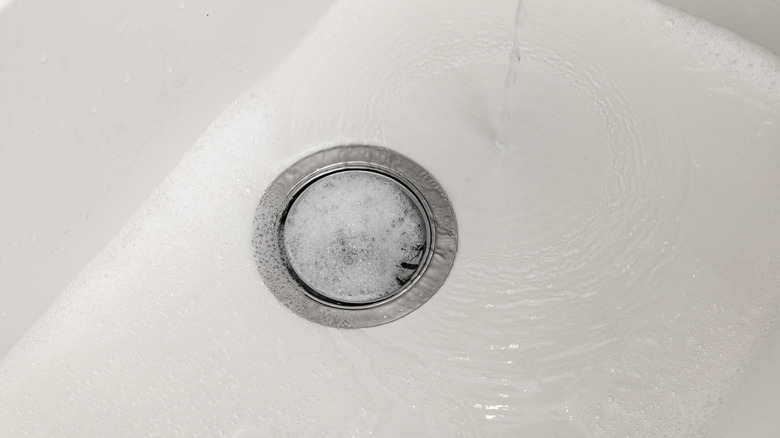
A drain that suddenly starts gurgling is an indicator of a clog that's forming. That sound it makes is air escaping past a semi-blocked drain. The gurgling sound is telling you that there's a clog that's narrowed the flow of water, so air gets forced back through the pipe, instead of moving through the drain with the water.
Many people hear a gurgle and, because the drain is still functioning, they just carry on and dismiss it as just a quirk of their property, but it's quicker, simpler, and cheaper to deal with a partial blockage than a full block and a backed-up drain. If you clear what you think is the blockage and the gurgling continues, or you hear it coming from more than one drain in the house, it's time to call in a pro, as it could indicate a clog further down that your equipment can reach.