

How To Repel Ants From Your Houseplants With This Helpful Soil Advice
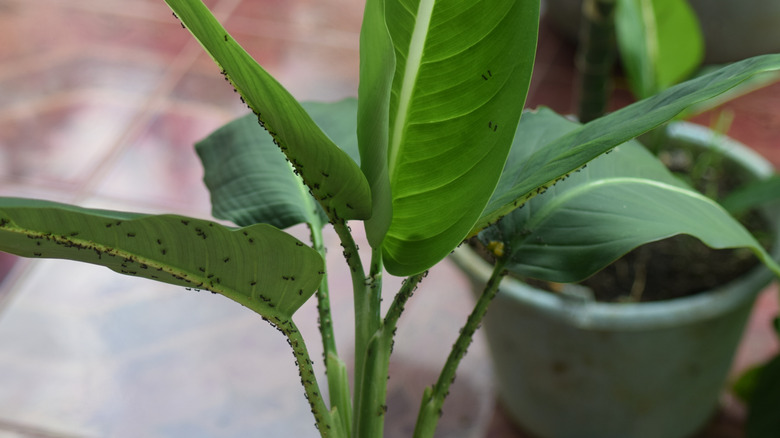
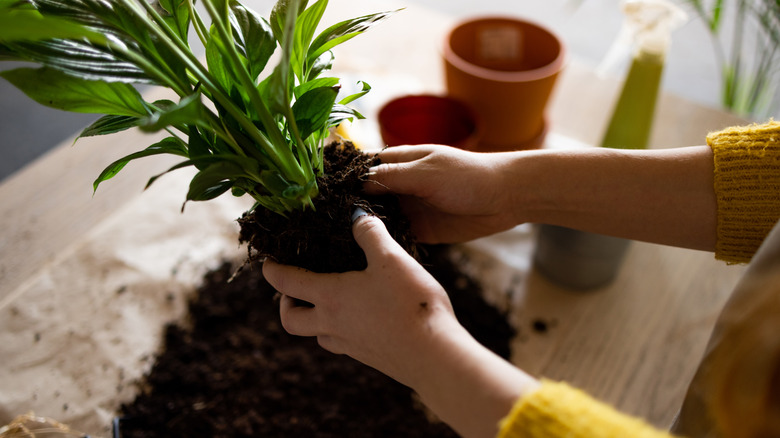
Don't be fooled by the tiny size of ants. These sneaky critters can be a menace if they set up shop indoors. They'll nest anywhere they can find shelter, food, and water. If ants have recently claimed your favorite houseplant as their home, examine the potting mix before reaching for the insect spray. Soil loaded with moisture-holding organic matter may be nutritious for plants, but it can also be a perfect place for ants, which prefer to set up camp in damp substrates. You can say goodbye to ants with one natural way to get rid of them: repotting the plant into fresh potting mix.
You shouldn't, of course, default to potting up your plants in a dry, dusty mix just to repel ants. In fact, bone-dry soil can also cause a problem — ants can build their nests in air pockets that naturally form in dry soil. Houseplants need moist, oxygenated soil to thrive, which is why it's common to find organic matter like peat moss and compost in potting soil. These materials retain water. When choosing the new mix, avoid loading it up with too much compost or other moisture-retaining organic materials. If you want to include these materials for the nutritional boost they provide to plants, mix in plenty of materials that promote good drainage, such as perlite, washed sand, pumice, or coarse bark. Bonus: it's a simple tip for keeping your houseplants healthy in any condition, since soggy potting mixes can deprive roots of oxygen and lead to rot.
Check what else could be attracting ants — from water to food
While changing your potting mixture is the number one tip to banishing ants from your houseplants, there are other things worth tweaking to keep them away for good. Once your plant has had a soil change, it's time to investigate your watering method and schedule. Learn exactly how much water your plant requires, as this depends on the species, the season, and its growing environment. In almost all cases, however, you should allow the potting mix to dry out at least a little before watering your houseplant again. And, of course, using a planter with drainage holes is essential since excess water needs somewhere to escape. This way, you avoid creating the consistently damp soil ants love.
Like all living beings, ants need sustenance to survive, and these pesky critters will eat almost anything, especially if it's sweet. Ants don't typically eat houseplant roots or leaves, so if you spot ants in your potting mix or near your plants, something else is likely attracting them. Check your stems, foliage, and flowers for aphids or scale insects. The ants aren't eating these insects. These common pests — which can wreak havoc on your houseplants during winter, or any other season, for that matter — secrete honeydew, a sweet liquid that is a food source for ants. Interestingly, some ants will protect aphids from predators so the ants can keep collecting this tasty nectar. To discourage ants, dislodge these pests with a strong spray of water.