

Not Lantana, Not Zinnia: The Orchid-Like Flower Hummingbirds Go Nuts Over
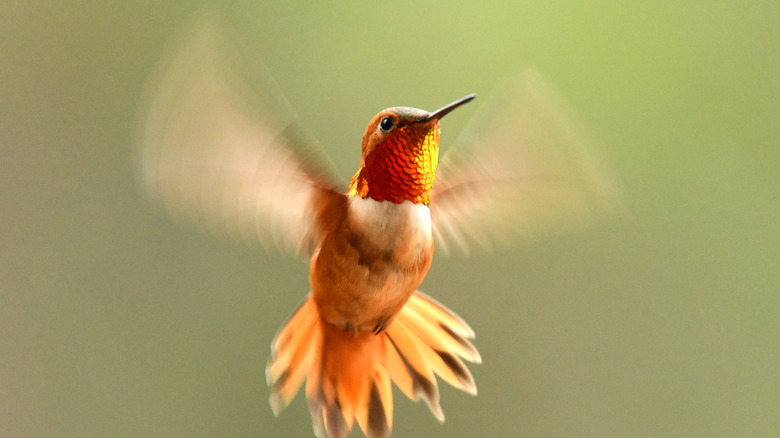
If you're hauling wheelbarrow loads of spent flowers to your compost pile, you might be reconsidering your approach to pollinator gardening. There are plenty of options for adding more color to your beds that require less yard work. Instead of choosing the standard hummingbird favorites, such as lantana or zinnias, consider Angelonia angustifolia 'Serenita Pink.' The plant looks like a snapdragon (Antirrhinum majus) — it's even called a summer snapdragon. It also blooms well into fall and drives hummingbirds nuts. Unlike snapdragons, however, 'Serenita Pink' tolerates summer heat well, and its flowers resemble orchids.
If you only recently started a pollinator garden, you might wonder if there's something wrong with the hummingbirds that visit it. All that mad dashing from one flower to the next is completely normal — these tiny nectar-sipping avians need to visit 1,000 to 2,000 flowers a day to meet their energy needs. Hummers are experts at identifying blooms that produce abundant nectar, which is why they're attracted to the tall flower stalks of 'Serenita Pink.' Plus, hummingbirds are strongly drawn to pink flowers.
Like other Angelonia cultivars, 'Serenita Pink' is heat- and drought-tolerant, as well as deer- and rabbit-resistant. It's a tender perennial that's typically grown as an annual, with plenty of ways to incorporate this stunning plant into a summer garden. All it really needs is a spot with well-draining soil and full sun to partial shade. 'Serenita Pink' is also a great plant for beginner gardeners. Since angelonias are popular low-maintenance flowers you'll never need to deadhead, you can claim back some of that time for other garden tasks. To top things off, this cultivar was the 2014 All-America Selections (AAS) Flower Winner. Who are we to argue with some of the country's leading professional horticulturists?
Angelonia angustifolia 'Serenita Pink' is perfect for sunny pollinator gardens
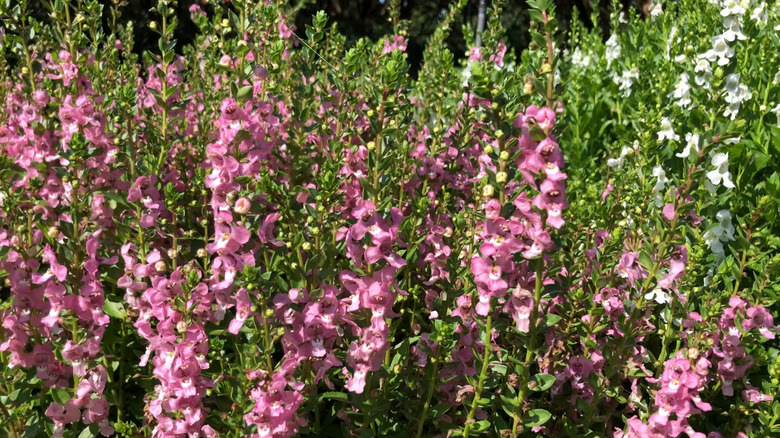
In almost all cases, Angelonia angustifolia 'Serenita Pink' is grown from seed, though it's also possible to buy rooted plugs from select nurseries. The seeds need exposure to light to germinate, so keep them uncovered when starting them indoors. 'Serenita Pink' doesn't really come into its own until the hottest part of summer. Once in the garden, your plant will probably grow quite slowly until temperatures reach 64 degrees Fahrenheit, though it could reach 14 inches tall and wide if provided with optimal growing conditions. It will eventually form an attractive mound and bloom about 13 to 15 weeks after germination. Fertilize 'Serenita Pink' every few weeks during the growing season to keep it blooming and provide hummingbirds with a steady supply of nectar.
This vibrant flowering annual is as suited to life in a patio planter or window box as it is to garden beds. It pairs well with silver-leaved, drought-tolerant lamb's ear (Stachys byzantina), which is perennial in Zones 4 to 9. Coreopsis and black-eyed Susans (Rudbeckia hirta) are also good companions for 'Serenita Pink' because they love sunny, well-draining sites. You can mix and match this AAS-winning plant with other flower colors from the 'Serenita' series — white, lavender, rose, raspberry, sky blue, and purple. Or you could pair it with the white-, rose-, blue-, or purple-flowering angelonias in the 'Serena' series. These latter cultivars grow up to 20 inches tall in most places, but in a warm climate like Florida, they may grow even bigger.