

Core Vs. Spike Aeration: What's The Difference?
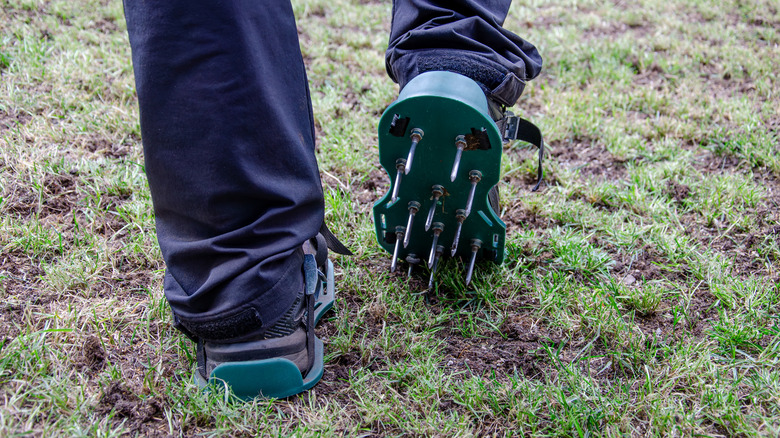
When it comes to simple tasks that ensure lush lawns, aerating is one that cannot be skipped. This process, best completed annually, loosens soil that has become compacted, allowing air, water, and nutrients to get down to the roots of the grass. There are all kinds of tools used to aerate a lawn, from spiked shoes to powered machinery, but they all fit into one of two categories: core aerators or spike aerators. The difference is that while a spike aerator punches through the soil surface, a core aerator actually removes a small plug of grass and dirt, and there are several reasons you might choose one method over the other.
In essence, spike aerators are the light-duty tool, while core aerators have longer-lasting results and are better for severe compaction. You can get budget-friendly spike aerator models that slip over your boots, and you just walk across your lawn with them on. There are other spike aerators you plunge into the surface by hand or push along and walk behind. Core aerators may also be manual, some can be towed behind lawn tractors, and others are gas-powered machines.
Is a core or spike aerator best for your lawn?
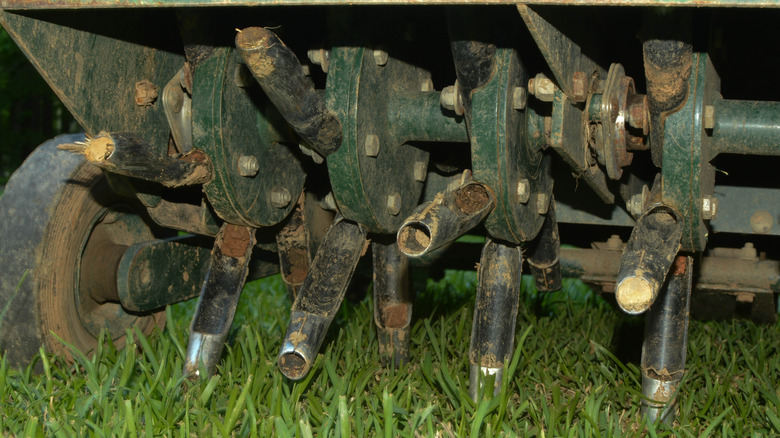
Which type of aerator is best mostly depends on the type and condition of the soil. If your lawn isn't very large or compacted and the soil is sandy, spike aeration could be fine. The process is quicker, these tools are usually among the cheapest, and there could be an option sitting in your shed already (a regular garden fork). There are a couple of drawbacks, though. First, the spikes simply push the soil out of the way, so they can actually cause more compaction in the surrounding area in the long run. Second, once you remove the spikes, the ground starts to close up and is soon in a similar condition to how it was before you started.
A core aerator is more expensive, but it fully removes plugs of compacted soil. So air, water, and nutrients can get to the roots easily, leading to richer, healthier growth long-term. It may also reduce the amount of fertilizer you need to use. Core aerators are particularly advised for highly compacted or heavy soils. If you have a large lawn, a tow-behind or powered model will dramatically reduce the time it takes, and these can often be rented if you don't want to buy. Don't worry about the little plugs that are scattered around. You could rake them up, but they will crumble back into the lawn in a week or so.
It's important the job is done at the right time of year for your grass, or it can cause turf stress. Cool-season grasses should be done in the early fall, and warm-season grasses in spring or early summer. There are some useful tips to identify what type of grass you have if you're not sure.