

Pyrex Bowls Simply Aren't Made The Same Way Anymore
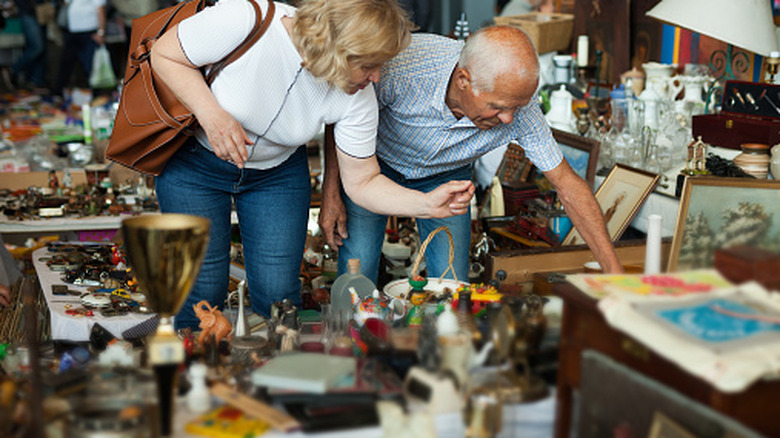
The name Pyrex is a familiar sight in many kitchens across America and has been for over 100 years. From the iconic vintage Pyrex mixing bowl sets to the oblong baking dishes, all Pyrex containers may seem to be made of the same material. However, that's not the case. Some modern Pyrex dishware is made from a different type of glass than its older counterparts, which is why it's important for thrift shoppers to know what they're buying.
Most clear vintage Pyrex made in the United States was produced using borosilicate glass, a material containing boron and silica sand. Adding boron to glass formulations revolutionized glass by making it more resistant to thermal shock. Essentially, borosilicate glass tolerates sudden changes in temperature much better than other types of glass. This thermal-shock resistance helped Pyrex develop a reputation for producing durable dishware.
Modern Pyrex, however, is generally made in the U.S. from soda-lime glass. Soda-lime glass is the same type of glass used in many everyday products like drinkware, and while some report it can be less heat-resistant than borosilicate, Pyrex states that all of their products have undergone heat strengthening at its Pennsylvania factory. The company adds that this process has remained the same for over 60 years. Despite this, there have been widespread stories regarding Pyrex dishes unexpectedly shattering, which may help explain why some consumers prefer vintage Pyrex pieces. Fortunately, most Pyrex pieces are made from glass that has been tempered, which strengthens the finished glass and makes it more heat-resistant.
Why modern and vintage Pyrex shouldn't be treated the same
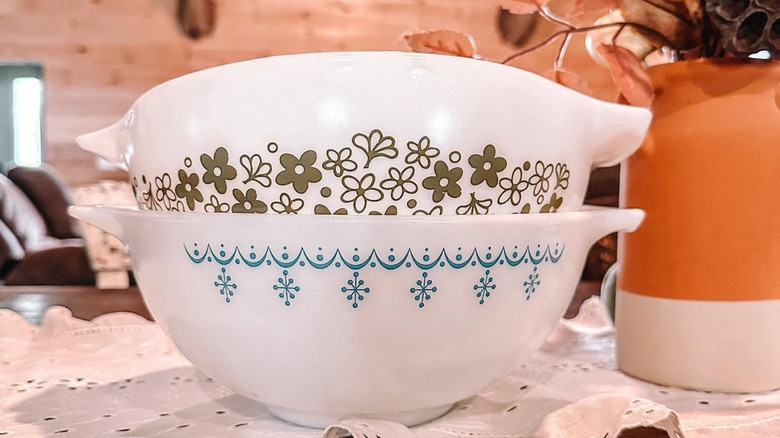
While tempered Pyrex is designed to resist breakage, factors such as surface damage and thermal shock can contribute to breakages. To avoid these issues, it's important you follow the manufacturer's care instructions when handling modern Pyrex. Don't assume that it can handle extreme temperature transitions. For example, Pyrex's Frequently Asked Questions (FAQ) warn customers against taking a modern Pyrex dish right from the freezer and putting it directly into a hot oven. Instead, the company urge you to allow the dish to warm to room temperature first.
These differences help explain part of vintage Pyrex's continuing appeal. Collectors love the bold colors and discontinued patterns of valuable vintage Pyrex pieces, but the older pieces also represent a different era of glass manufacturing. Some vintage designs, like the "Lucky in Love" casserole dish, are considered collectors' "holy grail" patterns that command high prices, while more common bowls remain popular simply because they are durable, useful, and visually distinctive.
However, age alone doesn't make every old Pyrex bowl valuable, and not every vintage piece was made from borosilicate. Pyrex manufacturing changed frequently, and no single detail can date the piece. For example, there are differences between the PYREX and Pyrex labels, but even that won't tell you exactly when or how the piece was made. Checking in a collector's guide or old catalog is a better way to determine a piece's age and glass composition. In general, though, if you're comparing a clear vintage American Pyrex bowl with a modern one, it's safe to assume that the newer model isn't quite as resistant to temperature changes.