

The Real Reason Gravel Driveways Can Sink Into The Soil, And It's Not Just Wear Or Drainage
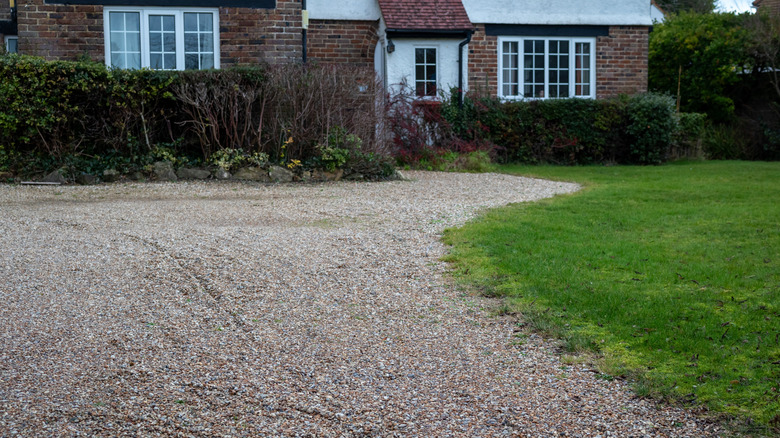
Many people choose a gravel driveway as a simple, affordable home project. The process shouldn't require much equipment, and it can be done as a DIY. Once it's done, it's known for its durability, typically lasting many years with relatively little maintenance. With decent weather, some weeding, and a bit of extra gravel every now and then, and the overlooked maintenance tip for keeping gravel driveways looking fresh, a gravel driveway can last a whole decade. So, sinking gravel driveways can be especially frustrating and unexpected. If your gravel driveway seems to be sinking, especially early on, it may not just be age or poor drainage. What might be happening instead is that your base layer, the soil beneath your gravel, is too soft.
When walking around your yard, your soil may feel firm underfoot, but when you load on tons of gravel, you will realize it may not be quite as solid as you thought. Loose soil will eventually compress under the weight of the rocks, sinking down. Over time, the gravel driveway will disappear down into the dirt. Instead of trying to pile more gravel on as the layers sink down, taking the time to make sure that you have a properly prepared base layer is your best bet. Of course, you'll want to verify that your sinking gravel is the consequence of soft soil and not just the result of regular wear, drainage issues, or other common problems. Then, you can look at options for fixing your already installed gravel driveway.
How to tell if soft soil is causing your driveway to sink
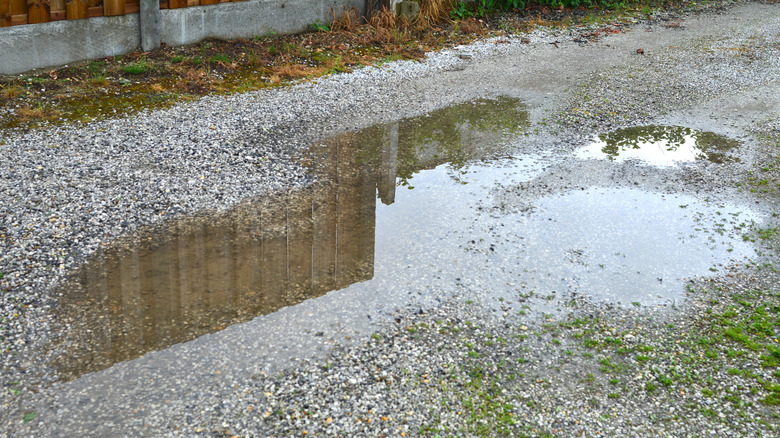
There are a number of possible reasons your driveway is sinking, and different problems require different solutions. For a sinking driveway, you will notice a number of signs. Look for puddles, deep tire tracks, and uneven texture along the surface of the driveway. Over time, it may get muddy and unusably bumpy. When a gravel driveway "sinks," it is not just the gravel getting scattered and misplaced in the way it might after a rainstorm. Sinking involves the gravel rocks being pushed deeper into the soil, so you will notice a mix of dirt and rock as well as disappearing rocks. You might even be able to feel the softness of the soil by pushing down on it in a spot clear of gravel.
Another good way to tell, especially if you installed the gravel driveway yourself, is by considering what you did to prepare the soil before laying the gravel. The soil needs to be tightly compacted, and crushed stone should be added to create a foundation that the gravel will sit on top of rather than descending into. If you know you skipped this, then soft soil is likely the culprit of your sinking driveway. With a cause determined, you can start exploring both temporary fixes and more permanent ways to improve your gravel driveway's appearance and functionality without continuing to dump more gravel and money on the issue.
Fixing a sinking gravel driveway
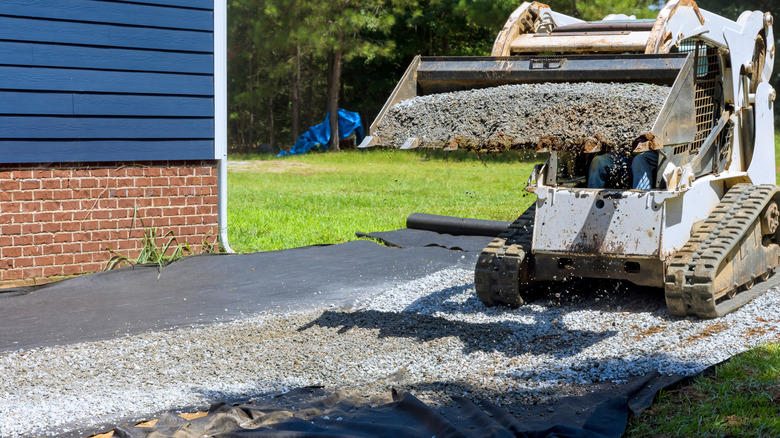
Unfortunately, the best way to fix a sinking gravel driveway and prevent the issue from recurring involves lots of labor and a steep up-front cost. However, compared to the alternative of simply adding a new layer of gravel each year, you'll likely save money in the long run. Because the base layer is so important, the best way to fix the problem is to essentially start over.
This will involve removing the gravel so that you can access and remove the topsoil or compact it. Then, you might add a few centimeters of crushed stone and some landscape or geotextile fabric to keep the gravel even further away from the soil. A gravel grid is also helpful for driveways with soft soil, and it improves a gravel driveway's ability to hold heavy vehicles. If the sinking issue is localized, you may be able to do just a section of the driveway instead of the whole thing.
The average price of a gravel driveway installation is about $1,500, with the price increasing (potentially to tens of thousands) for longer or larger driveways. Plus, fixing a sinking driveway involves the extra labor of getting past the gravel that has already been placed. And, because the gravel that sinks is lost to the soil, you'll be buying more rocks, too, so the total price may be be at least a couple thousand dollars. If you're looking for a quick fix before you're able to complete the larger project, swapping to a larger and more angular gravel might help. Just remember why adding more gravel to an existing gravel driveway won't solve your problems.