

How Long Do Laminate Floors Last?

Allow us to lay out a case for laminate flooring. Made of compressed layers of wood fibers, the cost-effective alternative to real hardwood, tile, and stone has become a growing trend since the material is durable and impressive. Not only is it water-resistant and relatively easy to install, but thanks to advancements in manufacturing, it barely resembles the flimsy, flat planks of yore. With embossed-in-register technology, laminate boards more closely imitate hardwood, marble, slate, travertine, and concrete at a fraction of the price. (Typically, you'll spend $15 per square foot for the materials and installation of laminate flooring.)
Of course, none of that matters if you need to replace your floors as frequently as you swap out your pillows. The good news: The right laminate flooring can be a true dream come true. With the requisite care and maintenance, quality planks can last, on average, 15 to 25 years, with some high-quality versions staying strong for a full three decades. However, if you begin to notice any cracks, chips, or deep scratches, it may be time to replace your flooring. Other signs you should walk away from your worn out boards: The color has faded significantly, or moisture damage has caused them to warp or buckle.
The keys to extending the life of your laminate flooring
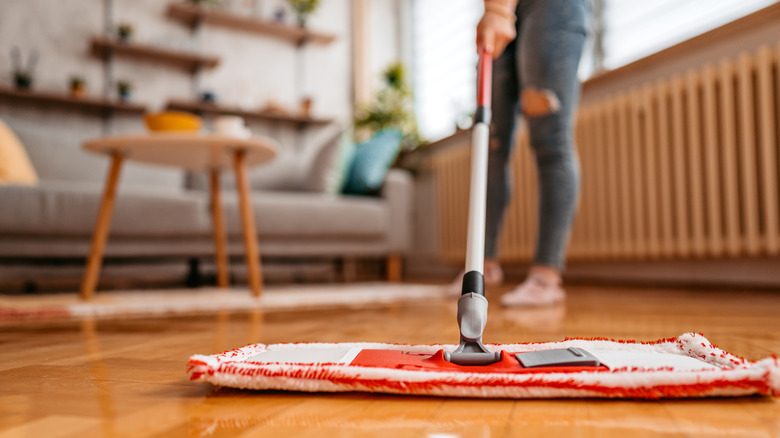
To start your laminate flooring journey off on the right foot, it's best to opt for a high-quality iteration. You'll want to pay particular attention to its Abrasion Class rating that indicates how resistant the planks will be to scratches, staining, fading, and other wear and tear. While an AC1 rating might be okay for rarely-used spaces, you'll want at least an AC3 for high-traffic areas such as kitchens, kids' rooms, and hallways. The highest option, AC5, is strong enough for stores, schools, and other commercial spaces. For maximum durability, you'll also want to opt for a thicker plank, a high-density fiberboard core, and a wear layer that makes it more resistant to scratches.
Another key step to ensuring your floors are level and protected from damaging moisture is proper installation. With a user-friendly click-and-lock system, laying laminate flooring can definitely be a DIY job. There's just one crucial step that you don't want to skip.
Before you start snapping everything into place, let the panels sit for 48 to 72 hours so that they can fully adjust to the room's humidity levels. This ensures they won't shrink, expand, or buckle after being laid down. In particularly well-tread spots, you may also want to use area rugs for extra protection. And when cleaning — something you'll want to do every two weeks — always use products that are safe for laminate floors. While you want to avoid cleaners that contain bleach, ammonia, acetone, or abrasive particles, a product specifically made for laminate may be your best bet.