

The Neat Amazon Product That Gives Hummingbirds A Place To Nest
We may receive a commission on purchases made from links.
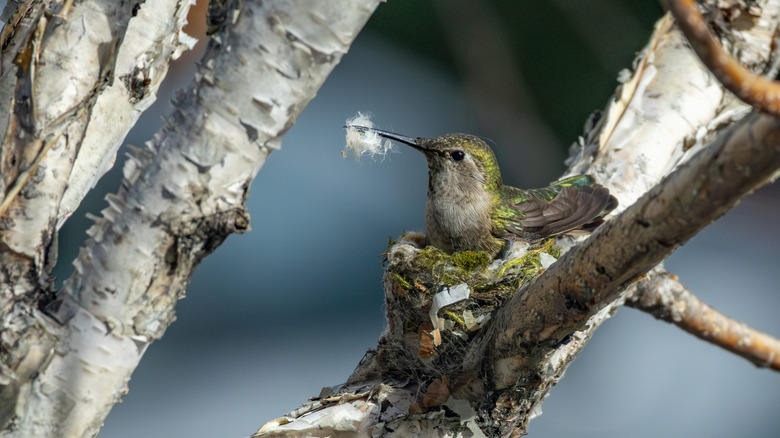
One of the great joys of bird watching is discovering a hummingbird nest in your very own yard. These tiny works of art are woven from natural materials like lichen and spider silk and are no larger than a ping-pong ball. Since hummingbirds aren't cavity nesters, they can't be enticed to build nests in that DIY birdhouse you built, but they may appreciate a home of a different style. The Hargis Habitats hummingbird nesting platforms, available from Etsy and Amazon, are designed to mimic the natural setting hummingbirds prefer to nest in while providing an opportunity for bird watchers to observe from home.
Hargis Habitats' nesting platforms are handmade in the United States and constructed from durable, moisture-resistant Western red cedar. They come in a set of two, and each platform contains a small nesting cavity and anchor pegs to which a hummingbird can attach her nest. The manufacturer, Ben Hargis, notes that his model of nesting platform does not come with a place for you to store nesting material for the birds, unlike similar products. This is because he'd observed too many instances of other birds stealing the material and scaring away hummingbirds.
How to use these hummingbird nesting platforms in your yard
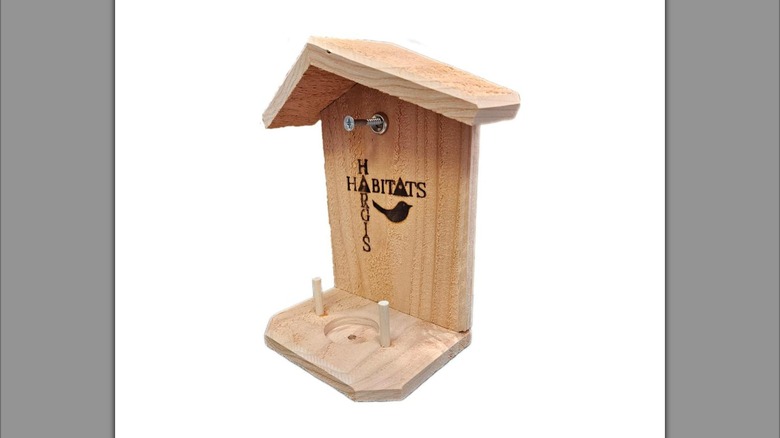
If you've been lucky enough to observe a hummingbird nesting in your yard before, you know that hummingbirds like to nest in forked branches of dense shrubs or trees that can hide them from predators. Depending on the species, hummingbird nests can be found anywhere from 5 to 90 feet off the ground. So, install this Hargis Habitats nesting platform at a safe and easily accessible height, in a location that gives the hummingbird mother the shelter she's looking for. If possible, hang it near a location where you've observed hummingbirds nesting before, without interfering with existing nests. Hummingbirds don't reuse the actual nests, but a successful nest site could be used multiple times, rewarding you with plenty of hummingbird viewing opportunities.
Install the platform before nesting season, which can begin as early as March and go as late as October, depending on the species and region. If you're trying to create a hummingbird oasis on a tiny balcony, consider only installing one of the platforms to prevent competition. While both male and female hummingbirds will aggressively defend food sources, nesting females will chase away other females entering their territory.
Build a complete hummingbird habitat to encourage nesting
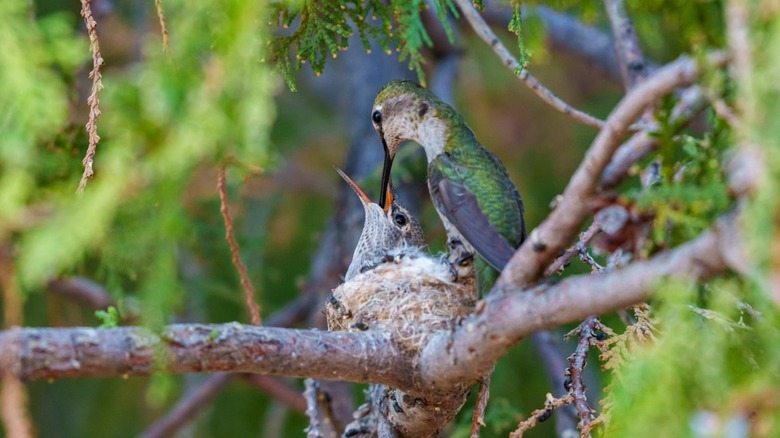
Once you've installed this Hargis Habitats nesting platform, resist the temptation to check on it frequently. Hummingbird mothers may abandon a nest if a threatening human is too close. Besides, some nests, like the rufous hummingbird's, are only half the size of a walnut. Not only will you be able to view these tiny nests better through binoculars, but observing from a distance means you won't scare the residents.
To get more hummingbirds to nest in your yard, supplement the platform with hummingbird feeders as well as nectar-rich plants with large, tubular flowers. Good options include cardinal flower, columbine, trumpet honeysuckle, and penstemons. Species that are native to your region are excellent for luring beautiful hummingbirds to your yard because they evolved together as part of the local food web. These plants also attract beneficial insects, which are crucial components of hummingbird diets, especially when raising a brood, as hummingbird mothers feed them to their babies.
Plants that produce soft, fluffy fibers or catkins are also useful to hummingbirds because the soft materials can be used in nest construction. These include willow, cottonwood, and flowers like milkweed and goldenrod. Try planting some near your nesting platform so hummingbirds can easily find what they need for their next nest.