

200 Years Ago, Plain Glass Jars Forever Changed The World Of Gardening
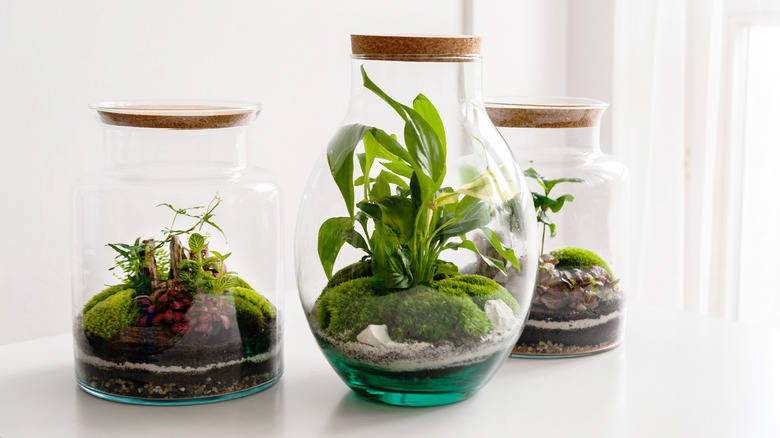
The advantages of growing plants in a greenhouse are far from new; in fact, there is evidence of growers reaping such benefits as far back as 4,000BC. However, while terrariums utilize many of the same principles — absorbing sunlight, protecting plants from the elements, and allowing soil to retain heat — it wasn't until 1829 that the concept of a sealed glass terrarium was first invented. Of course, today, hobby home horticulturalists will know that there's much to be said for a plain-old glass jar when it comes to giving plants a cozy home in which to thrive. Not only that, there are now various types of terrariums that you can use to add a gorgeous mini garden to your household. But 200 years ago, when Dr Nathaniel Bagshaw Ward first discovered the concept, it was new. Not only that, but the invention of the terrarium happened purely by accident.
Working as a physician in London, Dr Ward was also a keen naturalist and an avid hobby gardener. He was largely unsuccessful with the latter, struggling to nurture anything of note due to the adverse conditions created in the city by the Industrial Revolution. Regardless, he persevered with his passion, toiling in vain outdoors while keeping various animal specimens in sealed glass containers. These included a moth cocoon, which he buried in soil in the hopes of observing the insect's metamorphosis. As he waited for this to occur, he noticed something strange: a tiny fern and a blade of grass had sprouted from the soil, growing quite happily in the protected confines of the case. It was a remarkable moment, although it would take another four years for him to establish a name — and a better design — for his novel discovery.
The invention of the Wardian Case
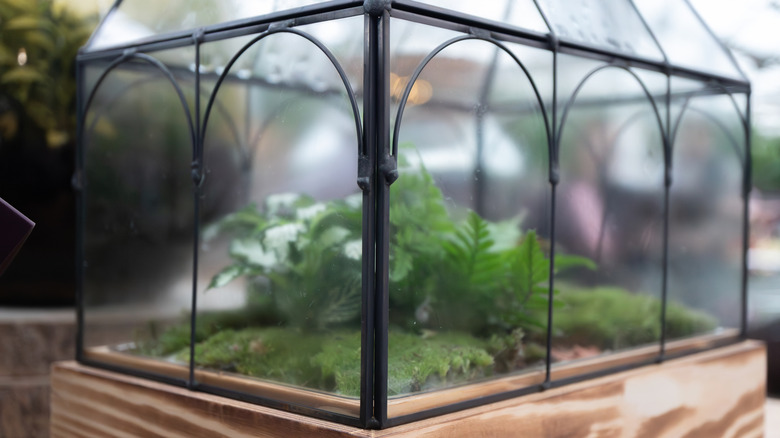
Having made his discovery and watched the plants inside thrive, without water, for three years, Dr Ward got to work perfecting the idea. He enlisted the help of a carpenter, and after finalizing the design, created what would become known as the Wardian case. It's among the earliest examples of the modern terrarium, and while he may not have known it at the time, it was an idea that would have a transformative effect on the world of botany.
For homeowners, it provided a way to connect with the natural world despite increasingly poor conditions in the urban environment. The case became highly sought after by explorers, too, who used it to send their botanical discoveries safely back home to Britain. Not only that, but the invention also had tremendous commercial benefits. It finally gave suppliers and importers a way of keeping the majority of their plants alive in transit. Notably, it also enabled the transportation of commercial plants from their native habitats to new countries and markets. Rubber, for example, was taken from South America and successfully introduced to British colonies in Asia.
Among homemakers, the trend gradually fell out of favor. However, in more recent decades, the terrarium has slowly but surely re-established itself in the minds of home gardeners. In the 1970s, as people began to seek a tonic to an increasingly industrial world, many once again turned to indoor gardening. Terrariums saw a resurgence in popularity, and over the ensuing decades, their designs continued to evolve. Today, hobby horticulturalists can use myriad household materials to make terrariums, from mason jars to salt and pepper shakers. And while they each have their own uses, they all hail from that same chance discovery in London's East End by an otherwise unsuccessful gardener.