

Not Mums: The Towering Flower That Blooms In October For A Spectacular Garden

Sunflowers have long been synonymous with summer. Golden blooms tower over fields and yards, embodying the warmth and joy of summer. But when the days shorten and temperatures drop, gardeners begin thinking about the best fall flowers to plant in pots, signifying a mental and visual transition to the next season. If you're not ready to give up summer, plant the tree daisy (Montanoa grandiflora) to make your yard stand out. This sunflower-esque evergreen perennial produces daisy-like blooms in late fall and winter. So move over, mums! Summer isn't over yet.
The tree daisy can take the form of a large bush or a small tree, growing up to 10 feet wide and tall. Its large lobed leaves add decorative interest to the garden before the white flowers take center stage, blooming so prolifically that they can completely hide the foliage. An added bonus: The flowers smell like freshly baked cupcakes or chocolate chip cookies, perfectly complementing your autumn pumpkin spice latte. Once flowers drop, gardeners delight in chartreuse seed heads that continue the plant's visual interest.
The plant, native to Central America and southern Mexico, is hardy to USDA Hardiness Zones 9a to 11 and is resistant to heat. Though it grows well in the sun, don't skimp on watering the tree daisy, as it thrives with regular watering and rich, well-drained soil. It can also be sensitive to frost, so make sure it has an extra sunny spot if you live in a cooler climate.
Practical tips for growing a tree daisy in your garden
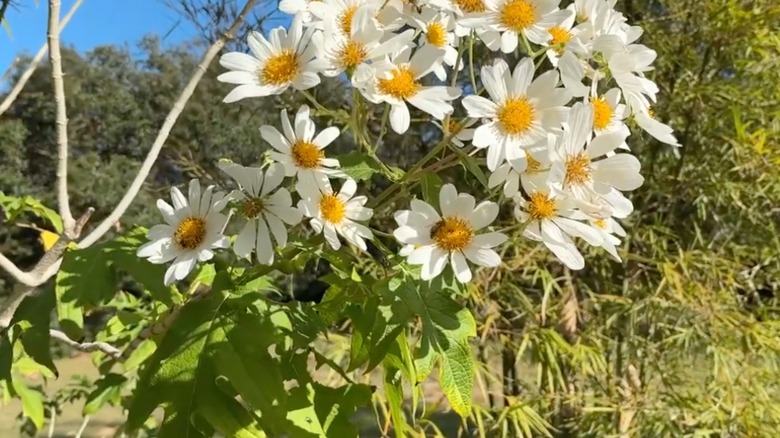
The tree daisy is often compared to its relative, the Mexican sunflower (Tithonia rotundifolia), which features daisy-like blooms atop soaring stems. One significant difference is that the Mexican sunflower blooms from the middle of summer until the frost arrives, making it an ideal companion to the tree daisy's subsequent flowering season. Bees and butterflies flock to the tree daisy, so if you want to bring even more pollinators into your yard and garden, pair the shrub with plants like Little John Dwarf Bottlebrush (Callistemon 'Little John'), lantana, or Blue Elf Aloe (Aloe 'Blue Elf') to give visitors a year-round food source.
The tree can grow a bit aggressively, so prune it after it blooms to control the size and shape. You also can cut it down to the ground, creating space for another specimen tree to take center stage between winter and spring, when the plant grows back. Its branches and foliage contain beneficial nutrients, so you can use the chop-and-drop mulch system — the secret to preventing weeds with what's already growing in your garden — if you're giving the tree a hard prune.