

Skip The Chemicals: This Grocery Store Item Can Be Used As A Natural Wood Stain
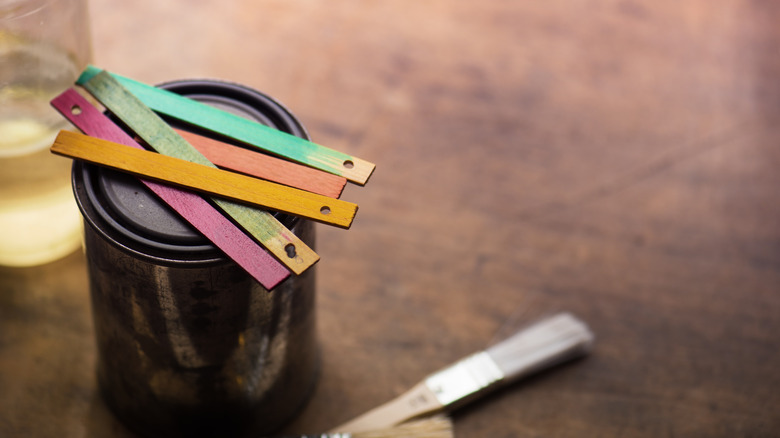
One of the most challenging parts of nearly any woodworking project is choosing your finish. Whether you're using paint, stain, or simply oiling the wood, the shade and tone of the timber need to be just right. There's a fine line between making the wood grain pop and achieving your intended aesthetic, all while sticking to a budget. One concern that might dictate your choice is the safety of commercial wood finishes, particularly if your project needs to be food safe. If you have the patience for a bit of experimentation, there's an all-natural wood stain option that should check every box. Plus, it's made with a vegetable you may already have in your refrigerator: red cabbage.
Red cabbage leaches a reddish-purple pigment into water when it's boiled. You can collect this pigmented water and use it as a natural wood stain. That's right! You can get a vibrant wood stain with a trip to the supermarket rather than the home improvement store. Plus, since you only use cabbage and water to create this stain, it's safer to work with than many store-bought wood stains. Before they dry, commercial oil-based wood stains emit volatile organic compounds (VOCs) that can cause respiratory issues, headaches, and nausea in sensitive individuals. Commercial water-based stains may have lower VOC levels, but they're typically not free from VOCs. Just note that the hue and consistency of a red cabbage stain may vary.
How boiled red cabbage works as a wood stain
Similar to how water-based wood stains work, the pigment in red cabbage, anthocyanin, remains in the wood when the solvent in the stain evaporates. The presence of anthocyanin is why that tired, floppy red cabbage at the back of your fridge is one of the common household waste products you can use on your clothes as fabric dye. Anthocyanin is of particular interest to DIY stain-makers because it is a pH indicator, meaning it changes color when it interacts with an acid or a base. This gives you unique control over the color of your stain.
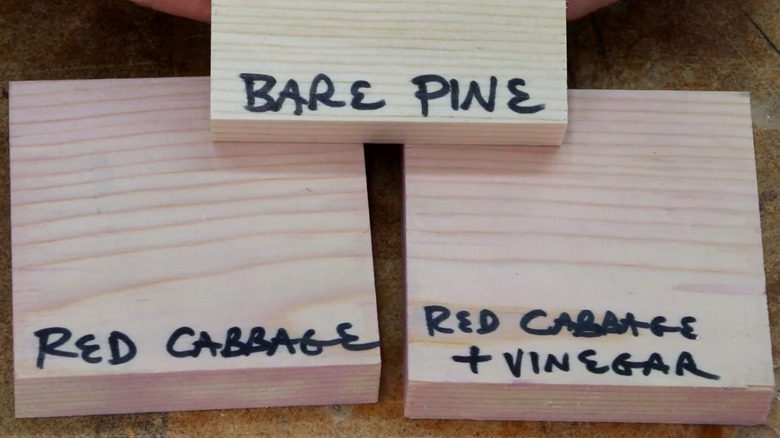
Red cabbage stain on its own is reddish-purple, but if you add an acid to the water, such as lemon juice or vinegar, the water will turn pinkish-red. Add a base, such as baking soda, to get bluish-green. You can experiment with different acids and bases to create bespoke colors, giving you plenty of options with just a few ingredients.
A stain made from red cabbage also has a few limitations worth noting. Commercial wood stains contain chemicals that help the stain and its color last longer. You may need to add a protective coating, such as a clear varnish, on top of naturally stained wood to ensure the color stays put. If you're staining a large woodworking project, you'd have to make a lot of red cabbage stain to apply the multiple coats required to achieve a decent hue. For example, a small head of cabbage will probably only cover six square feet of wood in a single coat.
How to make a natural wood stain by boiling red cabbage
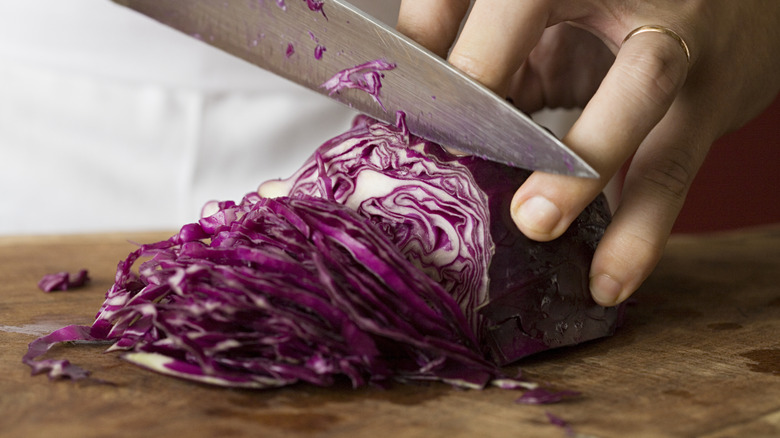
Making your own natural wood stain using red cabbage is a simple but messy process, so wear gloves and old clothes or an apron. Protect your work surface from splashes, too. Chop the red cabbage into small pieces using a sharp knife. Try not to squish the cabbage as you work — you want to retain as much moisture in the leaves as possible. Then put the shredded cabbage into a juicer and pour the juice into a saucepan. Alternatively, add the chopped vegetable directly to a saucepan filled with water.
Either way, bring the mixture to a boil on your stovetop, then simmer it for about an hour. The more concentrated the mixture, the better, so don't put a lid on the pot to allow for evaporation. Once the liquid turns a deep purple, take the saucepan off the heat and allow it to cool. Strain the cooled liquid through a sieve or large coffee filter to remove the cabbage pieces. Your stain is ready to use!
If you're not using the stain right away, decant it into an airtight jar and store it in your refrigerator. Before using the stain, make sure you prepare your wood properly — a helpful tip savvy DIYers will want to know before using wood stain. Once the surface is suitably prepped, apply the stain with a paintbrush, wiping away the excess before it dries. Allow the stain to dry for up to 24 hours to get a good idea of the true color, then apply another layer if you want a deeper hue. You can finish the surface with wood oil or waterproof the wood with an all-natural ingredient — beeswax.