

The Aromatic Herb That'll Not Only Grow Tall But Fill Your Yard With Pollinators
If you're creating a pollinator-friendly yard, you need plants that can do two things: grow tall and produce a lot of nectar-rich flowers. It turns out there's a native perennial herb that checks both of these boxes. With the right care, it could grow an impressive 6 feet tall, making it much taller than most other herbs, including other species in the same genus. Plus, it's a prolific bloomer that will attract many types of beneficial bees you want in your garden, as well as a plethora of other pollinators, including hummingbirds. For these reasons and more, southern mountain mint (Pycnanthemum pycnanthemoides) should have a place in your beds.
This mint-family plant produces small but mighty flowers that bloom in tightly packed clusters in June, July, and August. They attract a wide range of pollinators — including bees, butterflies, wasps, and other insects — rather than just one particular species. All that height might really be worth the investment, too, since it's possible that pollinators favor taller plants. For example, a 1998 study published in Écoscience found that the inflorescences of tall plants received more visits from pollinators. Another study conducted in China and published in a 2026 issue of Agriculture, Ecosystems & Environment found that hoverflies preferred taller flowering plants. Oh, and did we mention that, while it does spread, southern mountain mint is among the varieties of mint that won't try to overrun your garden? Let it go to seed after flowering to grow your patch quickly and provide food for small songbirds.
Southern mountain mint's scent makes it an intriguing choice for home gardeners
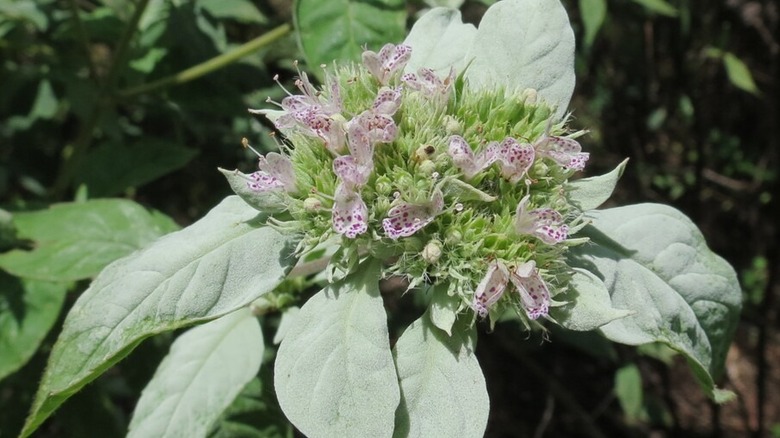
Southern mountain mint foliage emits a fresh scent when you brush up against it or crush it between your fingers. In fact, the leaves and flowers are safe for human consumption, which is quite the bonus for gardeners who enjoy drinking homegrown herbal teas. The aromatic leaves may also defend the plant against herbivorous pests — a protective shield that may extend to other plants nearby. Adding this wildflower to your collection is a helpful tip for growing a thriving herb garden. Be wary, however, of removing caterpillars — southern mountain mint is a host plant for the native wavy-lined emerald moth.
Considering southern mountain mint can grow taller than the average American, give it lots of space in your garden. You can grow this upright plant in a container, but it will probably be happier in a garden bed. Don't get confused when buying southern mountain mint seeds or plugs, either. The Pycnanthemum genus includes several North American mountain mints, and they all look similar. However, most other species reach 2 to 3 feet tall at best. Check the botanical name to ensure you're buying the right plant.
Southern mountain mint grows best in USDA Plant Hardiness Zones 4 to 8, so it's a great choice for gardeners almost anywhere in the country. Make sure you plant it in a full-sun site with well-draining soil. It will grow in shade, but won't flower as abundantly. Once this tough native herb is established, it can tolerate short dry spells, but if you want it to reach its maximum height, keep the soil around its roots consistently moist and full of nutrients.