

What To Do With Your Asphalt Driveway In September
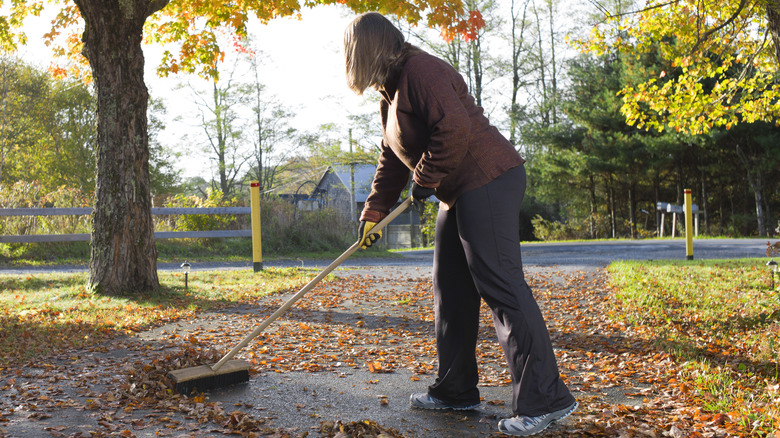
When fall is right around the corner, you may find yourself inundated with advice on what you should be doing to care for your lawn and garden before the colder seasons get under way. However, did you know that there are also some crucial tasks to tackle for your asphalt driveway to keep it looking good and functioning well? It's true. With the arrival of colder temperatures and — sometimes — frozen precipitation, asphalt can become weaker and more cracked than before. However, don't panic. There are a few simple September chores, from cleaning to sealing, to prepare and protect your asphalt.
First, clear the dirt and debris. By sweeping away or gently washing off leaves and twigs, you can expose the parts of your driveway — such as cracks or holes — that require attention before winter. In addition, when those natural items become heaped up on your driveway, they store water, which can then seep into the asphalt and freeze when the temperatures lower. This freezing is the motivation behind the next step: filling gaps. When moisture leaks into openings and holes in asphalt and freezes, it gets bigger, widening the existing gaps and causing the material to degrade quicker. Finally, reseal your driveway. Sealing asphalt protects it from sunlight and can prevent your driveway from cracking or developing holes and stains. You want to do this in early fall before the temperature drops too much because the coating needs warmth in order to set correctly. Now, while sweeping is relatively straightforward, the other tasks can seem a little daunting, but we have the details to tackle these chores with ease.
Fill and seal asphalt driveways in early fall
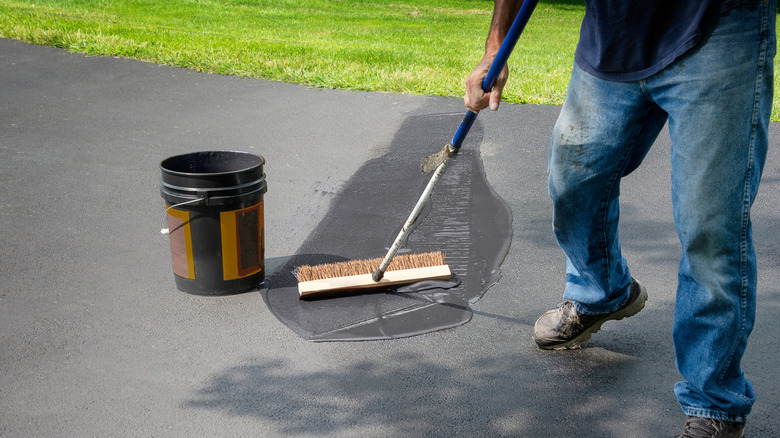
If you've already swept and washed the driveway, then you can go straight into filling the cracks. If not, make sure to use a hose on a low setting or your hands to clean out any weeds or loose materials that are sitting in the gaps. Cracks that are around ⅛ of an inch or smaller can usually be filled with asphalt crack caulking. Just make sure to check the weather as any precipitation in the next day or so can lower the effectiveness of the caulking as it won't cure properly. You can also use an asphalt patch for bigger crevices or for areas where larger sections of the asphalt have started to come apart.
After the cracks have been filled and the materials you used have fully set to help make your driveway look new again, you can then seal your driveway to make it more durable during winter. Starting off by your house, apply the emulsion sealer to your clean, newly crack-free driveway using a squeegee or other flat-sided object. Try to make a thin, uniform layer with the sealant across the entire drive. Follow the curing instructions on the product to see how long to wait before applying a second layer. Finally, if your driveway has any lines or painted words on it that need to be refreshed, you can do this after the sealant is fully cured. This helps to ensure the best possible visibility during the months when the driveway is likely to be covered in ice, snow, or debris.