

How To Fix A Low Flame On A Gas Stove?
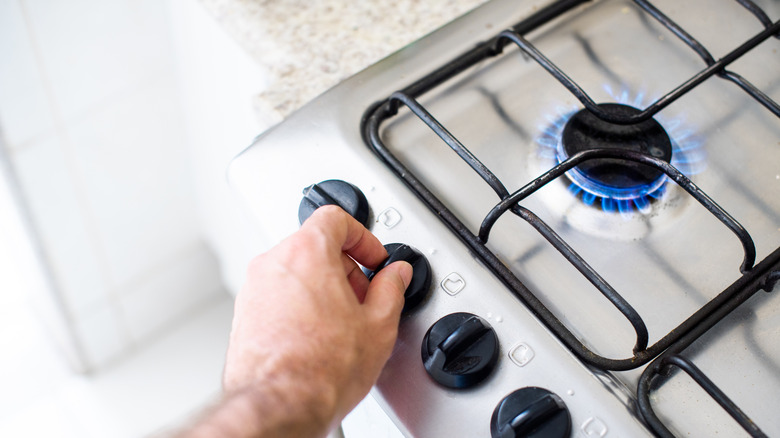
Picture yourself starting up your gas stove to cook up a delicious dinner, only to realize something is wrong with the appliance. No matter how much you turn up the gas, the flame just isn't getting higher. This can be a relatively simple problem, and it isn't always a sign that something is seriously wrong with your stove. Before you start panicking, take a minute to check some simple issues and see if it was user error. You may find that a quick clean or a slight repositioning of your burner caps can make a world of difference. However, don't just brush it off. It could be a more serious problem, too, which is why you need to take the time to inspect it.
Having a low burner may seem like a simple annoyance when you're trying to cook or boil water. However, it can be much more serious than that. A persistently low flame can indicate that your burner isn't operating properly, particularly if cleaning and repositioning the burner cap don't solve the problem.
A gas leak can create a serious fire or explosion hazard. There are numerous health issues from breathing in the gas as well, which is one of the reasons some people ditch this common kitchen appliance for a safer alternative – an electric stove. That's why you need to pay attention when you start to notice something odd about your range's behavior, such as the flames staying low.
Simple fixes to try on your gas stove first for low flames
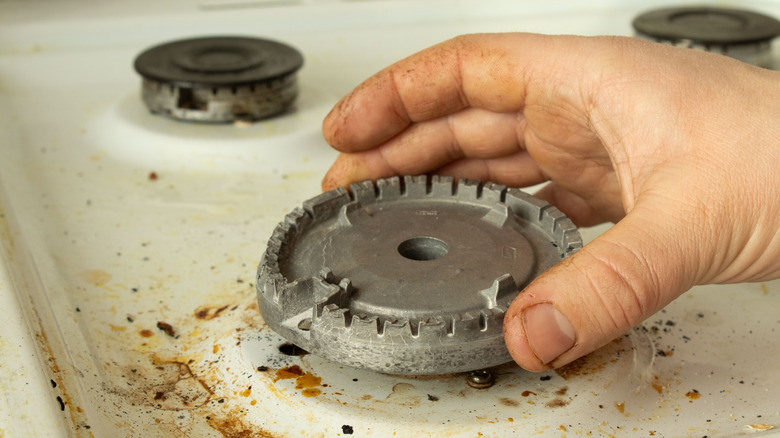
Thankfully, if you notice your flames aren't quite the right size, there are a few simple fixes you can check first. For example, if the flames are uneven or aren't appearing from some of the burner ports, a misplaced burner cap could be responsible. In this case, turn the burner off, wait for it to cool, and reposition the cap so it sits flush on the burner base with minimal side-to-side movement.
Also, while you are moving the caps around, make sure you have them in the right spots. On some stoves, the burners and their corresponding caps come in different sizes. While they may look like they fit, putting the wrong burner cap on a burner base can result in an improper flame.
Another issue could be that the openings are clogged. This is likely from food spilling over the edges and burning off. Though it sounds stressful, you usually just have to scrub off any mess, take everything off, and wash it. You can check the igniter by cleaning it with a soft brush, like an old toothbrush. Spilled liquids or moisture left behind after cleaning can also interfere with the burner flame. In this case, just let it dry fully before trying to turn it on. You should make sure you regularly deep clean your gas stove top to prevent the issue from happening again.
More complex problems that may be causing low flames
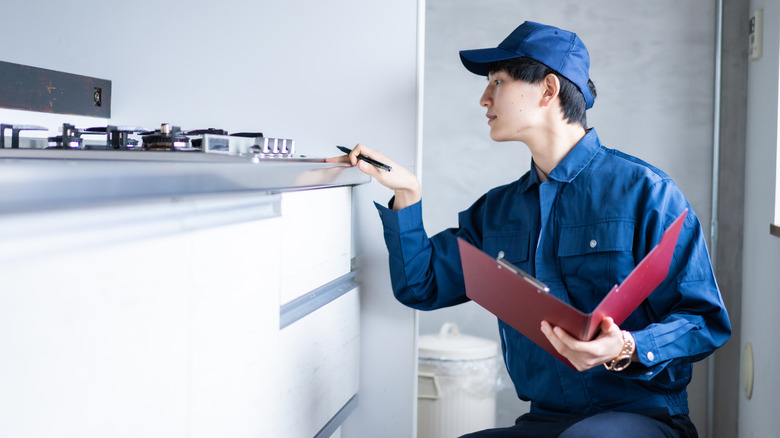
Unfortunately, if these simple fixes aren't doing the job, it may be a sign that something more serious is happening, especially if all your burners have low flames. As gas lines age, they can crack and start leaking. This means you could be releasing gas into your home, and your stove isn't getting enough to properly light.
Other issues may involve your gas supply, such as a nearly empty cylinder, a broken regulator, or a lack of pressure in piped systems. If you've recently replaced anything on your stove, double-check those new parts. Sometimes, the parts you get are just faulty; they may not be the right size or may be damaged upon arrival. You may also need to consider ventilation. Pay attention to the color of the flames as well, it may be another sign that your gas stove is going bad. Natural gas burners generally produce a soft blue flame, while propane flames may have slightly yellow tips.
If you've ruled out the simple troubleshooting steps and the flames remain unusually low, turn off your range and the gas running to it. Usually, there should be a valve near the connection point. Check the hose or pipe for any visible signs of damage or cracks, but don't attempt to locate a suspected gas leak yourself. If you use a cylinder, see if it's almost empty. If you smell or hear leaking gas, stop, leave the house, and don't use electronics, switches, or anything else that could create a spark while you're inside. Once you're at a safe distance, contact 911 or your gas utility for assistance. No one wants to spend unnecessary money, but gas is no joke. In this case, it's best to call someone to check that it is safe and working properly.