

How To Disinfect Pruning Shears Properly Between Cuts

Pruning shears are an essential gardening tool for most keen gardeners. Even though they are one of the smallest pieces of equipment you're likely to have in your toolkit, they are a true all-rounder. They can be used for lots of different tasks including cutting back overgrown trees and shrubs, deadheading flower heads, and trimming anything else that needs to be tamed. A good pair will ensure an accurate, clean cut, which makes keeping your garden tidy a whole lot easier. Plus, garden pruners can do a lot more than tackle plants. But, in order to keep them in a good condition, you're going to want to clean them properly after each use. If not, you run the risk of spreading diseases from an infected plant to a perfectly healthy one.
What you're going to need to properly sanitize your pruning shears is a bucket, a bottle of household bleach, and some water. This simple mixture will make sure any harmful bacteria is removed from your shears and that they'll be good as new, ready for your next pruning session.
Sanitizing and maintaining your pruning shears
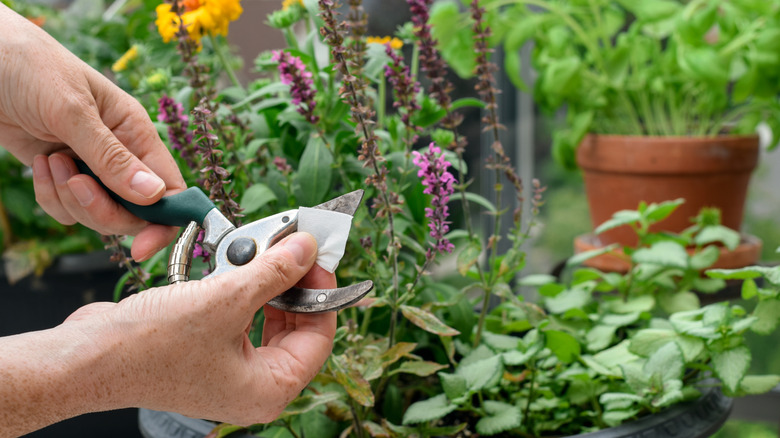
First, take your bucket and add one part bleach to nine parts water. Give it a good mix and soak your pruning shears in the solution for around 10 minutes to fully sanitize them. Once the 10 minutes is up, remove from the bucket, rinse with clean water, and dry them thoroughly with a clean cloth. Or as an alternative to bleach, try 70% isopropyl alcohol aka rubbing alcohol. You don't need any soaking or diluting. Just wipe the blades in the alcohol and let it dry.
The only downside with disinfecting your shears on a regular basis is the increased risk of rust. It's worth lubricating your pruning shears after sanitizing them to avoid this. Apply a lubricant, such as WD-40, on a clean cloth and wipe down your shears, making sure you cover all of the moving parts. This maintenance keeps your shears in tip-top shape and will have them working better by creating a barrier against any moisture that could possibly seep into the mechanism and cause rust.
If your pruning shears are electrical or battery operated, you can certainly follow the same process, but you must unplug the sheers or remove the battery beforehand. Also, make sure that the battery or electrical parts are never immersed in water as this can permanently damage the shears. Disinfecting your shears is all well and good, but it'll go to waste if they aren't stored correctly. Make sure to keep them in a dry space with good ventilation, preferably in an isolated shed, and hang them up high to prevent them from getting trampled on.