

The Discontinued '80s Wedgwood Pattern That Collectors Wish They Could Find

We may receive a commission on purchases made from links.
Secondhand shopping is a great way to add unique, beautiful pieces to your home, especially if you're a fan of vintage and antique items. One antique houseware brand that people search for when thrifting is Wedgwood, which has a long and storied history that dates back to 1759. With over 260 years in business, it makes sense that there are a lot of dish patterns that collectors would be on the lookout for when shopping at thrift and antique stores. One pattern that was originally released in '84 before being discontinued in 2012 is the Wedgwood Amherst design. It's an elegant design with a contemporary touch that will elevate any dining room table.
The Amherst pattern features a platinum gray band around the rim of the dishware, with an art deco style blue floral motif spaced out across the stripe. The blue flowers add a pop of color that delivers a more contemporary feel to each dish. And as with many pieces from Wedgwood, this design was done on fine bone china, so the rest of the dishware is a brilliant white color that offsets the gray and blue trim.
Not only do these dishes instantly upgrade any tablescape, but there is a lot of value to be had in picking up this china at thrift stores and estate sales. On eBay, a set of three serving dishes featuring two vegetable bowls and a platter sold for $100, while a 36-piece dinner set for six that was listed for $250 has also sold. Whereas on Replacements, you can find a 40-piece estate set listed for $879.95, and a single accent salad plate is listed for as much as $99.95.
What to pay attention to when picking up Wedgwood Amherst china
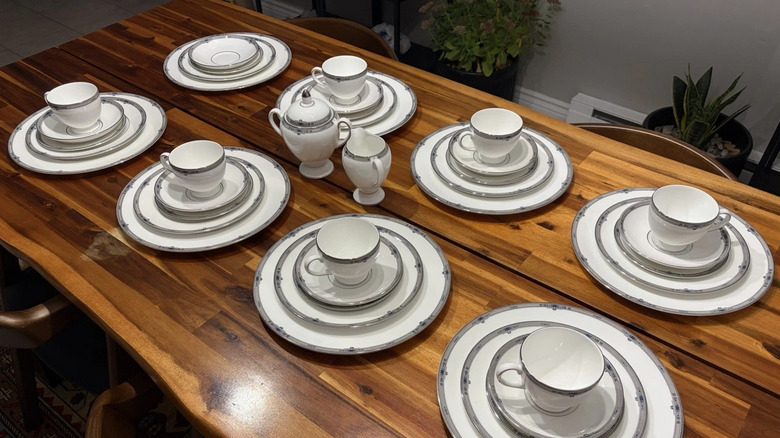
When you're looking to pick up dishware that elevates any table, a design from Wedgwood that will do that is the Amherst pattern because of its simple lines and delicate floral detail. However, you will want to look over these pieces for both condition and proper markings. Make sure that there are no chipping or cracks in the porcelain. Discoloration can also impact the value of these dishes.
Once you've checked the condition of each piece, it's important to look for the makers marks associated with the Amherst pattern. Since this pattern was produced for nearly 30 years, it makes sense that the makers mark on the back of the china changed during that time. There are two different backstamps to check for with the Amherst pattern. Pieces made prior to '98 will have a decorative vase with the Wedgwood name in all capital letters underneath. Then you'll see the marks that say that this is bone china made in England, with the pattern name directly underneath it. Pieces made after '98 will have a capital W in the place of the vase. Another change is the order of the words, as well as the addition of the copyright year 1984, which is at the bottom of the backstamp. In the newer pieces, the pattern name is found directly under the word Wedgwood. With both marks, it's clear exactly what you have found and even when it was produced, making identification relatively easy.